Updates

  1. Person pages list letters, writing, profiles and links as sortable tables with filters, and show each person's companies as links; Fund letters show each letter's description in its own column.
  2. Experts show a checked job title and a short description of each person; 30 more people have photographs.
  3. Every company, fund, university and publication the experts work for has a page listing the people there.
  4. Fund letters show each letter's thesis and filter by it; 225 person pages list the essays, columns and newsletter issues the person wrote.
  5. Person pages list every essay and newsletter issue a person wrote, and their own books as a table in List view.
  6. Recommends shows the five largest kinds of book and the rest under More; browse pictures load sooner.
  7. Podcasts and talks link the original episode, filter by Audio and video or Press, and list each publisher once.
  8. Pages are wider, Recommends has List and Grid, and a filter clicked again turns off.
  9. Book cards sit in a ruled grid with Open Library and Goodreads links and each book's one-line note.
  10. Funds is now Investors; each investor's styles are buttons that filter the table.
  11. Podcasts and talks on a person's page filter by year and publisher and show as a list or a grid of pictures.
  12. Quotes show only people's own words: 472 summaries written by list sites are gone.
  13. Country pages open from Browse again, and every link on the shelf lands on a page.
  14. Subject and person pages show their sections as tabs, and each book appears once on a person's page.
  15. Book cards show the quote, who said it and the source; grids show five cards to a row.
  16. On a phone, a menu holds the sections, search, Updates, Feedback and dark mode.
  17. Feedback takes a screenshot of the page with no browser prompt, opens a screenshot full size when you click it, and clears itself once sent.
  18. Book cards are centred, search names the topic each book sits in, and any text cut short shows whole on hover.
  19. Search groups its results by kind: people, companies, geographies, subjects, topics, books, funds, fund letters and papers.
  20. The Books table lists who recommended each book by name, and the browser tab names the section you are in.
  21. Feedback can take a screenshot of the page, or one you paste or choose, and opens in the corner beside Updates.
  22. Each rail button reopens its section where you left it, and Browse, Table and People show on every book and subject page.
  23. Filters grey out choices that hold nothing instead of hiding them, and Books › People filters by authors or recommenders.
  24. Feedback takes a subject line and up to three screenshots.
  25. Biographies are grouped by the person they are about: 41 new pages, from Abraham Lincoln to Lee Kuan Yew.
  26. Sport splits into 23 sports, and Religion into one topic per faith.
  27. Book lists show as cards: the cover, one recommendation quote and every recommender by name.
  28. Seventeen subjects that had two or three pages under different names now have one page each.
  29. Every page lists its Experts as authors and recommenders, with a link to them on the Experts tab.
  30. Economics, Financial history, Financial panics and Accounting are subjects of their own, with one page per financial crisis.
  31. Book, person and subject pages open inside the app, so the tabs stay in view.
  32. 996 more book covers, and photographs or logos for 227 more people and companies.
  33. Books › Browse shows every subject as cards, and the rail holds Fund letters, Papers, Experts, Books and Funds.
  34. Every topic over 150 books splits into narrower topics, each with a page of its own.

Send feedback

What is it?
Screenshots, up to 3 (optional)
or paste one with Ctrl+V

We use your email only to reply to you.

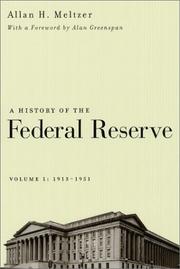
A History of the Federal Reserve, Volume 1

A History of the Federal Reserve, Volume 1

Allan H. Meltzer
2003
T1 808 pages · about 13h 28m to read Open Librarygoodreads

The institutional history from the inside of the minutes.

Summary

Meltzer, a monetary economist at Carnegie Mellon, wrote a documentary history of the Federal Reserve from its 1913 founding to 1951, working from the institution's own minutes, memoranda and internal correspondence.

The method is to establish what policymakers actually believed and said at each decision point rather than to evaluate outcomes retrospectively. This produces the book's main contribution: an account of the intellectual framework the Federal Reserve operated under, particularly the real bills doctrine, which held that credit extended against genuine commercial transactions could not be inflationary and that the central bank's role was to accommodate the needs of trade. Meltzer shows that this doctrine, combined with the use of member bank borrowing and nominal interest rates as indicators of monetary conditions, led the Federal Reserve to conclude that policy was easy during the sharpest monetary contraction in American history.

The Depression chapters are the core. Meltzer establishes that the Federal Reserve had the tools and the gold to prevent the contraction, that individual officials including some at the New York bank argued for expansion, and that the institution's structure, divided between the Board and twelve reserve banks with no clear authority, prevented action. He is somewhat more sympathetic than Friedman and Schwartz to the constraints officials perceived, while reaching the same conclusion about the outcome.

Later sections cover the 1937 recession following reserve requirement increases, the wartime pegging of interest rates, and the 1951 Treasury-Federal Reserve Accord that restored the central bank's independence.

The book is long, technical and written for economists. It assumes the reader knows the monetary economics. A second volume covers 1951 to 1986. Readers wanting a shorter treatment should go to Friedman and Schwartz's Monetary History, which covers overlapping ground with a stronger thesis and less institutional detail.

Key takeaways 7

  1. The real bills doctrine led the Federal Reserve to treat credit extended against commercial transactions as inherently non-inflationary.
  2. Using member bank borrowing and nominal interest rates as indicators caused the Federal Reserve to judge policy easy during the sharpest contraction on record.
  3. The Federal Reserve had both the gold and the legal authority to prevent the monetary contraction of 1930 to 1933.
  4. Divided authority between the Board and twelve reserve banks prevented decisive action when it was most needed.
  5. Individual officials argued for expansion during the Depression and were unable to move the institution.
  6. Raising reserve requirements in 1936 and 1937 produced a renewed contraction, which demonstrated that excess reserves were being held deliberately.
  7. The 1951 Accord ended the wartime obligation to peg government bond yields and restored the central bank's ability to set policy.

Who should read it

Economists and serious students of monetary policy who want the documentary record of what Federal Reserve officials actually believed and decided.

Similar books 6

Chosen by shared topics, the entries that hold them, and the people who recommended both.
Ben S. Bernanke · 2022

Insider account of the Fed from Burns through the QE era.
William Greider · 1987

The Volcker Fed from the inside; still the fullest political account.

Recommended by: Mohnish Pabrai
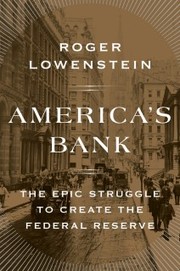
Roger Lowenstein · 2015

How the Federal Reserve was argued into existence, from the 1907 panic to 1913.

Recommended by: Seth Klarman
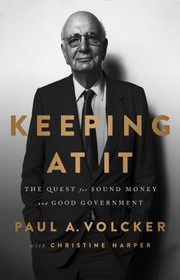
Paul A Volcker · 2018

The Fed chair's memoir of his career at Treasury and the Fed, and beating inflation.

Barry Eichengreen, Asmaa El-Ganainy, Rui Esteves, Kris James Mitchener · 2021

Sovereign borrowing from Italian city-states to the pandemic, and what it paid for.

Where it sits in the reference 2

Financial history
Financial history

Topics

Financial HistoryEconomicsPolitics and GovernmentRegulation, central banks and public policy