Updates

  1. Person pages list letters, writing, profiles and links as sortable tables with filters, and show each person's companies as links; Fund letters show each letter's description in its own column.
  2. Experts show a checked job title and a short description of each person; 30 more people have photographs.
  3. Every company, fund, university and publication the experts work for has a page listing the people there.
  4. Fund letters show each letter's thesis and filter by it; 225 person pages list the essays, columns and newsletter issues the person wrote.
  5. Person pages list every essay and newsletter issue a person wrote, and their own books as a table in List view.
  6. Recommends shows the five largest kinds of book and the rest under More; browse pictures load sooner.
  7. Podcasts and talks link the original episode, filter by Audio and video or Press, and list each publisher once.
  8. Pages are wider, Recommends has List and Grid, and a filter clicked again turns off.
  9. Book cards sit in a ruled grid with Open Library and Goodreads links and each book's one-line note.
  10. Funds is now Investors; each investor's styles are buttons that filter the table.
  11. Podcasts and talks on a person's page filter by year and publisher and show as a list or a grid of pictures.
  12. Quotes show only people's own words: 472 summaries written by list sites are gone.
  13. Country pages open from Browse again, and every link on the shelf lands on a page.
  14. Subject and person pages show their sections as tabs, and each book appears once on a person's page.
  15. Book cards show the quote, who said it and the source; grids show five cards to a row.
  16. On a phone, a menu holds the sections, search, Updates, Feedback and dark mode.
  17. Feedback takes a screenshot of the page with no browser prompt, opens a screenshot full size when you click it, and clears itself once sent.
  18. Book cards are centred, search names the topic each book sits in, and any text cut short shows whole on hover.
  19. Search groups its results by kind: people, companies, geographies, subjects, topics, books, funds, fund letters and papers.
  20. The Books table lists who recommended each book by name, and the browser tab names the section you are in.
  21. Feedback can take a screenshot of the page, or one you paste or choose, and opens in the corner beside Updates.
  22. Each rail button reopens its section where you left it, and Browse, Table and People show on every book and subject page.
  23. Filters grey out choices that hold nothing instead of hiding them, and Books › People filters by authors or recommenders.
  24. Feedback takes a subject line and up to three screenshots.
  25. Biographies are grouped by the person they are about: 41 new pages, from Abraham Lincoln to Lee Kuan Yew.
  26. Sport splits into 23 sports, and Religion into one topic per faith.
  27. Book lists show as cards: the cover, one recommendation quote and every recommender by name.
  28. Seventeen subjects that had two or three pages under different names now have one page each.
  29. Every page lists its Experts as authors and recommenders, with a link to them on the Experts tab.
  30. Economics, Financial history, Financial panics and Accounting are subjects of their own, with one page per financial crisis.
  31. Book, person and subject pages open inside the app, so the tabs stay in view.
  32. 996 more book covers, and photographs or logos for 227 more people and companies.
  33. Books › Browse shows every subject as cards, and the rail holds Fund letters, Papers, Experts, Books and Funds.
  34. Every topic over 150 books splits into narrower topics, each with a page of its own.

Send feedback

What is it?
Screenshots, up to 3 (optional)
or paste one with Ctrl+V

We use your email only to reply to you.

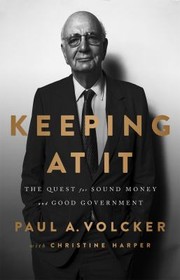
Keeping At It

Keeping At It

Paul A Volcker
2018
T4 286 pages · about 4h 46m to read Open Librarygoodreads

Summary

Volcker chaired the Federal Reserve from 1979 to 1987 and wrote this memoir with Christine Harper near the end of his life. It covers his career at Treasury, at the New York Fed and at the Federal Reserve Board, and his subsequent work on financial regulation.

The central episode is the disinflation. Volcker raised the federal funds rate above twenty percent in 1981, which produced the deepest recession since the 1930s, unemployment above ten percent, farm and construction sector collapse, and death threats and public protests directed at him personally. He held the position, inflation fell from around thirteen percent to around three, and the credibility established shaped monetary policy for decades. His account of the decision explains the reasoning: inflation expectations had become embedded in wage and price setting, incremental tightening had failed repeatedly through the 1970s, and only a demonstration that the central bank would accept the cost would change expectations.

He also covers the closing of the gold window in 1971, at which he was present as a Treasury official, the Latin American debt crisis, and his later work including the Volcker Rule restricting proprietary trading by banks. His general position is that sound money, sound finance and competent public administration are the preconditions for everything else, and he is direct about his view that all three deteriorated.

The book is a memoir by a person with a reputation to defend, though Volcker is unusually candid about mistakes. It is not an analysis of monetary policy and readers wanting that should go elsewhere. The account of what it cost to hold the position is the most valuable material.

Key takeaways 8

  1. Inflation expectations become embedded in wage and price setting, which is why incremental tightening failed repeatedly through the 1970s.
  2. Only a demonstration that the central bank would accept severe economic cost could change those expectations.
  3. Rates above twenty percent produced the deepest recession since the 1930s, unemployment above ten percent and direct personal threats against Volcker.
  4. The credibility established by holding the position shaped monetary policy expectations for decades afterwards.
  5. Central bank independence matters because the political cost of disinflation exceeds what any elected official could accept.
  6. Volcker was present at the closing of the gold window in 1971 and treats the subsequent monetary arrangements as unresolved rather than settled.
  7. Restricting proprietary trading by deposit-taking institutions separates risk-taking from the guaranteed part of the system, which is the rule that carries his name.
  8. Competent public administration is a precondition for the rest, and Volcker is direct that it has deteriorated.

Who should read it

Investors and policy readers who want the disinflation from the person who executed it, including what holding the position actually cost.

Who recommended it 3

Ray Dalioreported

Similar books 6

Chosen by shared topics, the entries that hold them, and the people who recommended both.

Ben S. Bernanke · 2022

Insider account of the Fed from Burns through the QE era.

Allan H. Meltzer · 2003

The Fed from 1913 to 1951, told from its own minutes and internal memos.

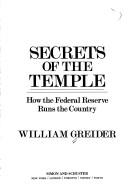
William Greider · 1987

The Volcker Fed from the inside; still the fullest political account.

Recommended by: Mohnish Pabrai
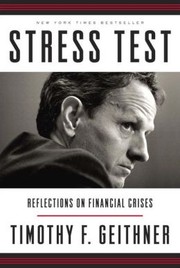
Timothy F. Geithner · 2014

The 2008 crisis and its aftermath, from inside the New York Fed and the Treasury.

Where it sits in the reference 3

Biographies
Financial history
Financial history

Topics

Biography and MemoirEconomicsFinancial HistoryPolitical Leaders and Policymakers