Updates

  1. Person pages list letters, writing, profiles and links as sortable tables with filters, and show each person's companies as links; Fund letters show each letter's description in its own column.
  2. Experts show a checked job title and a short description of each person; 30 more people have photographs.
  3. Every company, fund, university and publication the experts work for has a page listing the people there.
  4. Fund letters show each letter's thesis and filter by it; 225 person pages list the essays, columns and newsletter issues the person wrote.
  5. Person pages list every essay and newsletter issue a person wrote, and their own books as a table in List view.
  6. Recommends shows the five largest kinds of book and the rest under More; browse pictures load sooner.
  7. Podcasts and talks link the original episode, filter by Audio and video or Press, and list each publisher once.
  8. Pages are wider, Recommends has List and Grid, and a filter clicked again turns off.
  9. Book cards sit in a ruled grid with Open Library and Goodreads links and each book's one-line note.
  10. Funds is now Investors; each investor's styles are buttons that filter the table.
  11. Podcasts and talks on a person's page filter by year and publisher and show as a list or a grid of pictures.
  12. Quotes show only people's own words: 472 summaries written by list sites are gone.
  13. Country pages open from Browse again, and every link on the shelf lands on a page.
  14. Subject and person pages show their sections as tabs, and each book appears once on a person's page.
  15. Book cards show the quote, who said it and the source; grids show five cards to a row.
  16. On a phone, a menu holds the sections, search, Updates, Feedback and dark mode.
  17. Feedback takes a screenshot of the page with no browser prompt, opens a screenshot full size when you click it, and clears itself once sent.
  18. Book cards are centred, search names the topic each book sits in, and any text cut short shows whole on hover.
  19. Search groups its results by kind: people, companies, geographies, subjects, topics, books, funds, fund letters and papers.
  20. The Books table lists who recommended each book by name, and the browser tab names the section you are in.
  21. Feedback can take a screenshot of the page, or one you paste or choose, and opens in the corner beside Updates.
  22. Each rail button reopens its section where you left it, and Browse, Table and People show on every book and subject page.
  23. Filters grey out choices that hold nothing instead of hiding them, and Books › People filters by authors or recommenders.
  24. Feedback takes a subject line and up to three screenshots.
  25. Biographies are grouped by the person they are about: 41 new pages, from Abraham Lincoln to Lee Kuan Yew.
  26. Sport splits into 23 sports, and Religion into one topic per faith.
  27. Book lists show as cards: the cover, one recommendation quote and every recommender by name.
  28. Seventeen subjects that had two or three pages under different names now have one page each.
  29. Every page lists its Experts as authors and recommenders, with a link to them on the Experts tab.
  30. Economics, Financial history, Financial panics and Accounting are subjects of their own, with one page per financial crisis.
  31. Book, person and subject pages open inside the app, so the tabs stay in view.
  32. 996 more book covers, and photographs or logos for 227 more people and companies.
  33. Books › Browse shows every subject as cards, and the rail holds Fund letters, Papers, Experts, Books and Funds.
  34. Every topic over 150 books splits into narrower topics, each with a page of its own.

Send feedback

What is it?
Screenshots, up to 3 (optional)
or paste one with Ctrl+V

We use your email only to reply to you.

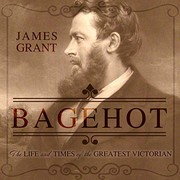
Bagehot: The Life and Times of the Greatest

Bagehot: The Life and Times of the Greatest Victorian

James Grant
2019
T4 368 pages · about 6h 8m to read Open Librarygoodreads

title listed on grantspub.com books page

Summary

Grant, the financial writer and publisher of Grant's Interest Rate Observer, wrote a biography of Walter Bagehot, the banker, editor of The Economist and author of Lombard Street.

The biographical material covers Bagehot's family banking background, his marriage into the family that owned The Economist, his editorship, his political writing including The English Constitution, and his repeated unsuccessful attempts to enter Parliament.

The financial content is what Grant cares about. Bagehot's Lombard Street, published in 1873 after the Overend Gurney failure of 1866, set out the doctrine that in a panic the central bank should lend freely, at a high rate of interest, against good collateral. The rule has three parts that are frequently misquoted: freely, so that the panic is stopped; at a penalty rate, so that the facility is used only in genuine need and is repaid promptly; and against collateral that would be good in normal times, so that the central bank supports illiquid but solvent institutions rather than insolvent ones. Grant explains the context: the Bank of England had no legal obligation to act as lender of last resort and its directors disputed that it should, and Bagehot's contribution was to describe what the Bank was already doing and to argue it should acknowledge and formalise it.

Grant also examines Bagehot's inconsistencies, his commercial interests, his views on democracy which were unattractive, and his errors as a forecaster.

The book is written by an admirer with a strong view about modern central banking, and Grant's argument that current practice has abandoned the penalty rate and the good collateral requirement is present throughout. Readers should note the frame. The biography is well researched and Grant writes unusually well.

Key takeaways 7

  1. Bagehot's rule requires lending freely, at a penalty rate, against collateral that would be good in normal times.
  2. The penalty rate exists so that the facility is used only in genuine need and is repaid as soon as conditions permit.
  3. The good collateral requirement distinguishes support for illiquid institutions from support for insolvent ones.
  4. The Bank of England had no legal obligation to act as lender of last resort and its directors disputed that it should.
  5. Bagehot described what the Bank was already doing and argued it should acknowledge the responsibility publicly.
  6. A central bank that denies it will act in a crisis makes the crisis worse, because uncertainty about support increases the panic.
  7. Modern practice has largely abandoned the penalty rate and relaxed the collateral standard, which is Grant's central criticism.

Who should read it

Investors and anyone thinking about central banking who wants the origin of the lender of last resort doctrine and an argument that current practice departs from it.

About James Grant

Founder and editor, Grant's Interest Rate Observer (since 1983); financial historian and biographer

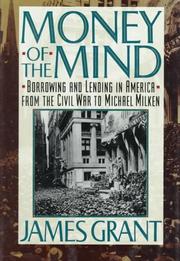
Grant's Interest Rate Observer is a primary source other investors read and quote, and Money of the Mind is a standard credit history.

Grant's Interest Rate Observer

Similar books 6

Chosen by shared topics, the entries that hold them, and the people who recommended both.
Paul A Volcker · 2018

The Fed chair's memoir of his career at Treasury and the Fed, and beating inflation.

Ben S. Bernanke · 2022

Insider account of the Fed from Burns through the QE era.
Allan H. Meltzer · 2003

The Fed from 1913 to 1951, told from its own minutes and internal memos.
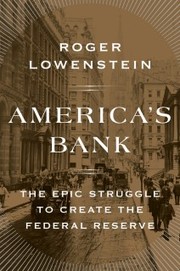
Roger Lowenstein · 2015

How the Federal Reserve was argued into existence, from the 1907 panic to 1913.

Recommended by: Seth Klarman
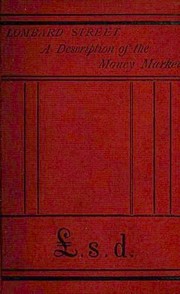
Walter Bagehot · 1873

How the London money market worked, and why a central bank lends freely in a panic.
Where it sits in the reference 3

Investors
Financial history
Financial history

Topics

Biography and MemoirFinancial History