Updates

  1. Person pages list letters, writing, profiles and links as sortable tables with filters, and show each person's companies as links; Fund letters show each letter's description in its own column.
  2. Experts show a checked job title and a short description of each person; 30 more people have photographs.
  3. Every company, fund, university and publication the experts work for has a page listing the people there.
  4. Fund letters show each letter's thesis and filter by it; 225 person pages list the essays, columns and newsletter issues the person wrote.
  5. Person pages list every essay and newsletter issue a person wrote, and their own books as a table in List view.
  6. Recommends shows the five largest kinds of book and the rest under More; browse pictures load sooner.
  7. Podcasts and talks link the original episode, filter by Audio and video or Press, and list each publisher once.
  8. Pages are wider, Recommends has List and Grid, and a filter clicked again turns off.
  9. Book cards sit in a ruled grid with Open Library and Goodreads links and each book's one-line note.
  10. Funds is now Investors; each investor's styles are buttons that filter the table.
  11. Podcasts and talks on a person's page filter by year and publisher and show as a list or a grid of pictures.
  12. Quotes show only people's own words: 472 summaries written by list sites are gone.
  13. Country pages open from Browse again, and every link on the shelf lands on a page.
  14. Subject and person pages show their sections as tabs, and each book appears once on a person's page.
  15. Book cards show the quote, who said it and the source; grids show five cards to a row.
  16. On a phone, a menu holds the sections, search, Updates, Feedback and dark mode.
  17. Feedback takes a screenshot of the page with no browser prompt, opens a screenshot full size when you click it, and clears itself once sent.
  18. Book cards are centred, search names the topic each book sits in, and any text cut short shows whole on hover.
  19. Search groups its results by kind: people, companies, geographies, subjects, topics, books, funds, fund letters and papers.
  20. The Books table lists who recommended each book by name, and the browser tab names the section you are in.
  21. Feedback can take a screenshot of the page, or one you paste or choose, and opens in the corner beside Updates.
  22. Each rail button reopens its section where you left it, and Browse, Table and People show on every book and subject page.
  23. Filters grey out choices that hold nothing instead of hiding them, and Books › People filters by authors or recommenders.
  24. Feedback takes a subject line and up to three screenshots.
  25. Biographies are grouped by the person they are about: 41 new pages, from Abraham Lincoln to Lee Kuan Yew.
  26. Sport splits into 23 sports, and Religion into one topic per faith.
  27. Book lists show as cards: the cover, one recommendation quote and every recommender by name.
  28. Seventeen subjects that had two or three pages under different names now have one page each.
  29. Every page lists its Experts as authors and recommenders, with a link to them on the Experts tab.
  30. Economics, Financial history, Financial panics and Accounting are subjects of their own, with one page per financial crisis.
  31. Book, person and subject pages open inside the app, so the tabs stay in view.
  32. 996 more book covers, and photographs or logos for 227 more people and companies.
  33. Books › Browse shows every subject as cards, and the rail holds Fund letters, Papers, Experts, Books and Funds.
  34. Every topic over 150 books splits into narrower topics, each with a page of its own.

Send feedback

What is it?
Screenshots, up to 3 (optional)
or paste one with Ctrl+V

We use your email only to reply to you.

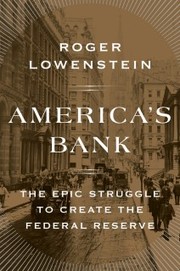
America's Bank: The Epic Struggle to Create

America's Bank: The Epic Struggle to Create the Federal Reserve

Roger Lowenstein
2015
T4 355 pages · about 5h 55m to read Open Librarygoodreads

How the Federal Reserve was argued into existence, 1907-1913.

Summary

Lowenstein narrates the political creation of the Federal Reserve from the 1907 panic through the Federal Reserve Act of December 1913. The main figures are Senator Nelson Aldrich, whose Jekyll Island meeting produced the initial plan; Paul Warburg, the German-born banker who supplied the technical design from European central banking practice; Carter Glass, the Virginia congressman who wrote the House version; and Woodrow Wilson, who resolved the political deadlock.

The substance is the political constraint. Americans had rejected two previous central banks and the opposition combined agrarian populists who saw any central institution as a Wall Street instrument with bankers who did not want government control. The compromise was structural: twelve regional reserve banks owned by member banks, a Washington board appointed by the president, and a division of powers designed so that neither New York bankers nor the federal government could control it alone. Lowenstein shows this was a political settlement rather than a monetary design, and that the resulting fragmentation of authority was intentional.

He makes the connection to later performance explicit: the division of authority between regional banks and the board, which was the price of passage, contributed directly to the paralysis of 1930 to 1933 when no one had clear responsibility to act.

The book is well-reported narrative history for a general audience. It is light on monetary economics and on the technical questions of note issue, reserve requirements and the gold standard constraint, which readers wanting the monetary history should get elsewhere.

Key takeaways 7

  1. The Federal Reserve's regional structure was a political compromise designed so that neither New York banks nor the federal government could control it alone.
  2. The United States had rejected two previous central banks, and the political opposition combined agrarian populists with bankers who each feared control by the other.
  3. Paul Warburg supplied the technical design from European central banking practice, and the American institution was built on precedents its opponents would have rejected if named.
  4. The 1907 panic created the political opening, and the reform took six years of negotiation after it.
  5. The deliberate fragmentation of authority between regional banks and the Washington board removed clear responsibility for acting in a crisis.
  6. That same fragmentation contributed directly to the paralysis of 1930 to 1933, when no part of the system had unambiguous authority to intervene.
  7. Founding institutional compromises constrain what an institution can do decades later, long after the political conflict that produced them is forgotten.

Who should read it

Investors and policy readers who want the political origin of the Federal Reserve's structure and why that structure mattered in 1930.

About Roger Lowenstein

Financial journalist and author; Wall Street Journal reporter for over a decade

Buffett: The Making of an American Capitalist and When Genius Failed are the standard reference accounts of Buffett's rise and of the LTCM collapse.

Sequoia Fund, The Wall Street Journal

Who recommended it 1

Seth Klarmanreported

Similar books 6

Chosen by shared topics, the entries that hold them, and the people who recommended both.
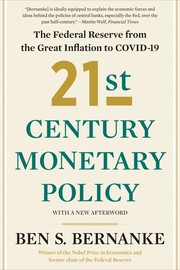
Ben S. Bernanke · 2022

Insider account of the Fed from Burns through the QE era.
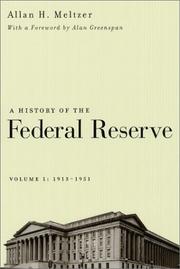
Allan H. Meltzer · 2003

The Fed from 1913 to 1951, told from its own minutes and internal memos.
William Greider · 1987

The Volcker Fed from the inside; still the fullest political account.

Recommended by: Mohnish Pabrai
Benn Steil · 2013

The 1944 Bretton Woods conference as a contest between Keynes and Harry Dexter White.

Where it sits in the reference 3

Journalists
Financial history
Financial history

Topics

Financial HistoryPolitics and GovernmentGeneral HistoryFinancial HistoryRegulation, central banks and public policy