Updates

  1. Person pages list letters, writing, profiles and links as sortable tables with filters, and show each person's companies as links; Fund letters show each letter's description in its own column.
  2. Experts show a checked job title and a short description of each person; 30 more people have photographs.
  3. Every company, fund, university and publication the experts work for has a page listing the people there.
  4. Fund letters show each letter's thesis and filter by it; 225 person pages list the essays, columns and newsletter issues the person wrote.
  5. Person pages list every essay and newsletter issue a person wrote, and their own books as a table in List view.
  6. Recommends shows the five largest kinds of book and the rest under More; browse pictures load sooner.
  7. Podcasts and talks link the original episode, filter by Audio and video or Press, and list each publisher once.
  8. Pages are wider, Recommends has List and Grid, and a filter clicked again turns off.
  9. Book cards sit in a ruled grid with Open Library and Goodreads links and each book's one-line note.
  10. Funds is now Investors; each investor's styles are buttons that filter the table.
  11. Podcasts and talks on a person's page filter by year and publisher and show as a list or a grid of pictures.
  12. Quotes show only people's own words: 472 summaries written by list sites are gone.
  13. Country pages open from Browse again, and every link on the shelf lands on a page.
  14. Subject and person pages show their sections as tabs, and each book appears once on a person's page.
  15. Book cards show the quote, who said it and the source; grids show five cards to a row.
  16. On a phone, a menu holds the sections, search, Updates, Feedback and dark mode.
  17. Feedback takes a screenshot of the page with no browser prompt, opens a screenshot full size when you click it, and clears itself once sent.
  18. Book cards are centred, search names the topic each book sits in, and any text cut short shows whole on hover.
  19. Search groups its results by kind: people, companies, geographies, subjects, topics, books, funds, fund letters and papers.
  20. The Books table lists who recommended each book by name, and the browser tab names the section you are in.
  21. Feedback can take a screenshot of the page, or one you paste or choose, and opens in the corner beside Updates.
  22. Each rail button reopens its section where you left it, and Browse, Table and People show on every book and subject page.
  23. Filters grey out choices that hold nothing instead of hiding them, and Books › People filters by authors or recommenders.
  24. Feedback takes a subject line and up to three screenshots.
  25. Biographies are grouped by the person they are about: 41 new pages, from Abraham Lincoln to Lee Kuan Yew.
  26. Sport splits into 23 sports, and Religion into one topic per faith.
  27. Book lists show as cards: the cover, one recommendation quote and every recommender by name.
  28. Seventeen subjects that had two or three pages under different names now have one page each.
  29. Every page lists its Experts as authors and recommenders, with a link to them on the Experts tab.
  30. Economics, Financial history, Financial panics and Accounting are subjects of their own, with one page per financial crisis.
  31. Book, person and subject pages open inside the app, so the tabs stay in view.
  32. 996 more book covers, and photographs or logos for 227 more people and companies.
  33. Books › Browse shows every subject as cards, and the rail holds Fund letters, Papers, Experts, Books and Funds.
  34. Every topic over 150 books splits into narrower topics, each with a page of its own.

Send feedback

What is it?
Screenshots, up to 3 (optional)
or paste one with Ctrl+V

We use your email only to reply to you.

The Battle of Bretton Woods

The Battle of Bretton Woods

Benn Steil
2013
T2 478 pages · about 7h 58m to read Open Librarygoodreads

Keynes, White and the design of the postwar currency order.

Summary

Benn Steil of the Council on Foreign Relations writes the history of the 1944 Bretton Woods conference through the conflict between John Maynard Keynes, representing Britain, and Harry Dexter White, representing the United States Treasury. His argument is that the conference was primarily a negotiation about the transfer of financial power from Britain to the United States, and that the technical monetary questions were subordinate to it.

The substance concerns what each side wanted. Keynes proposed an international clearing union with a synthetic reserve asset, the bancor, and symmetric adjustment obligations on creditor and debtor countries, which would have relieved Britain's position as a debtor with an unconvertible currency and large sterling balances. White's plan made the dollar the system's centre, tied to gold, with adjustment falling on deficit countries, and with the United States controlling the institutions. White's plan prevailed because the United States held the resources and Britain needed the loan that followed.

Steil also covers White's contacts with Soviet intelligence, drawing on the Venona decrypts and other evidence, and argues that White passed information and shaped policy in ways favourable to Soviet interests. This part is the most contested: other historians accept the contacts while disputing Steil's characterisation of White's motives and the significance of his actions. The monetary history is careful and the account of the negotiations is well documented. Readers should treat the White espionage material as one interpretation of contested evidence.

Key takeaways 7

  1. Bretton Woods was a negotiation about the transfer of financial primacy from Britain to the United States rather than a technical monetary conference.
  2. Keynes proposed a clearing union with a synthetic reserve asset and symmetric adjustment obligations on creditors and debtors.
  3. White's plan centred the system on the dollar with adjustment falling on deficit countries, and it prevailed because the United States held the resources.
  4. Britain's sterling balances and its need for an American loan removed any negotiating position Keynes might have had.
  5. The system's design contained the contradiction that Triffin later identified, requiring dollar deficits to supply reserves while those deficits undermined confidence.
  6. Steil argues from the Venona material that White acted as a source for Soviet intelligence, an interpretation other historians dispute.
  7. The institutions created at Bretton Woods were designed to be controlled by their largest contributor rather than governed multilaterally.

Who should read it

Investors and analysts of the international monetary system who want the political negotiation behind its founding, treating the espionage material as contested.

Similar books 6

Chosen by shared topics, the entries that hold them, and the people who recommended both.
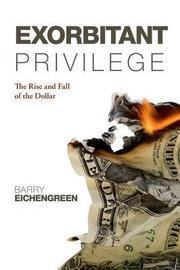
Barry Eichengreen · 2011

How the dollar became the world's currency, what it gives the US, what may follow.
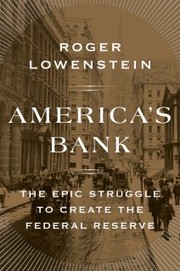
Roger Lowenstein · 2015

How the Federal Reserve was argued into existence, from the 1907 panic to 1913.

Recommended by: Seth Klarman

James Rickards · 2011

Popular account of competitive devaluation as policy.

Barry Eichengreen · 1996

Money between nations from the gold standard to floating rates and the euro.

Sidney Homer, Richard Sylla · 1963

Interest rates from Babylonian lending through Rome and Europe to modern bonds.

Recommended by: Mohnish Pabrai

Barry Eichengreen · 1992

How the gold standard spread the Depression, and why leaving it early meant recovery.

Where it sits in the reference 2

Assets
Financial history

Topics

Financial HistoryGeneral HistoryPolitics and GovernmentFinancial HistoryGlobalisation, development and offshore money