
Updates

  1. Person pages list letters, writing, profiles and links as sortable tables with filters, and show each person's companies as links; Fund letters show each letter's description in its own column.
  2. Experts show a checked job title and a short description of each person; 30 more people have photographs.
  3. Every company, fund, university and publication the experts work for has a page listing the people there.
  4. Fund letters show each letter's thesis and filter by it; 225 person pages list the essays, columns and newsletter issues the person wrote.
  5. Person pages list every essay and newsletter issue a person wrote, and their own books as a table in List view.
  6. Recommends shows the five largest kinds of book and the rest under More; browse pictures load sooner.
  7. Podcasts and talks link the original episode, filter by Audio and video or Press, and list each publisher once.
  8. Pages are wider, Recommends has List and Grid, and a filter clicked again turns off.
  9. Book cards sit in a ruled grid with Open Library and Goodreads links and each book's one-line note.
  10. Funds is now Investors; each investor's styles are buttons that filter the table.
  11. Podcasts and talks on a person's page filter by year and publisher and show as a list or a grid of pictures.
  12. Quotes show only people's own words: 472 summaries written by list sites are gone.
  13. Country pages open from Browse again, and every link on the shelf lands on a page.
  14. Subject and person pages show their sections as tabs, and each book appears once on a person's page.
  15. Book cards show the quote, who said it and the source; grids show five cards to a row.
  16. On a phone, a menu holds the sections, search, Updates, Feedback and dark mode.
  17. Feedback takes a screenshot of the page with no browser prompt, opens a screenshot full size when you click it, and clears itself once sent.
  18. Book cards are centred, search names the topic each book sits in, and any text cut short shows whole on hover.
  19. Search groups its results by kind: people, companies, geographies, subjects, topics, books, funds, fund letters and papers.
  20. The Books table lists who recommended each book by name, and the browser tab names the section you are in.
  21. Feedback can take a screenshot of the page, or one you paste or choose, and opens in the corner beside Updates.
  22. Each rail button reopens its section where you left it, and Browse, Table and People show on every book and subject page.
  23. Filters grey out choices that hold nothing instead of hiding them, and Books › People filters by authors or recommenders.
  24. Feedback takes a subject line and up to three screenshots.
  25. Biographies are grouped by the person they are about: 41 new pages, from Abraham Lincoln to Lee Kuan Yew.
  26. Sport splits into 23 sports, and Religion into one topic per faith.
  27. Book lists show as cards: the cover, one recommendation quote and every recommender by name.
  28. Seventeen subjects that had two or three pages under different names now have one page each.
  29. Every page lists its Experts as authors and recommenders, with a link to them on the Experts tab.
  30. Economics, Financial history, Financial panics and Accounting are subjects of their own, with one page per financial crisis.
  31. Book, person and subject pages open inside the app, so the tabs stay in view.
  32. 996 more book covers, and photographs or logos for 227 more people and companies.
  33. Books › Browse shows every subject as cards, and the rail holds Fund letters, Papers, Experts, Books and Funds.
  34. Every topic over 150 books splits into narrower topics, each with a page of its own.

Send feedback

What is it?
Screenshots, up to 3 (optional)
or paste one with Ctrl+V

We use your email only to reply to you.

Currency Wars

Currency Wars

James Rickards
2011
T3 288 pages · about 4h 48m to read Open Librarygoodreads

Popular account of competitive devaluation as policy.

Summary

Rickards, a lawyer and consultant who had been general counsel at Long-Term Capital Management, argued that competitive currency devaluation had resumed and would produce a monetary crisis.

The historical framework identifies three currency wars. The first ran from 1921 to 1936, covering the German hyperinflation, the British return to gold at prewar parity, competitive devaluations after 1931 and the American gold revaluation. The second ran from 1967 to 1987, covering the strain on Bretton Woods, the 1971 suspension of convertibility, the inflation of the 1970s, and the Plaza and Louvre accords. The third, he argued, began in 2010 with quantitative easing and the resulting pressure on other countries' currencies.

His analytical claims include that devaluation is a zero-sum action which invites retaliation; that currency conflict escalates into trade conflict and can escalate further; that the dollar's reserve position is not permanent and that its loss would be abrupt rather than gradual; and that the international monetary system has no anchor and no mechanism for resolving imbalances.

His policy discussion covers financial warfare, including his participation in a Pentagon exercise simulating economic conflict, and his proposals include a return to some form of gold link at a substantially revalued price.

The forecasting record is poor. Rickards predicted dollar collapse, hyperinflation and monetary system breakdown, none of which occurred in the following decade, and he has continued making similar predictions since. The historical framework is a reasonable organising device and the account of the earlier currency conflicts is competent. The analysis of the current period is not supported by what followed, and readers should treat the predictive claims accordingly.

Key takeaways 7

  1. Competitive devaluation is zero-sum across countries and therefore invites retaliation rather than resolving anything.
  2. The interwar currency conflict escalated into trade restriction and contributed to the collapse of international commerce.
  3. The 1971 suspension of dollar convertibility ended the last formal anchor in the international monetary system.
  4. The current system has no anchor and no mechanism for resolving persistent imbalances between surplus and deficit countries.
  5. Reserve currency status can be lost, and historical transitions have been abrupt rather than gradual.
  6. Quantitative easing in one country exports currency appreciation pressure to others, which invites reciprocal action.
  7. The book's specific predictions of dollar collapse and hyperinflation did not occur, which readers should weigh against its analysis.

Who should read it

Readers who want the historical framing of currency conflicts, discounting the predictive claims that the subsequent decade did not support.

Similar books 6

Chosen by shared topics, the entries that hold them, and the people who recommended both.
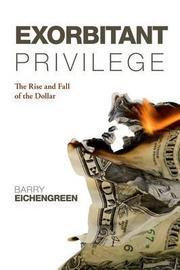
Barry Eichengreen · 2011

How the dollar became the world's currency, what it gives the US, what may follow.
Marc Chandler · 2009

Working FX strategist on what actually moves the dollar.

Barry Eichengreen · 1996

Money between nations from the gold standard to floating rates and the euro.

Benn Steil · 2013

The 1944 Bretton Woods conference as a contest between Keynes and Harry Dexter White.
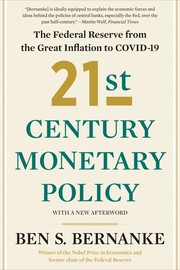
Ben S. Bernanke · 2022

Insider account of the Fed from Burns through the QE era.
Allan H. Meltzer · 2003

The Fed from 1913 to 1951, told from its own minutes and internal memos.

Where it sits in the reference 2

Assets
Financial history

Topics

EconomicsFinance and MarketsPolitics and GovernmentGeopolitics and international relations