Updates

  1. Person pages list letters, writing, profiles and links as sortable tables with filters, and show each person's companies as links; Fund letters show each letter's description in its own column.
  2. Experts show a checked job title and a short description of each person; 30 more people have photographs.
  3. Every company, fund, university and publication the experts work for has a page listing the people there.
  4. Fund letters show each letter's thesis and filter by it; 225 person pages list the essays, columns and newsletter issues the person wrote.
  5. Person pages list every essay and newsletter issue a person wrote, and their own books as a table in List view.
  6. Recommends shows the five largest kinds of book and the rest under More; browse pictures load sooner.
  7. Podcasts and talks link the original episode, filter by Audio and video or Press, and list each publisher once.
  8. Pages are wider, Recommends has List and Grid, and a filter clicked again turns off.
  9. Book cards sit in a ruled grid with Open Library and Goodreads links and each book's one-line note.
  10. Funds is now Investors; each investor's styles are buttons that filter the table.
  11. Podcasts and talks on a person's page filter by year and publisher and show as a list or a grid of pictures.
  12. Quotes show only people's own words: 472 summaries written by list sites are gone.
  13. Country pages open from Browse again, and every link on the shelf lands on a page.
  14. Subject and person pages show their sections as tabs, and each book appears once on a person's page.
  15. Book cards show the quote, who said it and the source; grids show five cards to a row.
  16. On a phone, a menu holds the sections, search, Updates, Feedback and dark mode.
  17. Feedback takes a screenshot of the page with no browser prompt, opens a screenshot full size when you click it, and clears itself once sent.
  18. Book cards are centred, search names the topic each book sits in, and any text cut short shows whole on hover.
  19. Search groups its results by kind: people, companies, geographies, subjects, topics, books, funds, fund letters and papers.
  20. The Books table lists who recommended each book by name, and the browser tab names the section you are in.
  21. Feedback can take a screenshot of the page, or one you paste or choose, and opens in the corner beside Updates.
  22. Each rail button reopens its section where you left it, and Browse, Table and People show on every book and subject page.
  23. Filters grey out choices that hold nothing instead of hiding them, and Books › People filters by authors or recommenders.
  24. Feedback takes a subject line and up to three screenshots.
  25. Biographies are grouped by the person they are about: 41 new pages, from Abraham Lincoln to Lee Kuan Yew.
  26. Sport splits into 23 sports, and Religion into one topic per faith.
  27. Book lists show as cards: the cover, one recommendation quote and every recommender by name.
  28. Seventeen subjects that had two or three pages under different names now have one page each.
  29. Every page lists its Experts as authors and recommenders, with a link to them on the Experts tab.
  30. Economics, Financial history, Financial panics and Accounting are subjects of their own, with one page per financial crisis.
  31. Book, person and subject pages open inside the app, so the tabs stay in view.
  32. 996 more book covers, and photographs or logos for 227 more people and companies.
  33. Books › Browse shows every subject as cards, and the rail holds Fund letters, Papers, Experts, Books and Funds.
  34. Every topic over 150 books splits into narrower topics, each with a page of its own.

Send feedback

What is it?
Screenshots, up to 3 (optional)
or paste one with Ctrl+V

We use your email only to reply to you.

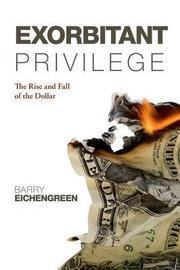
Exorbitant Privilege

Exorbitant Privilege

Barry Eichengreen
2011
T1 220 pages · about 3h 40m to read Open Librarygoodreads

The dollar's reserve status and what would end it.

Summary

Eichengreen examines the dollar's position as the dominant international currency: how it acquired that role, what benefits it confers on the United States, whether the position is stable, and what would replace it.

The historical argument corrects a common misunderstanding. Eichengreen shows that sterling's dominance did not end abruptly in 1914 and that the dollar and sterling shared the reserve currency role for decades, which contradicts the assumption that international currency status is winner-take-all and irreversible. He documents the deliberate policy work, particularly the creation of the Federal Reserve and the development of a dollar trade acceptance market, that made the dollar usable internationally in the 1920s.

On the benefits he is specific. The privilege consists of seigniorage on foreign holdings of dollars, lower borrowing costs from foreign demand for Treasury securities, the ability to settle international obligations in one's own currency, and the return differential between American foreign assets and foreign holdings of American assets. He quantifies these and finds them real but smaller than the political rhetoric implies.

On the future he argues the dollar's position is more likely to erode gradually into a multiple reserve currency world than to collapse, and that the greater risk is a domestic American fiscal failure rather than a foreign challenge. He assesses the euro and the renminbi as candidates and finds both constrained.

The book was written in 2011 and its assessments of the euro and renminbi have been tested since, with both remaining less significant than the analysis allowed for.

Key takeaways 7

  1. International currency status is not winner-take-all, and the dollar and sterling shared the reserve role for several decades.
  2. The dollar's international role was built deliberately in the 1920s through the creation of the Federal Reserve and a dollar trade acceptance market.
  3. The benefits of reserve currency status are real but smaller than political rhetoric implies, consisting mainly of seigniorage and a modest borrowing cost advantage.
  4. The United States earns higher returns on its foreign assets than foreigners earn on their American assets, which sustains its external position despite persistent deficits.
  5. The dollar's position is more likely to erode into a multiple reserve currency arrangement than to be displaced by a single successor.
  6. The main risk to the dollar's role is a domestic American fiscal or political failure rather than a foreign challenge.
  7. The euro is constrained by the absence of a unified safe asset and the renminbi by capital controls and the absence of an independent legal system.

Who should read it

Macro investors who need a careful account of what dollar dominance actually delivers and how international currency positions historically change.

About Barry Eichengreen

Professor of economics and political science at the University of California, Berkeley, and economic historian of international monetary systems.

Golden Fetters established the standard account of the interwar gold standard: fixed exchange rates transmitted deflation across borders, and recovery began in each country only after it left the peg. The later books apply that monetary-history method to reserve-currency status, the euro, sovereign debt capacity and the 2008 policy response.

University of California, Berkeley

Similar books 6

Chosen by shared topics, the entries that hold them, and the people who recommended both.
Barry Eichengreen · 1996

Money between nations from the gold standard to floating rates and the euro.

Barry Eichengreen, Asmaa El-Ganainy, Rui Esteves, Kris James Mitchener · 2021

Sovereign borrowing from Italian city-states to the pandemic, and what it paid for.

Benn Steil · 2013

The 1944 Bretton Woods conference as a contest between Keynes and Harry Dexter White.

James Rickards · 2011

Popular account of competitive devaluation as policy.

Barry Eichengreen · 1992

How the gold standard spread the Depression, and why leaving it early meant recovery.

Barry Eichengreen, Marc Flandreau · 1997

Key academic papers on how the gold standard worked and why it broke down.

Where it sits in the reference 3

Academics
Assets
Financial history

Topics

EconomicsFinancial HistoryPolitics and GovernmentGlobalisation, development and offshore money