
Golden Fetters
The scholarly case that the gold standard transmitted the Depression.
Summary
Eichengreen argues that the gold standard was the principal mechanism transmitting and deepening the Great Depression internationally, and supports it with comparative evidence across countries. His central empirical finding is that the date a country left the gold standard predicts the date its recovery began, and that this holds across countries with very different政 political systems, banking structures and trade positions. Britain and the Scandinavian countries left in 1931 and recovered earlier. The United States left in 1933. France and the gold bloc countries held on until 1936 and suffered longest.
The mechanism he identifies is that a fixed exchange rate removes monetary policy as a domestic instrument. A country losing gold must raise interest rates and contract regardless of domestic unemployment, and the deflationary adjustment is transmitted to every other country in the system. There is no symmetric obligation on surplus countries to expand, so the adjustment burden falls entirely on the deficit side.
His political economy argument is that the prewar gold standard worked because central banks were insulated from domestic political pressure and because market participants believed the commitment was unconditional. After the war, the extension of the franchise, the growth of organised labour and the visibility of unemployment made the commitment conditional, and once participants doubted it the stabilising capital flows became destabilising ones.
The book is academic economic history and requires familiarity with the concepts. It is the standard reference on the subject and its central finding has held up. Readers wanting a narrative treatment should read Ahamed's Lords of Finance instead.
Key takeaways 8
- The date a country left the gold standard predicts the date its recovery began, across countries with very different political and banking systems.
- A fixed exchange rate removes monetary policy as a domestic instrument, forcing contraction regardless of unemployment.
- There was no symmetric obligation on surplus countries to expand, so the entire adjustment burden fell on countries losing gold.
- Deflationary adjustment in one country was transmitted to every other country in the system, which is how a national shock became a global depression.
- The prewar gold standard worked because central banks were insulated from domestic political pressure and the commitment was believed unconditional.
- After the war the franchise and organised labour made the commitment conditional, and once participants doubted it capital flows became destabilising.
- Credibility rather than the mechanics of the system determined whether capital flows stabilised or destabilised an exchange rate.
- Countries that held to gold longest, including France and the gold bloc, suffered the longest depressions.
Who should read it
Investors and policy readers who want the standard academic account of how a monetary regime turned a downturn into a depression.
About Barry Eichengreen
Professor of economics and political science at the University of California, Berkeley, and economic historian of international monetary systems.
Golden Fetters established the standard account of the interwar gold standard: fixed exchange rates transmitted deflation across borders, and recovery began in each country only after it left the peg. The later books apply that monetary-history method to reserve-currency status, the euro, sovereign debt capacity and the 2008 policy response.
Similar books 6
Chosen by shared topics, the entries that hold them, and the people who recommended both.
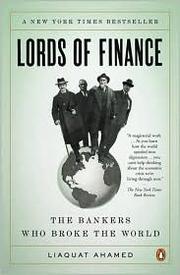
How four central bankers and the gold standard turned a slump into the Depression.
“I'm going to use "classic" again but rightfully so.” — Christopher Bloomstran
Source: Semper Augustus 2020 Letter to Clients, 'To Read or Not to Read', p. 57
Recommended by: Christopher Bloomstran, Mohnish Pabrai

How 1930s lessons guided policy in 2008, averting a depression but adding errors.

Sovereign borrowing from Italian city-states to the pandemic, and what it paid for.
Key academic papers on how the gold standard worked and why it broke down.
Monthly data tested against explanations of Germany's 1919 to 1923 inflation.
Modern retelling with more on the stabilisation and the Rentenmark.
Where it sits in the reference 7
Topics