
Updates

  1. Person pages list letters, writing, profiles and links as sortable tables with filters, and show each person's companies as links; Fund letters show each letter's description in its own column.
  2. Experts show a checked job title and a short description of each person; 30 more people have photographs.
  3. Every company, fund, university and publication the experts work for has a page listing the people there.
  4. Fund letters show each letter's thesis and filter by it; 225 person pages list the essays, columns and newsletter issues the person wrote.
  5. Person pages list every essay and newsletter issue a person wrote, and their own books as a table in List view.
  6. Recommends shows the five largest kinds of book and the rest under More; browse pictures load sooner.
  7. Podcasts and talks link the original episode, filter by Audio and video or Press, and list each publisher once.
  8. Pages are wider, Recommends has List and Grid, and a filter clicked again turns off.
  9. Book cards sit in a ruled grid with Open Library and Goodreads links and each book's one-line note.
  10. Funds is now Investors; each investor's styles are buttons that filter the table.
  11. Podcasts and talks on a person's page filter by year and publisher and show as a list or a grid of pictures.
  12. Quotes show only people's own words: 472 summaries written by list sites are gone.
  13. Country pages open from Browse again, and every link on the shelf lands on a page.
  14. Subject and person pages show their sections as tabs, and each book appears once on a person's page.
  15. Book cards show the quote, who said it and the source; grids show five cards to a row.
  16. On a phone, a menu holds the sections, search, Updates, Feedback and dark mode.
  17. Feedback takes a screenshot of the page with no browser prompt, opens a screenshot full size when you click it, and clears itself once sent.
  18. Book cards are centred, search names the topic each book sits in, and any text cut short shows whole on hover.
  19. Search groups its results by kind: people, companies, geographies, subjects, topics, books, funds, fund letters and papers.
  20. The Books table lists who recommended each book by name, and the browser tab names the section you are in.
  21. Feedback can take a screenshot of the page, or one you paste or choose, and opens in the corner beside Updates.
  22. Each rail button reopens its section where you left it, and Browse, Table and People show on every book and subject page.
  23. Filters grey out choices that hold nothing instead of hiding them, and Books › People filters by authors or recommenders.
  24. Feedback takes a subject line and up to three screenshots.
  25. Biographies are grouped by the person they are about: 41 new pages, from Abraham Lincoln to Lee Kuan Yew.
  26. Sport splits into 23 sports, and Religion into one topic per faith.
  27. Book lists show as cards: the cover, one recommendation quote and every recommender by name.
  28. Seventeen subjects that had two or three pages under different names now have one page each.
  29. Every page lists its Experts as authors and recommenders, with a link to them on the Experts tab.
  30. Economics, Financial history, Financial panics and Accounting are subjects of their own, with one page per financial crisis.
  31. Book, person and subject pages open inside the app, so the tabs stay in view.
  32. 996 more book covers, and photographs or logos for 227 more people and companies.
  33. Books › Browse shows every subject as cards, and the rail holds Fund letters, Papers, Experts, Books and Funds.
  34. Every topic over 150 books splits into narrower topics, each with a page of its own.

Send feedback

What is it?
Screenshots, up to 3 (optional)
or paste one with Ctrl+V

We use your email only to reply to you.

Making Sense of the Dollar

Making Sense of the Dollar

Marc Chandler
2009
T3 212 pages · about 3h 32m to read Open Librarygoodreads

Working FX strategist on what actually moves the dollar.

Summary

Marc Chandler was a currency strategist at Brown Brothers Harriman, and this book attacks a set of beliefs about the dollar and the American economy that he considers empirically wrong. It is organised as a series of arguments against propositions rather than as a positive theory of exchange rates.

The propositions he disputes include: that the current account deficit means the United States lives beyond its means and must eventually face a dollar collapse; that American manufacturing has declined, which he answers with output data showing production near record levels with employment falling because of productivity; that foreign central banks fund the American deficit and could stop; that the dollar's reserve currency status is eroding; and that a weaker dollar reliably improves the trade balance. On the current account he makes the argument that sales by American-owned foreign affiliates dwarf exports, so the standard trade accounts misrepresent the position of American firms in world markets.

Chandler is a market practitioner writing against widely held views, and he states his case more confidently than the data always support, particularly on the durability of dollar dominance. The book appeared in 2009 and readers should update it: the shale revolution changed the energy component of the trade balance, quantitative easing changed central bank behaviour, and the sanctions of the 2020s reopened the reserve-currency question he treats as settled. The framework for reading current account data and for separating trade flows from ownership remains useful.

Key takeaways 7

  1. American manufacturing output has kept rising while manufacturing employment fell, so job loss reflects productivity rather than decline.
  2. Sales by American-owned foreign affiliates far exceed American exports, which makes the trade balance a poor measure of competitive position.
  3. Current account deficits reflect capital inflows as much as they reflect trade, and the causation runs in both directions.
  4. Foreign central bank holdings of Treasuries are a consequence of those countries' exchange rate policies rather than a favour to the United States.
  5. Chandler argues that no currency is positioned to replace the dollar because none offers comparable market depth and legal certainty.
  6. Exchange rate movements pass through to trade balances slowly and incompletely, so devaluation is a weak instrument for correcting deficits.
  7. Popular narratives of American economic decline rest on employment statistics rather than on output or productivity data.

Who should read it

Investors with currency exposure who want a practitioner's argument against the standard dollar-decline thesis, updated for events since 2009.

Similar books 6

Chosen by shared topics, the entries that hold them, and the people who recommended both.

James Rickards · 2011

Popular account of competitive devaluation as policy.
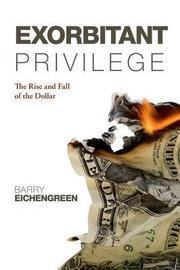
Barry Eichengreen · 2011

How the dollar became the world's currency, what it gives the US, what may follow.

Barry Eichengreen · 1996

Money between nations from the gold standard to floating rates and the euro.

Benn Steil · 2013

The 1944 Bretton Woods conference as a contest between Keynes and Harry Dexter White.

Benjamin Graham · 1937

Subtitled A Modern Ever-Normal Granary; commodity-reserve currency plan.

Recommended by: Mohnish Pabrai

Saifedean Ammous · 2018

Sound money must hold value over time, and Bitcoin's fixed supply makes it such.

Where it sits in the reference 2

Assets
Financial history

Topics

EconomicsFinance and Markets