Updates

  1. Person pages list letters, writing, profiles and links as sortable tables with filters, and show each person's companies as links; Fund letters show each letter's description in its own column.
  2. Experts show a checked job title and a short description of each person; 30 more people have photographs.
  3. Every company, fund, university and publication the experts work for has a page listing the people there.
  4. Fund letters show each letter's thesis and filter by it; 225 person pages list the essays, columns and newsletter issues the person wrote.
  5. Person pages list every essay and newsletter issue a person wrote, and their own books as a table in List view.
  6. Recommends shows the five largest kinds of book and the rest under More; browse pictures load sooner.
  7. Podcasts and talks link the original episode, filter by Audio and video or Press, and list each publisher once.
  8. Pages are wider, Recommends has List and Grid, and a filter clicked again turns off.
  9. Book cards sit in a ruled grid with Open Library and Goodreads links and each book's one-line note.
  10. Funds is now Investors; each investor's styles are buttons that filter the table.
  11. Podcasts and talks on a person's page filter by year and publisher and show as a list or a grid of pictures.
  12. Quotes show only people's own words: 472 summaries written by list sites are gone.
  13. Country pages open from Browse again, and every link on the shelf lands on a page.
  14. Subject and person pages show their sections as tabs, and each book appears once on a person's page.
  15. Book cards show the quote, who said it and the source; grids show five cards to a row.
  16. On a phone, a menu holds the sections, search, Updates, Feedback and dark mode.
  17. Feedback takes a screenshot of the page with no browser prompt, opens a screenshot full size when you click it, and clears itself once sent.
  18. Book cards are centred, search names the topic each book sits in, and any text cut short shows whole on hover.
  19. Search groups its results by kind: people, companies, geographies, subjects, topics, books, funds, fund letters and papers.
  20. The Books table lists who recommended each book by name, and the browser tab names the section you are in.
  21. Feedback can take a screenshot of the page, or one you paste or choose, and opens in the corner beside Updates.
  22. Each rail button reopens its section where you left it, and Browse, Table and People show on every book and subject page.
  23. Filters grey out choices that hold nothing instead of hiding them, and Books › People filters by authors or recommenders.
  24. Feedback takes a subject line and up to three screenshots.
  25. Biographies are grouped by the person they are about: 41 new pages, from Abraham Lincoln to Lee Kuan Yew.
  26. Sport splits into 23 sports, and Religion into one topic per faith.
  27. Book lists show as cards: the cover, one recommendation quote and every recommender by name.
  28. Seventeen subjects that had two or three pages under different names now have one page each.
  29. Every page lists its Experts as authors and recommenders, with a link to them on the Experts tab.
  30. Economics, Financial history, Financial panics and Accounting are subjects of their own, with one page per financial crisis.
  31. Book, person and subject pages open inside the app, so the tabs stay in view.
  32. 996 more book covers, and photographs or logos for 227 more people and companies.
  33. Books › Browse shows every subject as cards, and the rail holds Fund letters, Papers, Experts, Books and Funds.
  34. Every topic over 150 books splits into narrower topics, each with a page of its own.

Send feedback

What is it?
Screenshots, up to 3 (optional)
or paste one with Ctrl+V

We use your email only to reply to you.

Storage and Stability

Storage and Stability

Benjamin Graham
1937
T4 298 pages · about 4h 58m to read Open Librarygoodreads

Subtitled A Modern Ever-Normal Granary; commodity-reserve currency plan.

Summary

Graham wrote this in 1937 proposing a commodity reserve currency, in which a country's currency would be backed by a fixed basket of storable raw materials rather than by gold alone.

The mechanism he proposes works in both directions. The government would stand ready to buy the defined basket at a fixed price and to sell it at a slightly higher one, which puts a floor under commodity prices during gluts and a ceiling during shortages. Because the government buys when prices are low and sells when they are high, it accumulates reserves during depressions, which injects money precisely when demand has collapsed, and releases them during booms, which withdraws money when the economy is overheating. The scheme is therefore counter-cyclical monetary policy and a strategic reserve simultaneously.

His argument for it was written in the context of the 1930s, when agricultural and commodity surpluses coexisted with unemployment and hunger, and he treats that coexistence as evidence of a monetary rather than a productive failure.

Graham pursued this proposal for decades and it was taken seriously by Keynes, Friedman and others without being adopted. Its problems are practical: selecting and weighting the basket, the storage costs of the commodities involved, the perishability of several candidates, and the international coordination the scheme would require.

The book is of interest today as a monetary proposal from the person best known for security analysis, and because the counter-cyclical buffer stock logic recurs in strategic reserve and price stabilisation debates.

Key takeaways 7

  1. A currency could be backed by a fixed basket of storable commodities rather than by gold, with the government standing ready to buy and sell the basket at fixed prices.
  2. Such a scheme is automatically counter-cyclical, since the government accumulates reserves and injects money when prices are low and releases them when prices are high.
  3. Buffer stock accumulation during a depression puts a floor under commodity prices and supplies money at the moment demand has collapsed.
  4. Simultaneous commodity surpluses and human deprivation indicate a monetary and distributive failure rather than a failure of production.
  5. A commodity-backed currency ties money to things people actually consume rather than to a metal with limited industrial use.
  6. The practical obstacles are basket selection and weighting, storage cost, perishability and the international coordination required.
  7. Graham pursued this proposal for decades and it was engaged with seriously by leading economists without ever being adopted.

Who should read it

Readers interested in monetary proposals and buffer stock schemes, and in the economic work of the person known for security analysis.

About Benjamin Graham

Co-founder, Graham-Newman Corporation; lecturer in finance, Columbia Business School 1928-1956

Security Analysis and The Intelligent Investor are the founding texts of value investing and remain the primary source every later value investor argues from.

Graham-Newman Corporation, Columbia Business School

Who recommended it 1 · 1 direct

Similar books 6

Chosen by shared topics, the entries that hold them, and the people who recommended both.
Benjamin Graham · 1996

Published posthumously; edited by Seymour Chatman.

Recommended by: Mohnish Pabrai

James Rickards · 2011

Popular account of competitive devaluation as policy.
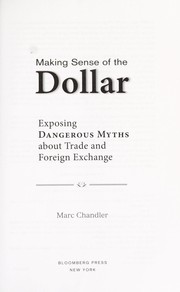
Marc Chandler · 2009

Working FX strategist on what actually moves the dollar.
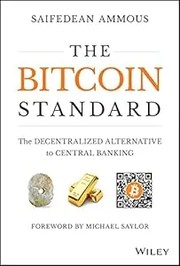
Saifedean Ammous · 2018

Sound money must hold value over time, and Bitcoin's fixed supply makes it such.

Sidney Homer, Richard Sylla · 1963

Interest rates from Babylonian lending through Rome and Europe to modern bonds.

Recommended by: Mohnish Pabrai

Where it sits in the reference 2

Investors
Financial history

Topics

EconomicsFinance and Markets