Updates

  1. Person pages list letters, writing, profiles and links as sortable tables with filters, and show each person's companies as links; Fund letters show each letter's description in its own column.
  2. Experts show a checked job title and a short description of each person; 30 more people have photographs.
  3. Every company, fund, university and publication the experts work for has a page listing the people there.
  4. Fund letters show each letter's thesis and filter by it; 225 person pages list the essays, columns and newsletter issues the person wrote.
  5. Person pages list every essay and newsletter issue a person wrote, and their own books as a table in List view.
  6. Recommends shows the five largest kinds of book and the rest under More; browse pictures load sooner.
  7. Podcasts and talks link the original episode, filter by Audio and video or Press, and list each publisher once.
  8. Pages are wider, Recommends has List and Grid, and a filter clicked again turns off.
  9. Book cards sit in a ruled grid with Open Library and Goodreads links and each book's one-line note.
  10. Funds is now Investors; each investor's styles are buttons that filter the table.
  11. Podcasts and talks on a person's page filter by year and publisher and show as a list or a grid of pictures.
  12. Quotes show only people's own words: 472 summaries written by list sites are gone.
  13. Country pages open from Browse again, and every link on the shelf lands on a page.
  14. Subject and person pages show their sections as tabs, and each book appears once on a person's page.
  15. Book cards show the quote, who said it and the source; grids show five cards to a row.
  16. On a phone, a menu holds the sections, search, Updates, Feedback and dark mode.
  17. Feedback takes a screenshot of the page with no browser prompt, opens a screenshot full size when you click it, and clears itself once sent.
  18. Book cards are centred, search names the topic each book sits in, and any text cut short shows whole on hover.
  19. Search groups its results by kind: people, companies, geographies, subjects, topics, books, funds, fund letters and papers.
  20. The Books table lists who recommended each book by name, and the browser tab names the section you are in.
  21. Feedback can take a screenshot of the page, or one you paste or choose, and opens in the corner beside Updates.
  22. Each rail button reopens its section where you left it, and Browse, Table and People show on every book and subject page.
  23. Filters grey out choices that hold nothing instead of hiding them, and Books › People filters by authors or recommenders.
  24. Feedback takes a subject line and up to three screenshots.
  25. Biographies are grouped by the person they are about: 41 new pages, from Abraham Lincoln to Lee Kuan Yew.
  26. Sport splits into 23 sports, and Religion into one topic per faith.
  27. Book lists show as cards: the cover, one recommendation quote and every recommender by name.
  28. Seventeen subjects that had two or three pages under different names now have one page each.
  29. Every page lists its Experts as authors and recommenders, with a link to them on the Experts tab.
  30. Economics, Financial history, Financial panics and Accounting are subjects of their own, with one page per financial crisis.
  31. Book, person and subject pages open inside the app, so the tabs stay in view.
  32. 996 more book covers, and photographs or logos for 227 more people and companies.
  33. Books › Browse shows every subject as cards, and the rail holds Fund letters, Papers, Experts, Books and Funds.
  34. Every topic over 150 books splits into narrower topics, each with a page of its own.

Send feedback

What is it?
Screenshots, up to 3 (optional)
or paste one with Ctrl+V

We use your email only to reply to you.

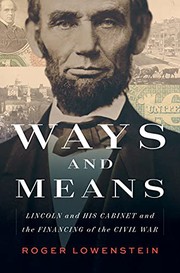
Ways and Means: Lincoln and His Cabinet and

Ways and Means: Lincoln and His Cabinet and the Financing of the Civil War

Roger Lowenstein
2022
T4 448 pages · about 7h 28m to read Open Librarygoodreads

Summary

Roger Lowenstein examines how the Union financed the Civil War and argues that the financial measures adopted transformed the American state more permanently than the military outcome did.

The measures were extraordinary for a government that had previously done almost nothing. Salmon Chase, the Treasury Secretary, issued greenbacks, paper money not convertible into specie, which was the first national currency; Congress imposed the first federal income tax; the National Banking Acts created a system of federally chartered banks required to hold government bonds against their note issue, which created a market for the debt and a uniform currency simultaneously; and Jay Cooke sold bonds directly to hundreds of thousands of ordinary citizens through a distribution network he built, which was the first mass retail securities distribution.

Lowenstein sets these against Confederate finance, which failed comprehensively: the South could not tax effectively, could not borrow abroad after the cotton embargo failed, and financed itself almost entirely by printing, producing hyperinflation. He also covers the parallel legislation that reshaped the country, including the Homestead Act, the Pacific Railway Act and the land grant colleges, all passed by a Congress from which the Southern members had withdrawn. His argument is that the war created a national economy and a national state, and that the financial machinery was the instrument. The book is narrative history and well told.

Key takeaways 7

  1. The Union financed the war through greenbacks, the first federal income tax, a national banking system and mass retail bond sales.
  2. Greenbacks were the first national paper currency and were issued as legal tender without specie convertibility.
  3. The National Banking Acts required federally chartered banks to hold government bonds, which created demand for the debt and a uniform currency at once.
  4. Jay Cooke sold bonds directly to hundreds of thousands of citizens, which was the first mass retail securities distribution.
  5. Confederate finance failed because the South could not tax, could not borrow abroad, and financed itself by printing.
  6. A Congress without Southern members passed the homestead, railway and land grant legislation that reshaped the country alongside the war finance.
  7. Lowenstein argues the financial machinery created a national state and a national economy more durably than the military outcome did.

Who should read it

Investors and readers of financial history who want the origin of American national currency, income taxation and mass securities distribution.

About Roger Lowenstein

Financial journalist and author; Wall Street Journal reporter for over a decade

Buffett: The Making of an American Capitalist and When Genius Failed are the standard reference accounts of Buffett's rise and of the LTCM collapse.

Sequoia Fund, The Wall Street Journal

Similar books 6

Chosen by shared topics, the entries that hold them, and the people who recommended both.
Roger Lowenstein · 2015

How the Federal Reserve was argued into existence, from the 1907 panic to 1913.

Recommended by: Seth Klarman
Sidney Homer, Richard Sylla · 1963

Interest rates from Babylonian lending through Rome and Europe to modern bonds.

Recommended by: Mohnish Pabrai
Barry Eichengreen · 1992

How the gold standard spread the Depression, and why leaving it early meant recovery.

Steven B. Webb · 1989

Monthly data tested against explanations of Germany's 1919 to 1923 inflation.

Mauricio Drelichman, Hans-Joachim Voth · 2014

Why bankers kept lending to Philip II of Spain despite four payment suspensions.
Where it sits in the reference 2

Journalists
Financial history

Topics

Financial HistoryGeneral HistoryFinancial History