
Updates

  1. Person pages list letters, writing, profiles and links as sortable tables with filters, and show each person's companies as links; Fund letters show each letter's description in its own column.
  2. Experts show a checked job title and a short description of each person; 30 more people have photographs.
  3. Every company, fund, university and publication the experts work for has a page listing the people there.
  4. Fund letters show each letter's thesis and filter by it; 225 person pages list the essays, columns and newsletter issues the person wrote.
  5. Person pages list every essay and newsletter issue a person wrote, and their own books as a table in List view.
  6. Recommends shows the five largest kinds of book and the rest under More; browse pictures load sooner.
  7. Podcasts and talks link the original episode, filter by Audio and video or Press, and list each publisher once.
  8. Pages are wider, Recommends has List and Grid, and a filter clicked again turns off.
  9. Book cards sit in a ruled grid with Open Library and Goodreads links and each book's one-line note.
  10. Funds is now Investors; each investor's styles are buttons that filter the table.
  11. Podcasts and talks on a person's page filter by year and publisher and show as a list or a grid of pictures.
  12. Quotes show only people's own words: 472 summaries written by list sites are gone.
  13. Country pages open from Browse again, and every link on the shelf lands on a page.
  14. Subject and person pages show their sections as tabs, and each book appears once on a person's page.
  15. Book cards show the quote, who said it and the source; grids show five cards to a row.
  16. On a phone, a menu holds the sections, search, Updates, Feedback and dark mode.
  17. Feedback takes a screenshot of the page with no browser prompt, opens a screenshot full size when you click it, and clears itself once sent.
  18. Book cards are centred, search names the topic each book sits in, and any text cut short shows whole on hover.
  19. Search groups its results by kind: people, companies, geographies, subjects, topics, books, funds, fund letters and papers.
  20. The Books table lists who recommended each book by name, and the browser tab names the section you are in.
  21. Feedback can take a screenshot of the page, or one you paste or choose, and opens in the corner beside Updates.
  22. Each rail button reopens its section where you left it, and Browse, Table and People show on every book and subject page.
  23. Filters grey out choices that hold nothing instead of hiding them, and Books › People filters by authors or recommenders.
  24. Feedback takes a subject line and up to three screenshots.
  25. Biographies are grouped by the person they are about: 41 new pages, from Abraham Lincoln to Lee Kuan Yew.
  26. Sport splits into 23 sports, and Religion into one topic per faith.
  27. Book lists show as cards: the cover, one recommendation quote and every recommender by name.
  28. Seventeen subjects that had two or three pages under different names now have one page each.
  29. Every page lists its Experts as authors and recommenders, with a link to them on the Experts tab.
  30. Economics, Financial history, Financial panics and Accounting are subjects of their own, with one page per financial crisis.
  31. Book, person and subject pages open inside the app, so the tabs stay in view.
  32. 996 more book covers, and photographs or logos for 227 more people and companies.
  33. Books › Browse shows every subject as cards, and the rail holds Fund letters, Papers, Experts, Books and Funds.
  34. Every topic over 150 books splits into narrower topics, each with a page of its own.

Send feedback

What is it?
Screenshots, up to 3 (optional)
or paste one with Ctrl+V

We use your email only to reply to you.

Lending to the Borrower from Hell

Lending to the Borrower from Hell

Mauricio Drelichman, Hans-Joachim Voth
2014
T2 328 pages · about 5h 28m to read Open Librarygoodreads

Philip II's serial defaults, and why bankers kept lending anyway.

Summary

Mauricio Drelichman and Hans-Joachim Voth reconstruct the finances of Philip II of Spain, who suspended payments on his debts four times between 1557 and 1596 and is the standard historical example of a serial sovereign defaulter. Their evidence is unusual: they assembled the complete surviving record of the loan contracts, or asientos, between the Spanish crown and its Genoese bankers, which lets them calculate what the lenders actually earned.

The finding overturns the received account. Lending to Philip was profitable across the whole period. The bankers charged rates that priced in the expected defaults, the settlements after each suspension typically converted short-term debt into longer-term annuities rather than writing it off, and the major banking families continued lending after each episode because the business remained attractive. The authors also show that Philip's fiscal position was sustainable by the standards of the time, with debt service well within the crown's revenue capacity, so the suspensions were liquidity events driven by silver fleet timing and war expenditure rather than insolvency.

Their explanation for why lending continued rests on coordination among the Genoese families, who could collectively withhold credit from a crown that treated any one of them badly, and on the fact that the crown needed the network's ability to move money to armies in the Netherlands. The book is quantitative economic history and demands attention, but it is clearly written. It has become a standard reference in the sovereign debt literature and is regularly cited in arguments about whether reputation or sanctions sustain sovereign lending.

Key takeaways 7

  1. Lenders to Philip II earned positive returns across his entire reign despite four suspensions of payment.
  2. Interest rates on the crown's loans priced in the expected frequency of default, so the defaults were anticipated rather than surprising.
  3. Philip's debt service was sustainable relative to revenue, which makes his suspensions liquidity events rather than insolvency.
  4. Settlements after each suspension converted short-term debt into long-term annuities rather than imposing outright losses.
  5. The Genoese banking families could coordinate to withhold credit, which enforced the crown's compliance without any legal mechanism.
  6. The crown needed the bankers' payment network to fund armies abroad, and that service was harder to replace than the money itself.
  7. Sovereign lending can be sustained by relationship and coordination among a small number of lenders, without courts or collateral.

Who should read it

Investors in sovereign debt and anyone interested in how lending to governments survives repeated default, supported by unusually complete contract-level evidence.

Similar books 6

Chosen by shared topics, the entries that hold them, and the people who recommended both.

Barry Eichengreen · 1992

How the gold standard spread the Depression, and why leaving it early meant recovery.

Steven B. Webb · 1989

Monthly data tested against explanations of Germany's 1919 to 1923 inflation.
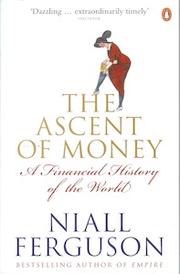
Niall Ferguson · 2008

The history of finance by instrument: credit, bonds, stocks, insurance and property.

Frederick Taylor · 2013

Modern retelling with more on the stabilisation and the Rentenmark.
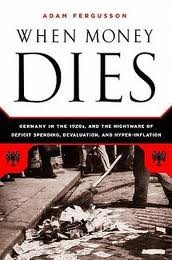
Adam Fergusson · 1975

What Germany's 1921 to 1923 hyperinflation did to ordinary people's lives.

Recommended by: Balaji S. Srinivasan
Sidney Homer, Richard Sylla · 1963

Interest rates from Babylonian lending through Rome and Europe to modern bonds.

Recommended by: Mohnish Pabrai

Where it sits in the reference 2

Geographies
Financial history

Topics

Financial HistoryGeneral HistoryEconomicsFinancial History