Updates

  1. Person pages list letters, writing, profiles and links as sortable tables with filters, and show each person's companies as links; Fund letters show each letter's description in its own column.
  2. Experts show a checked job title and a short description of each person; 30 more people have photographs.
  3. Every company, fund, university and publication the experts work for has a page listing the people there.
  4. Fund letters show each letter's thesis and filter by it; 225 person pages list the essays, columns and newsletter issues the person wrote.
  5. Person pages list every essay and newsletter issue a person wrote, and their own books as a table in List view.
  6. Recommends shows the five largest kinds of book and the rest under More; browse pictures load sooner.
  7. Podcasts and talks link the original episode, filter by Audio and video or Press, and list each publisher once.
  8. Pages are wider, Recommends has List and Grid, and a filter clicked again turns off.
  9. Book cards sit in a ruled grid with Open Library and Goodreads links and each book's one-line note.
  10. Funds is now Investors; each investor's styles are buttons that filter the table.
  11. Podcasts and talks on a person's page filter by year and publisher and show as a list or a grid of pictures.
  12. Quotes show only people's own words: 472 summaries written by list sites are gone.
  13. Country pages open from Browse again, and every link on the shelf lands on a page.
  14. Subject and person pages show their sections as tabs, and each book appears once on a person's page.
  15. Book cards show the quote, who said it and the source; grids show five cards to a row.
  16. On a phone, a menu holds the sections, search, Updates, Feedback and dark mode.
  17. Feedback takes a screenshot of the page with no browser prompt, opens a screenshot full size when you click it, and clears itself once sent.
  18. Book cards are centred, search names the topic each book sits in, and any text cut short shows whole on hover.
  19. Search groups its results by kind: people, companies, geographies, subjects, topics, books, funds, fund letters and papers.
  20. The Books table lists who recommended each book by name, and the browser tab names the section you are in.
  21. Feedback can take a screenshot of the page, or one you paste or choose, and opens in the corner beside Updates.
  22. Each rail button reopens its section where you left it, and Browse, Table and People show on every book and subject page.
  23. Filters grey out choices that hold nothing instead of hiding them, and Books › People filters by authors or recommenders.
  24. Feedback takes a subject line and up to three screenshots.
  25. Biographies are grouped by the person they are about: 41 new pages, from Abraham Lincoln to Lee Kuan Yew.
  26. Sport splits into 23 sports, and Religion into one topic per faith.
  27. Book lists show as cards: the cover, one recommendation quote and every recommender by name.
  28. Seventeen subjects that had two or three pages under different names now have one page each.
  29. Every page lists its Experts as authors and recommenders, with a link to them on the Experts tab.
  30. Economics, Financial history, Financial panics and Accounting are subjects of their own, with one page per financial crisis.
  31. Book, person and subject pages open inside the app, so the tabs stay in view.
  32. 996 more book covers, and photographs or logos for 227 more people and companies.
  33. Books › Browse shows every subject as cards, and the rail holds Fund letters, Papers, Experts, Books and Funds.
  34. Every topic over 150 books splits into narrower topics, each with a page of its own.

Send feedback

What is it?
Screenshots, up to 3 (optional)
or paste one with Ctrl+V

We use your email only to reply to you.

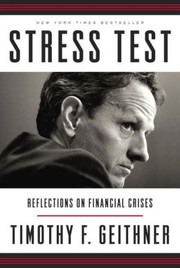
Stress Test: Reflections on Financial Crises

Stress Test: Reflections on Financial Crises

Timothy F. Geithner
2014
T2 592 pages · about 9h 52m to read Open Librarygoodreads

Insider account by the New York Fed president who ran the $182bn rescue.

Summary

Geithner was president of the Federal Reserve Bank of New York from 2003 and Treasury Secretary from 2009 to 2013, and this is his account of the crisis and its aftermath from inside the response. It covers his earlier work on the Mexican, Asian and Russian crises at Treasury, which shaped his views on how financial panics end.

His central argument is that a financial panic is a run, that runs end only when the government convinces creditors it will stand behind the system, and that measures which appear morally satisfying, including letting institutions fail and imposing losses on creditors, make panics worse rather than better. He defends the AIG rescue on those grounds and argues that Lehman's failure was not a choice but the absence of a legal authority to prevent it.

The most substantive policy material concerns the 2009 bank stress tests, which he designed against considerable internal opposition. The tests published capital shortfalls under an adverse scenario and required private capital raising, which Geithner argues restored confidence more effectively than nationalisation would have. He addresses the criticism that the response rescued banks while doing too little for homeowners, and his defence, that the mortgage programmes were constrained by legal authority and by operational capacity, is the weakest section of the book.

This is a participant's account with obvious interests. Geithner does not seriously engage with the argument that the response entrenched moral hazard or with the political consequences of rescuing institutions while households were foreclosed on. It is the clearest available statement of the case for the response as executed, and should be read against critics including Barofsky and Stiglitz.

Key takeaways 8

  1. A financial panic is a run, and runs end only when creditors believe the government will stand behind the system.
  2. Measures that appear morally satisfying, including letting institutions fail and imposing losses on creditors, intensify a panic rather than resolving it.
  3. Overwhelming force applied early is cheaper than incremental intervention, because partial measures signal that the authorities lack either capacity or will.
  4. The Lehman failure resulted from the absence of legal authority to act rather than from a policy decision, which Geithner states directly and critics dispute.
  5. The 2009 stress tests restored confidence by publishing capital shortfalls under an adverse scenario and requiring private capital raising against them.
  6. Transparency about losses works better than concealment once a credible backstop exists, and worse before one does.
  7. Crisis authorities operate with incomplete information under time pressure, and the choice is between imperfect actions rather than between right and wrong ones.
  8. Geithner does not seriously engage with the moral hazard consequences or with the political effects of rescuing institutions while households lost homes.

Who should read it

Investors and policy-minded readers who want the official case for the 2008 response from its principal architect, read against its critics.

Who recommended it 4 · 2 direct

Similar books 6

Chosen by shared topics, the entries that hold them, and the people who recommended both.

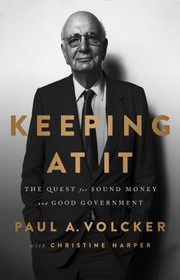
Paul A Volcker · 2018

The Fed chair's memoir of his career at Treasury and the Fed, and beating inflation.

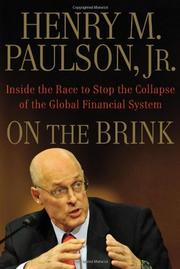
Henry M. Paulson · 2010

Insider memoir: the Treasury Secretary's version of the same weeks.

Recommended by: Mohnish Pabrai
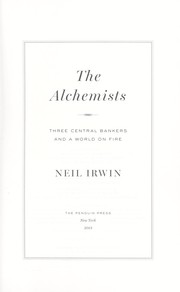
Neil Irwin · 2013

The 2007 to 2012 crises through three central bankers: Bernanke, King and Trichet.

Where it sits in the reference 3

Companies
Financial panics
Financial history

Topics

Financial HistoryEconomicsBiography and MemoirPolitical Leaders and PolicymakersFinance ministers and central bankers