Updates

  1. Person pages list letters, writing, profiles and links as sortable tables with filters, and show each person's companies as links; Fund letters show each letter's description in its own column.
  2. Experts show a checked job title and a short description of each person; 30 more people have photographs.
  3. Every company, fund, university and publication the experts work for has a page listing the people there.
  4. Fund letters show each letter's thesis and filter by it; 225 person pages list the essays, columns and newsletter issues the person wrote.
  5. Person pages list every essay and newsletter issue a person wrote, and their own books as a table in List view.
  6. Recommends shows the five largest kinds of book and the rest under More; browse pictures load sooner.
  7. Podcasts and talks link the original episode, filter by Audio and video or Press, and list each publisher once.
  8. Pages are wider, Recommends has List and Grid, and a filter clicked again turns off.
  9. Book cards sit in a ruled grid with Open Library and Goodreads links and each book's one-line note.
  10. Funds is now Investors; each investor's styles are buttons that filter the table.
  11. Podcasts and talks on a person's page filter by year and publisher and show as a list or a grid of pictures.
  12. Quotes show only people's own words: 472 summaries written by list sites are gone.
  13. Country pages open from Browse again, and every link on the shelf lands on a page.
  14. Subject and person pages show their sections as tabs, and each book appears once on a person's page.
  15. Book cards show the quote, who said it and the source; grids show five cards to a row.
  16. On a phone, a menu holds the sections, search, Updates, Feedback and dark mode.
  17. Feedback takes a screenshot of the page with no browser prompt, opens a screenshot full size when you click it, and clears itself once sent.
  18. Book cards are centred, search names the topic each book sits in, and any text cut short shows whole on hover.
  19. Search groups its results by kind: people, companies, geographies, subjects, topics, books, funds, fund letters and papers.
  20. The Books table lists who recommended each book by name, and the browser tab names the section you are in.
  21. Feedback can take a screenshot of the page, or one you paste or choose, and opens in the corner beside Updates.
  22. Each rail button reopens its section where you left it, and Browse, Table and People show on every book and subject page.
  23. Filters grey out choices that hold nothing instead of hiding them, and Books › People filters by authors or recommenders.
  24. Feedback takes a subject line and up to three screenshots.
  25. Biographies are grouped by the person they are about: 41 new pages, from Abraham Lincoln to Lee Kuan Yew.
  26. Sport splits into 23 sports, and Religion into one topic per faith.
  27. Book lists show as cards: the cover, one recommendation quote and every recommender by name.
  28. Seventeen subjects that had two or three pages under different names now have one page each.
  29. Every page lists its Experts as authors and recommenders, with a link to them on the Experts tab.
  30. Economics, Financial history, Financial panics and Accounting are subjects of their own, with one page per financial crisis.
  31. Book, person and subject pages open inside the app, so the tabs stay in view.
  32. 996 more book covers, and photographs or logos for 227 more people and companies.
  33. Books › Browse shows every subject as cards, and the rail holds Fund letters, Papers, Experts, Books and Funds.
  34. Every topic over 150 books splits into narrower topics, each with a page of its own.

Send feedback

What is it?
Screenshots, up to 3 (optional)
or paste one with Ctrl+V

We use your email only to reply to you.

On the Brink: Inside the Race to Stop the Co

On the Brink: Inside the Race to Stop the Collapse of the Global Financial System

Henry M. Paulson
2010
T4 496 pages · about 8h 16m to read Open Librarygoodreads

Insider memoir: the Treasury Secretary's version of the same weeks.

Summary

Paulson was Treasury Secretary from 2006 to January 2009 and wrote this account of the crisis from inside the department, covering the period from his arrival through the Troubled Asset Relief Program and the transition.

The substantive material is the decision record. Paulson covers the Bear Stearns rescue, the conservatorship of Fannie Mae and Freddie Mac, the Lehman weekend and his account of why no rescue occurred, the AIG intervention two days later, the design and passage of the Troubled Asset Relief Program including its initial rejection by Congress, and the decision to inject capital directly into banks rather than buy troubled assets as the legislation had been sold on.

His explanation of Lehman is that no buyer would take it without government support, that the Federal Reserve had no legal authority to lend without adequate collateral, and that Lehman's collateral was insufficient. Critics including Bair and others argue the legal constraint was interpreted flexibly two days later for AIG and could have been for Lehman, and that political considerations were present. Paulson disputes this and the dispute is not resolvable from the public record.

The forced capital injection into nine large banks, including institutions that did not want it, is the decision he defends most strongly, on the ground that letting banks choose would have stigmatised those that accepted.

The book is a participant's defence written shortly after the events. It should be read alongside the accounts by Bernanke, Geithner and Bair, each of which places responsibility differently.

Key takeaways 7

  1. The Treasury and Federal Reserve had no pre-existing legal mechanism for resolving a large investment bank, which shaped every decision that followed.
  2. Paulson's account of Lehman is that no buyer would take it without government support and the Federal Reserve lacked authority to lend against insufficient collateral.
  3. Capital was injected into nine large banks simultaneously including institutions that did not want it, because letting banks choose would have stigmatised those that accepted.
  4. The Troubled Asset Relief Program was legislated as an asset purchase programme and was used for capital injection, because capital was the binding constraint.
  5. Fannie Mae and Freddie Mac were placed into conservatorship because their implicit guarantee had become explicit and their capital was inadequate to their obligations.
  6. Congressional rejection of the initial legislation caused an immediate market collapse, which demonstrated the market was pricing the rescue rather than the underlying assets.
  7. Crisis decisions were made with incomplete information under extreme time pressure, and the accounts of the participants place responsibility differently.

Who should read it

Investors and policy readers who want the Treasury's account of the crisis decisions, read alongside the other participants' memoirs.

Who recommended it 1 · 1 direct

Similar books 6

Chosen by shared topics, the entries that hold them, and the people who recommended both.
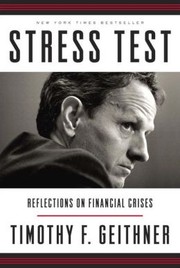
Timothy F. Geithner · 2014

The 2008 crisis and its aftermath, from inside the New York Fed and the Treasury.

Sheila Bair · 2012

The 2008 crisis from inside the FDIC, which closed failed banks and guarded deposits.

Recommended by: Mohnish Pabrai

Viral V. Acharya, Matthew Richardson, Stijn van Nieuwerburgh, Lawrence J. White · 2011

Recommended by: Mohnish Pabrai

Alan S. Blinder · 2013

The 2008 crisis, the policy response and the aftermath, for general readers.

Where it sits in the reference 1

Financial panics

Topics

Financial HistoryPolitics and GovernmentBiography and MemoirPolitical Leaders and PolicymakersRegulation, central banks and public policyFinance ministers and central bankers