Updates

  1. Person pages list letters, writing, profiles and links as sortable tables with filters, and show each person's companies as links; Fund letters show each letter's description in its own column.
  2. Experts show a checked job title and a short description of each person; 30 more people have photographs.
  3. Every company, fund, university and publication the experts work for has a page listing the people there.
  4. Fund letters show each letter's thesis and filter by it; 225 person pages list the essays, columns and newsletter issues the person wrote.
  5. Person pages list every essay and newsletter issue a person wrote, and their own books as a table in List view.
  6. Recommends shows the five largest kinds of book and the rest under More; browse pictures load sooner.
  7. Podcasts and talks link the original episode, filter by Audio and video or Press, and list each publisher once.
  8. Pages are wider, Recommends has List and Grid, and a filter clicked again turns off.
  9. Book cards sit in a ruled grid with Open Library and Goodreads links and each book's one-line note.
  10. Funds is now Investors; each investor's styles are buttons that filter the table.
  11. Podcasts and talks on a person's page filter by year and publisher and show as a list or a grid of pictures.
  12. Quotes show only people's own words: 472 summaries written by list sites are gone.
  13. Country pages open from Browse again, and every link on the shelf lands on a page.
  14. Subject and person pages show their sections as tabs, and each book appears once on a person's page.
  15. Book cards show the quote, who said it and the source; grids show five cards to a row.
  16. On a phone, a menu holds the sections, search, Updates, Feedback and dark mode.
  17. Feedback takes a screenshot of the page with no browser prompt, opens a screenshot full size when you click it, and clears itself once sent.
  18. Book cards are centred, search names the topic each book sits in, and any text cut short shows whole on hover.
  19. Search groups its results by kind: people, companies, geographies, subjects, topics, books, funds, fund letters and papers.
  20. The Books table lists who recommended each book by name, and the browser tab names the section you are in.
  21. Feedback can take a screenshot of the page, or one you paste or choose, and opens in the corner beside Updates.
  22. Each rail button reopens its section where you left it, and Browse, Table and People show on every book and subject page.
  23. Filters grey out choices that hold nothing instead of hiding them, and Books › People filters by authors or recommenders.
  24. Feedback takes a subject line and up to three screenshots.
  25. Biographies are grouped by the person they are about: 41 new pages, from Abraham Lincoln to Lee Kuan Yew.
  26. Sport splits into 23 sports, and Religion into one topic per faith.
  27. Book lists show as cards: the cover, one recommendation quote and every recommender by name.
  28. Seventeen subjects that had two or three pages under different names now have one page each.
  29. Every page lists its Experts as authors and recommenders, with a link to them on the Experts tab.
  30. Economics, Financial history, Financial panics and Accounting are subjects of their own, with one page per financial crisis.
  31. Book, person and subject pages open inside the app, so the tabs stay in view.
  32. 996 more book covers, and photographs or logos for 227 more people and companies.
  33. Books › Browse shows every subject as cards, and the rail holds Fund letters, Papers, Experts, Books and Funds.
  34. Every topic over 150 books splits into narrower topics, each with a page of its own.

Send feedback

What is it?
Screenshots, up to 3 (optional)
or paste one with Ctrl+V

We use your email only to reply to you.

Bull by the Horns: Fighting to Save Main Str

Bull by the Horns: Fighting to Save Main Street from Wall Street and Wall Street from Itself

Sheila Bair
2012
T2 415 pages · about 6h 55m to read Open Librarygoodreads

FDIC chair's own account of seizing WaMu and selling it to JPMorgan.

Summary

Bair chaired the Federal Deposit Insurance Corporation from 2006 to 2011 and this is her account of the crisis from inside the agency responsible for resolving failed banks and protecting insured deposits.

Her institutional position gives the book a distinct view. The FDIC resolves banks by closing them, imposing losses on shareholders and unsecured creditors, and transferring deposits to an acquirer, which it did for hundreds of institutions during the crisis including Washington Mutual and IndyMac. Bair argues this mechanism worked and should have been applied to the largest institutions rather than recapitalising them, and she documents her disagreements with Treasury under Paulson and Geithner and with the Federal Reserve over the terms of assistance, over the debt guarantee programme, over Citigroup specifically, and over whether shareholders and creditors should have absorbed losses.

Her other main theme is loan modification. She argues the mortgage servicing industry had no incentive to modify loans, that the programmes designed to encourage modification were structured to protect servicers and investors rather than borrowers, and that a mandatory systematic modification programme would have reduced foreclosures and the resulting economic damage substantially.

The book is a participant's account and settles scores. Bair's characterisations of Geithner and of the Treasury position are contested and other memoirs from the period tell it differently. Her substantive positions on resolution authority and on creditor loss allocation have been substantially adopted in subsequent regulation.

Key takeaways 7

  1. The FDIC's resolution mechanism, which closes a bank and imposes losses on shareholders and unsecured creditors, worked for hundreds of institutions during the crisis.
  2. The largest institutions should have been resolved rather than recapitalised, with losses imposed on shareholders and creditors rather than absorbed publicly.
  3. Assistance terms during the crisis protected creditors of large institutions in ways that were not applied to smaller banks that were closed.
  4. Mortgage servicers had no financial incentive to modify loans, because their fee income came from servicing and foreclosure rather than from recovery.
  5. Loan modification programmes were structured to protect servicers and investors rather than to reduce foreclosures, which is why they achieved so little.
  6. Deposit insurance and a credible resolution mechanism are what prevent bank runs, and both depend on the resolution actually being applied.
  7. Regulatory agencies with different mandates reach different conclusions from the same facts, and the crisis response was shaped by which agency prevailed.

Who should read it

Investors and policy readers who want the bank resolution perspective on the crisis and the case for imposing creditor losses.

Who recommended it 1 · 1 direct

Similar books 6

Chosen by shared topics, the entries that hold them, and the people who recommended both.

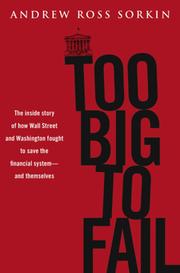
Andrew Ross Sorkin · 2009

Inside the meetings of bankers and regulators during the 2008 financial crisis.

Viral V. Acharya, Matthew Richardson, Stijn van Nieuwerburgh, Lawrence J. White · 2011

Recommended by: Mohnish Pabrai

Henry M. Paulson · 2010

Insider memoir: the Treasury Secretary's version of the same weeks.

Recommended by: Mohnish Pabrai

Where it sits in the reference 2

Companies
Financial panics

Topics

Financial HistoryPolitics and GovernmentRegulation, central banks and public policy