Updates

  1. Person pages list letters, writing, profiles and links as sortable tables with filters, and show each person's companies as links; Fund letters show each letter's description in its own column.
  2. Experts show a checked job title and a short description of each person; 30 more people have photographs.
  3. Every company, fund, university and publication the experts work for has a page listing the people there.
  4. Fund letters show each letter's thesis and filter by it; 225 person pages list the essays, columns and newsletter issues the person wrote.
  5. Person pages list every essay and newsletter issue a person wrote, and their own books as a table in List view.
  6. Recommends shows the five largest kinds of book and the rest under More; browse pictures load sooner.
  7. Podcasts and talks link the original episode, filter by Audio and video or Press, and list each publisher once.
  8. Pages are wider, Recommends has List and Grid, and a filter clicked again turns off.
  9. Book cards sit in a ruled grid with Open Library and Goodreads links and each book's one-line note.
  10. Funds is now Investors; each investor's styles are buttons that filter the table.
  11. Podcasts and talks on a person's page filter by year and publisher and show as a list or a grid of pictures.
  12. Quotes show only people's own words: 472 summaries written by list sites are gone.
  13. Country pages open from Browse again, and every link on the shelf lands on a page.
  14. Subject and person pages show their sections as tabs, and each book appears once on a person's page.
  15. Book cards show the quote, who said it and the source; grids show five cards to a row.
  16. On a phone, a menu holds the sections, search, Updates, Feedback and dark mode.
  17. Feedback takes a screenshot of the page with no browser prompt, opens a screenshot full size when you click it, and clears itself once sent.
  18. Book cards are centred, search names the topic each book sits in, and any text cut short shows whole on hover.
  19. Search groups its results by kind: people, companies, geographies, subjects, topics, books, funds, fund letters and papers.
  20. The Books table lists who recommended each book by name, and the browser tab names the section you are in.
  21. Feedback can take a screenshot of the page, or one you paste or choose, and opens in the corner beside Updates.
  22. Each rail button reopens its section where you left it, and Browse, Table and People show on every book and subject page.
  23. Filters grey out choices that hold nothing instead of hiding them, and Books › People filters by authors or recommenders.
  24. Feedback takes a subject line and up to three screenshots.
  25. Biographies are grouped by the person they are about: 41 new pages, from Abraham Lincoln to Lee Kuan Yew.
  26. Sport splits into 23 sports, and Religion into one topic per faith.
  27. Book lists show as cards: the cover, one recommendation quote and every recommender by name.
  28. Seventeen subjects that had two or three pages under different names now have one page each.
  29. Every page lists its Experts as authors and recommenders, with a link to them on the Experts tab.
  30. Economics, Financial history, Financial panics and Accounting are subjects of their own, with one page per financial crisis.
  31. Book, person and subject pages open inside the app, so the tabs stay in view.
  32. 996 more book covers, and photographs or logos for 227 more people and companies.
  33. Books › Browse shows every subject as cards, and the rail holds Fund letters, Papers, Experts, Books and Funds.
  34. Every topic over 150 books splits into narrower topics, each with a page of its own.

Send feedback

What is it?
Screenshots, up to 3 (optional)
or paste one with Ctrl+V

We use your email only to reply to you.

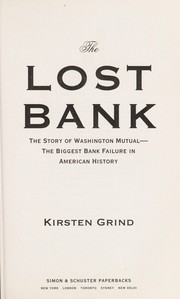
The Lost Bank: The Story of Washington Mutua

The Lost Bank: The Story of Washington Mutual, the Biggest Bank Failure in American History

Kirsten Grind
2012
T2 389 pages · about 6h 29m to read Open Librarygoodreads

The only full account, by the local reporter who covered the collapse.

Summary

Kirsten Grind covered Washington Mutual for the Puget Sound Business Journal and won awards for that reporting. This book reconstructs the bank's rise and its failure in September 2008, which remains the largest bank failure in American history.

The institutional history covers the bank's origins as a Seattle savings institution, its transformation under Kerry Killinger through serial acquisitions during the 1990s, and its positioning as a consumer-friendly alternative to large banks. Grind then documents the shift in lending: the growth of option adjustable rate mortgages and subprime lending through the Long Beach subsidiary, the compensation structures that paid loan officers more for riskier products, the underwriting deterioration, and the internal warnings from risk officers that were overruled or ignored.

The failure narrative covers the deposit run in September 2008, in which roughly seventeen billion dollars left in about ten days; the seizure by the Office of Thrift Supervision and the sale of the banking operations to JPMorgan Chase by the Federal Deposit Insurance Corporation, which wiped out bondholders and shareholders including a recent private equity investment; and the disputes about whether the bank was solvent and whether the seizure was necessary. Grind reports both the regulatory position and the shareholders' argument. The book is well reported and is the standard account. Its treatment of the internal risk management overrides is the material most useful to a bank investor.

Key takeaways 7

  1. Washington Mutual's compensation structure paid loan officers more for originating riskier mortgage products than safer ones.
  2. Internal risk officers warned about underwriting deterioration and were overruled or removed.
  3. The Long Beach subsidiary originated subprime loans whose performance was known internally to be poor well before the crisis.
  4. Roughly seventeen billion dollars of deposits left in about ten days, which is what forced the seizure.
  5. The Federal Deposit Insurance Corporation sold the banking operations while leaving bondholders and shareholders with nothing.
  6. Whether the bank was solvent at the time of seizure remains disputed, and Grind presents both positions.
  7. Serial acquisition during the 1990s left the bank with systems and portfolios its management could not see clearly.

Who should read it

Bank investors and risk professionals who want a detailed account of how origination incentives and overruled risk management destroyed a large institution.

Similar books 6

Chosen by shared topics, the entries that hold them, and the people who recommended both.

Sheila Bair · 2012

The 2008 crisis from inside the FDIC, which closed failed banks and guarded deposits.

Recommended by: Mohnish Pabrai

Andrew Ross Sorkin · 2009

Inside the meetings of bankers and regulators during the 2008 financial crisis.

Alex Brummer · 2008

By the Daily Mail City editor; Northern Rock as the opening of the crisis.
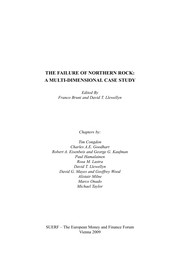
Franco Bruni, David T. Llewellyn · 2009

Northern Rock's failure from several angles: business model, funding and regulation.

Where it sits in the reference 2

Companies
Financial panics

Topics

Company HistoriesFinancial History