Updates

  1. Person pages list letters, writing, profiles and links as sortable tables with filters, and show each person's companies as links; Fund letters show each letter's description in its own column.
  2. Experts show a checked job title and a short description of each person; 30 more people have photographs.
  3. Every company, fund, university and publication the experts work for has a page listing the people there.
  4. Fund letters show each letter's thesis and filter by it; 225 person pages list the essays, columns and newsletter issues the person wrote.
  5. Person pages list every essay and newsletter issue a person wrote, and their own books as a table in List view.
  6. Recommends shows the five largest kinds of book and the rest under More; browse pictures load sooner.
  7. Podcasts and talks link the original episode, filter by Audio and video or Press, and list each publisher once.
  8. Pages are wider, Recommends has List and Grid, and a filter clicked again turns off.
  9. Book cards sit in a ruled grid with Open Library and Goodreads links and each book's one-line note.
  10. Funds is now Investors; each investor's styles are buttons that filter the table.
  11. Podcasts and talks on a person's page filter by year and publisher and show as a list or a grid of pictures.
  12. Quotes show only people's own words: 472 summaries written by list sites are gone.
  13. Country pages open from Browse again, and every link on the shelf lands on a page.
  14. Subject and person pages show their sections as tabs, and each book appears once on a person's page.
  15. Book cards show the quote, who said it and the source; grids show five cards to a row.
  16. On a phone, a menu holds the sections, search, Updates, Feedback and dark mode.
  17. Feedback takes a screenshot of the page with no browser prompt, opens a screenshot full size when you click it, and clears itself once sent.
  18. Book cards are centred, search names the topic each book sits in, and any text cut short shows whole on hover.
  19. Search groups its results by kind: people, companies, geographies, subjects, topics, books, funds, fund letters and papers.
  20. The Books table lists who recommended each book by name, and the browser tab names the section you are in.
  21. Feedback can take a screenshot of the page, or one you paste or choose, and opens in the corner beside Updates.
  22. Each rail button reopens its section where you left it, and Browse, Table and People show on every book and subject page.
  23. Filters grey out choices that hold nothing instead of hiding them, and Books › People filters by authors or recommenders.
  24. Feedback takes a subject line and up to three screenshots.
  25. Biographies are grouped by the person they are about: 41 new pages, from Abraham Lincoln to Lee Kuan Yew.
  26. Sport splits into 23 sports, and Religion into one topic per faith.
  27. Book lists show as cards: the cover, one recommendation quote and every recommender by name.
  28. Seventeen subjects that had two or three pages under different names now have one page each.
  29. Every page lists its Experts as authors and recommenders, with a link to them on the Experts tab.
  30. Economics, Financial history, Financial panics and Accounting are subjects of their own, with one page per financial crisis.
  31. Book, person and subject pages open inside the app, so the tabs stay in view.
  32. 996 more book covers, and photographs or logos for 227 more people and companies.
  33. Books › Browse shows every subject as cards, and the rail holds Fund letters, Papers, Experts, Books and Funds.
  34. Every topic over 150 books splits into narrower topics, each with a page of its own.

Send feedback

What is it?
Screenshots, up to 3 (optional)
or paste one with Ctrl+V

We use your email only to reply to you.

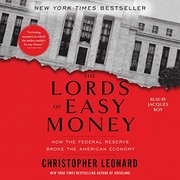
The Lords of Easy Money: How the Federal Res

The Lords of Easy Money: How the Federal Reserve Broke the American Economy

Christopher Leonard
2022
T4 384 pages · about 6h 24m to read Open Librarygoodreads

Quantitative easing told through Thomas Hoenig's dissents.

Summary

Leonard tells the story of Federal Reserve policy from 2010 through 2021 largely through Thomas Hoenig, the Kansas City Fed president who dissented at every Federal Open Market Committee meeting in 2010 against quantitative easing and zero rates. The reporting draws on FOMC transcripts, which are released after five years, and on interviews.

The argument is that quantitative easing worked mainly by raising asset prices and pushing investors into riskier assets, and that this had distributional and structural consequences the Fed did not intend and does not measure. Leonard follows the money into corporate debt, leveraged loans and collateralised loan obligations, into private equity dividend recapitalisations, and into share buybacks. He argues that cheap debt let weak companies survive, encouraged financial engineering over investment, and concentrated gains among people who already owned assets. He uses Rexnord, an industrial company loaded with debt through successive buyouts, as an extended case.

The book ends with the 2020 response, which Leonard reads as the same policy at far greater scale, and treats the subsequent inflation as partial vindication of Hoenig.

Mainstream economists dispute the central causal claims. Most evidence indicates that quantitative easing had modest effects on output and that the alternative, tighter policy in 2010, would have produced higher unemployment. Hoenig's specific warning was about inflation, which did not appear for a decade, and the 2021 inflation is generally attributed to fiscal transfers and supply shocks rather than to asset purchases. Leonard also does not seriously engage the counterfactual.

Key takeaways 7

  1. Quantitative easing transmits primarily through asset prices, so its first-order effect is to enrich people who already hold assets.
  2. Prolonged low rates pushed institutional investors into corporate credit and leveraged loans in search of yield.
  3. Cheap debt allowed companies to fund buybacks and dividend recapitalisations instead of capital investment.
  4. The Federal Reserve has no mandate covering asset price inflation or wealth distribution, so it does not measure the effects it produces.
  5. Thomas Hoenig's 2010 dissents argued that the policy would misallocate capital rather than that it would fail to stimulate.
  6. The 2020 intervention extended Federal Reserve support to corporate bonds and set a precedent for backstopping private credit.
  7. Financial engineering at companies like Rexnord transferred value to owners while increasing the fragility of the operating business.

Who should read it

Investors and operators who want the case that a decade of monetary policy reshaped credit markets and corporate behaviour, read alongside a mainstream defence of the same policy.

Who recommended it 1

Similar books 6

Chosen by shared topics, the entries that hold them, and the people who recommended both.
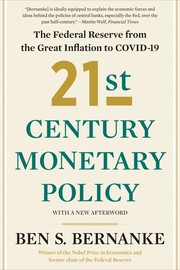
Ben S. Bernanke · 2022

Insider account of the Fed from Burns through the QE era.
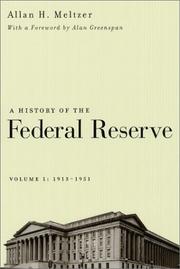
Allan H. Meltzer · 2003

The Fed from 1913 to 1951, told from its own minutes and internal memos.
Paul A Volcker · 2018

The Fed chair's memoir of his career at Treasury and the Fed, and beating inflation.

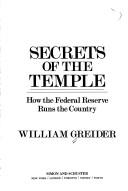
William Greider · 1987

The Volcker Fed from the inside; still the fullest political account.

Recommended by: Mohnish Pabrai
Roger Lowenstein · 2015

How the Federal Reserve was argued into existence, from the 1907 panic to 1913.

Recommended by: Seth Klarman
Where it sits in the reference 2

Financial history
Financial history

Topics

Financial HistoryEconomics