
Fragile by Design
Banking crises as outcomes of political bargains, not accidents.
Summary
Calomiris and Haber argue that whether a country's banking system is stable or crisis-prone is determined by politics rather than by economics or regulation. They call the mechanism the game of bank bargains: banking systems are the outcome of a coalition between the government, which needs credit and controls the rules, bankers, who need charters and protection, and whichever other groups have political power, typically debtors and depositors.
The method is comparative and historical. The United States has suffered repeated banking crises across two centuries. Canada, with a similar economy, similar geography and similar exposure to the same shocks, has had none since 1840. The authors attribute the difference to political structure. American populist coalitions of agrarian debtors blocked branch banking, producing thousands of small undiversified unit banks that failed whenever local conditions turned. Canada's federal structure gave chartered banks nationwide branching and a stable oligopoly, which produced diversification and durability at the cost of less competition. They extend the analysis to Mexico, where a narrow coalition produced a banking system that served the government and a small elite while providing almost no credit to the economy, and to Brazil and the United Kingdom.
The modern American chapters argue that the coalition changed in the late twentieth century: branching restrictions fell, and the new bargain traded regulatory approval for commitments on mortgage lending to designated groups, which the authors treat as the political origin of the subprime expansion.
The framework is powerful and the Canada comparison is difficult to answer. The treatment of the 2008 crisis is the contested part: most researchers find that community reinvestment obligations account for a small share of subprime origination, and that private-label securitisation drove the expansion. Readers can take the historical and comparative analysis, which is strong, without accepting that chapter.
Key takeaways 7
- Banking systems are the product of political bargains between governments, bankers and other groups with power, not of technical regulatory design.
- The United States has suffered repeated banking crises while Canada has had essentially none since 1840 despite similar economic conditions.
- American agrarian populist coalitions blocked branch banking, producing thousands of small undiversified banks that could not survive local shocks.
- Canada's stable banking oligopoly delivers durability at the cost of reduced competition, which is a trade the political system accepted.
- Governments that need to borrow must give bankers something in return, and what they give determines the system's structure.
- Where the coalition is narrow, as in Mexico, banks serve the government and a small elite and supply little credit to the wider economy.
- Regulatory reform cannot produce stability if it does not change the underlying political coalition that produced the existing structure.
Who should read it
Investors and operators in banking who want a political explanation of why national banking systems differ so persistently in their fragility.
Similar books 6
Chosen by shared topics, the entries that hold them, and the people who recommended both.
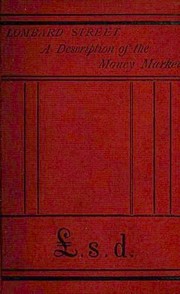
How the London money market worked, and why a central bank lends freely in a panic.
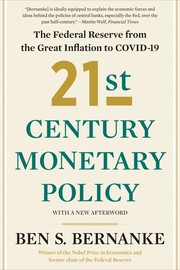
Insider account of the Fed from Burns through the QE era.
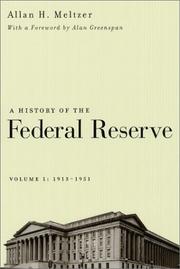
The Fed from 1913 to 1951, told from its own minutes and internal memos.
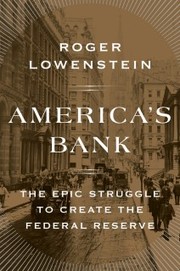
How the Federal Reserve was argued into existence, from the 1907 panic to 1913.
Recommended by: Seth Klarman
Sovereign borrowing from Italian city-states to the pandemic, and what it paid for.
Where it sits in the reference 2
Topics