Updates

  1. Person pages list letters, writing, profiles and links as sortable tables with filters, and show each person's companies as links; Fund letters show each letter's description in its own column.
  2. Experts show a checked job title and a short description of each person; 30 more people have photographs.
  3. Every company, fund, university and publication the experts work for has a page listing the people there.
  4. Fund letters show each letter's thesis and filter by it; 225 person pages list the essays, columns and newsletter issues the person wrote.
  5. Person pages list every essay and newsletter issue a person wrote, and their own books as a table in List view.
  6. Recommends shows the five largest kinds of book and the rest under More; browse pictures load sooner.
  7. Podcasts and talks link the original episode, filter by Audio and video or Press, and list each publisher once.
  8. Pages are wider, Recommends has List and Grid, and a filter clicked again turns off.
  9. Book cards sit in a ruled grid with Open Library and Goodreads links and each book's one-line note.
  10. Funds is now Investors; each investor's styles are buttons that filter the table.
  11. Podcasts and talks on a person's page filter by year and publisher and show as a list or a grid of pictures.
  12. Quotes show only people's own words: 472 summaries written by list sites are gone.
  13. Country pages open from Browse again, and every link on the shelf lands on a page.
  14. Subject and person pages show their sections as tabs, and each book appears once on a person's page.
  15. Book cards show the quote, who said it and the source; grids show five cards to a row.
  16. On a phone, a menu holds the sections, search, Updates, Feedback and dark mode.
  17. Feedback takes a screenshot of the page with no browser prompt, opens a screenshot full size when you click it, and clears itself once sent.
  18. Book cards are centred, search names the topic each book sits in, and any text cut short shows whole on hover.
  19. Search groups its results by kind: people, companies, geographies, subjects, topics, books, funds, fund letters and papers.
  20. The Books table lists who recommended each book by name, and the browser tab names the section you are in.
  21. Feedback can take a screenshot of the page, or one you paste or choose, and opens in the corner beside Updates.
  22. Each rail button reopens its section where you left it, and Browse, Table and People show on every book and subject page.
  23. Filters grey out choices that hold nothing instead of hiding them, and Books › People filters by authors or recommenders.
  24. Feedback takes a subject line and up to three screenshots.
  25. Biographies are grouped by the person they are about: 41 new pages, from Abraham Lincoln to Lee Kuan Yew.
  26. Sport splits into 23 sports, and Religion into one topic per faith.
  27. Book lists show as cards: the cover, one recommendation quote and every recommender by name.
  28. Seventeen subjects that had two or three pages under different names now have one page each.
  29. Every page lists its Experts as authors and recommenders, with a link to them on the Experts tab.
  30. Economics, Financial history, Financial panics and Accounting are subjects of their own, with one page per financial crisis.
  31. Book, person and subject pages open inside the app, so the tabs stay in view.
  32. 996 more book covers, and photographs or logos for 227 more people and companies.
  33. Books › Browse shows every subject as cards, and the rail holds Fund letters, Papers, Experts, Books and Funds.
  34. Every topic over 150 books splits into narrower topics, each with a page of its own.

Send feedback

What is it?
Screenshots, up to 3 (optional)
or paste one with Ctrl+V

We use your email only to reply to you.

Reforming U.S. Financial Markets

Reforming U.S. Financial Markets

Robert J. Shiller, Randall S. Kroszner
2011
T4 170 pages · about 2h 50m to read Open Librarygoodreads

Summary

This volume pairs lectures by Randall Kroszner and Robert Shiller, delivered as the Alvin Hansen Symposium at Harvard, with commentary from other economists including Benjamin Friedman and George Kaufman. Both principal authors address what should be done about American financial regulation after the 2008 crisis, and they disagree.

Kroszner, a former Federal Reserve governor and Chicago economist, examines the regulatory failures in terms of incentives and information. He is concerned with how supervision should work, with the treatment of systemically important institutions, with the moral hazard created by rescue expectations, and with the practical constraints regulators face. His approach is institutional and cautious about the capacity of regulation to anticipate problems.

Shiller argues from his standard position that financial innovation should be expanded rather than restricted, and that the correct response to the crisis is to build the institutions that would let households manage the risks they actually face: better mortgage contracts with automatic workout provisions, continuous workout mortgages, home equity insurance, and instruments to hedge house price and income risk. He treats the crisis as evidence of missing markets rather than of excessive innovation. The commentaries examine both positions. The volume is short, accessible, and useful mainly for seeing two credible positions on financial regulation stated against each other rather than in isolation.

Key takeaways 7

  1. Kroszner argues that regulatory failure before 2008 reflected supervisory incentives and information limits rather than the absence of authority.
  2. Shiller argues that the crisis revealed missing markets for household risk rather than excessive financial innovation.
  3. Mortgage contracts with automatic adjustment provisions would prevent the mass renegotiation problem that foreclosure creates.
  4. Expectations of rescue for large institutions change their funding costs and therefore their risk-taking before any crisis occurs.
  5. Household exposure to house price and income risk is unhedgeable, and Shiller treats building those markets as the appropriate reform.
  6. Regulation designed after a crisis addresses the previous mechanism rather than the next one, which limits what any reform can achieve.
  7. The two authors agree that the pre-crisis regulatory structure was fragmented across agencies in ways that left gaps nobody covered.

Who should read it

Readers who want two credible and opposed positions on post-crisis financial regulation stated compactly against each other.

About Robert J. Shiller

Sterling Professor of Economics Emeritus, Yale University; co-creator of the Case-Shiller home price indices; Nobel laureate in economics 2013

Excess-volatility work and Irrational Exuberance are the primary sources for the empirical case that asset prices move far more than fundamentals justify.

Yale University

Similar books 6

Chosen by shared topics, the entries that hold them, and the people who recommended both.

Charles W. Calomiris, Stephen H. Haber · 2014

Whether a nation's banks are stable or crisis-prone is decided by its politics.

Anat Admati, Martin Hellwig · 2013

Why banks should fund themselves with far more equity, and why their objections fail.

Carl E. Walter, Fraser J. T. Howie · 2011

How China's state-run financial system really works behind its official figures.

Ferdinand Pecora · 1939

The 1933 Senate hearings exposing bankers' practices that led to securities laws.

“It's a passage from one of my favorite books, "Wall Street Under Oath.” — Howard Marks

Source: Oaktree memo 'Learning From Enron'

Recommended by: Howard Marks

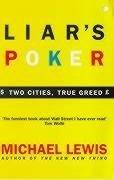
Michael Lewis · 1989

Life on Salomon Brothers' bond trading floor in the 1980s mortgage-bond boom.

“I do believe, as Michael Lewis writes in his intriguing 1989 book, "Liar's Poker," that it is unlikely that an individual unable to buck convention in one's life will suddenly be able to buck…” — Michael Burry

Source: MSN Money Strategy Lab journal, March 2, 2001 — archived

Recommended by: Michael Burry, Mohnish Pabrai, Nat Eliason and 3 others

Where it sits in the reference 2

Academics
Industries

Topics

Finance and MarketsPolitics and GovernmentRegulation, central banks and public policy