Updates

  1. Person pages list letters, writing, profiles and links as sortable tables with filters, and show each person's companies as links; Fund letters show each letter's description in its own column.
  2. Experts show a checked job title and a short description of each person; 30 more people have photographs.
  3. Every company, fund, university and publication the experts work for has a page listing the people there.
  4. Fund letters show each letter's thesis and filter by it; 225 person pages list the essays, columns and newsletter issues the person wrote.
  5. Person pages list every essay and newsletter issue a person wrote, and their own books as a table in List view.
  6. Recommends shows the five largest kinds of book and the rest under More; browse pictures load sooner.
  7. Podcasts and talks link the original episode, filter by Audio and video or Press, and list each publisher once.
  8. Pages are wider, Recommends has List and Grid, and a filter clicked again turns off.
  9. Book cards sit in a ruled grid with Open Library and Goodreads links and each book's one-line note.
  10. Funds is now Investors; each investor's styles are buttons that filter the table.
  11. Podcasts and talks on a person's page filter by year and publisher and show as a list or a grid of pictures.
  12. Quotes show only people's own words: 472 summaries written by list sites are gone.
  13. Country pages open from Browse again, and every link on the shelf lands on a page.
  14. Subject and person pages show their sections as tabs, and each book appears once on a person's page.
  15. Book cards show the quote, who said it and the source; grids show five cards to a row.
  16. On a phone, a menu holds the sections, search, Updates, Feedback and dark mode.
  17. Feedback takes a screenshot of the page with no browser prompt, opens a screenshot full size when you click it, and clears itself once sent.
  18. Book cards are centred, search names the topic each book sits in, and any text cut short shows whole on hover.
  19. Search groups its results by kind: people, companies, geographies, subjects, topics, books, funds, fund letters and papers.
  20. The Books table lists who recommended each book by name, and the browser tab names the section you are in.
  21. Feedback can take a screenshot of the page, or one you paste or choose, and opens in the corner beside Updates.
  22. Each rail button reopens its section where you left it, and Browse, Table and People show on every book and subject page.
  23. Filters grey out choices that hold nothing instead of hiding them, and Books › People filters by authors or recommenders.
  24. Feedback takes a subject line and up to three screenshots.
  25. Biographies are grouped by the person they are about: 41 new pages, from Abraham Lincoln to Lee Kuan Yew.
  26. Sport splits into 23 sports, and Religion into one topic per faith.
  27. Book lists show as cards: the cover, one recommendation quote and every recommender by name.
  28. Seventeen subjects that had two or three pages under different names now have one page each.
  29. Every page lists its Experts as authors and recommenders, with a link to them on the Experts tab.
  30. Economics, Financial history, Financial panics and Accounting are subjects of their own, with one page per financial crisis.
  31. Book, person and subject pages open inside the app, so the tabs stay in view.
  32. 996 more book covers, and photographs or logos for 227 more people and companies.
  33. Books › Browse shows every subject as cards, and the rail holds Fund letters, Papers, Experts, Books and Funds.
  34. Every topic over 150 books splits into narrower topics, each with a page of its own.

Send feedback

What is it?
Screenshots, up to 3 (optional)
or paste one with Ctrl+V

We use your email only to reply to you.

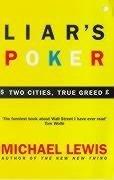
Liar's Poker

Liar's Poker

Michael Lewis
1989
T1 304 pages · about 5h 4m to read Open Librarygoodreads

Salomon Brothers mortgage desk, from the inside

Summary

Lewis worked at Salomon Brothers from 1985 to 1988 and wrote this account of the bond trading floor at the peak of its profitability. The title comes from a game played with the serial numbers on dollar bills, and the opening scene has chairman John Gutfreund challenging trader John Meriwether to a single hand for a million dollars.

The substantive history concerns mortgage-backed securities. Lewis documents how Lewie Ranieri's department created the market from nothing, how the 1981 tax change and the savings and loan crisis produced forced sellers of mortgages at prices Salomon could exploit, and how the firm held a near-monopoly on the product for several years before competitors developed the capability. He also covers the collapse of that advantage as staff left for other firms.

The cultural material is what most readers remember: the training programme, the eating and behaviour on the trading floor, the term Big Swinging Dick, the practice of selling clients securities the firm needed to remove from its own inventory, and the description of how a junior salesman's incentives conflicted directly with his customers' interests.

Lewis intended the book as a warning and has said repeatedly that it instead functioned as a recruiting document. It is a memoir, written young, with reconstructed dialogue and a satirical shape, and former Salomon employees have disputed details. It covers one firm in one period and the market structure described no longer exists. Its value is the account of how an information advantage in an opaque market produces extraordinary profits and how quickly that advantage disappears.

Key takeaways 8

  1. Salomon created the mortgage-backed securities market and held a near-monopoly for several years, which produced profits unavailable once competitors developed the same capability.
  2. An opaque market with few participants generates enormous profits for the intermediary, and transparency destroys those profits permanently.
  3. A salesman's compensation depends on the firm's position rather than on the customer's outcome, which makes the conflict structural rather than personal.
  4. The firm's most profitable trades came from customers who did not understand the securities they were buying.
  5. Regulatory and tax changes created the forced sellers that made the mortgage business possible, so the opportunity came from policy rather than from insight.
  6. Salomon lost its advantage because the knowledge left with the people, which is the standard fate of a business whose asset is human.
  7. Firm culture rewarded aggression and short-term production, which produced both the profits and the eventual management failures.
  8. Lewis wrote the book as a warning and it functioned as a recruiting advertisement, which says something about how such accounts are read.

Who should read it

Readers who want an insider account of how a market-making information advantage is created and lost, with the culture reported honestly.

About Michael Lewis

Financial journalist and author; former Salomon Brothers bond salesman

Liar's Poker, The Big Short and Flash Boys are the primary narrative sources later writers build on for Wall Street of the 1980s, the subprime crisis and high-frequency trading.

Vanity Fair, Salomon Brothers

Who recommended it 6 · 3 direct

“I do believe, as Michael Lewis writes in his intriguing 1989 book, "Liar's Poker," that it is unlikely that an individual unable to buck convention in one's life will suddenly be able to buck…”

Tim Ferrissreported

Similar books 6

Chosen by shared topics, the entries that hold them, and the people who recommended both.
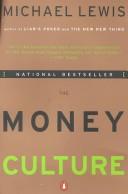
Michael Lewis · 1991

Collected 1980s finance essays

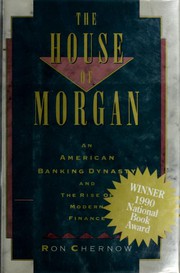
Ron Chernow · 1990

The Morgan banks from 1830s London to J.P. Morgan and Morgan Stanley in the 1980s.

Recommended by: Mohnish Pabrai, Paul Graham
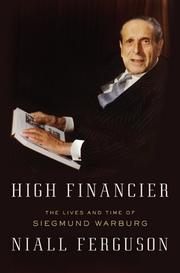
Niall Ferguson · 2010

Siegmund Warburg, who fled Germany and founded S.G. Warburg in London.

Recommended by: Mohnish Pabrai
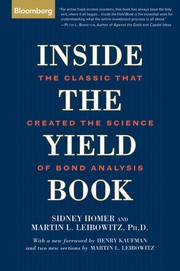
Sidney Homer, Martin L. Leibowitz · 1972

Bond maths made usable: price and yield, interest on interest, and bond swaps.

Robert Sobel · 1986

Commissioned institutional history, written before the fall.

Where it sits in the reference 6

Journalists
Companies
Companies
Assets
Industries
Financial history

Topics

Financial HistoryFinance and MarketsBiography and Memoir