Updates

  1. Person pages list letters, writing, profiles and links as sortable tables with filters, and show each person's companies as links; Fund letters show each letter's description in its own column.
  2. Experts show a checked job title and a short description of each person; 30 more people have photographs.
  3. Every company, fund, university and publication the experts work for has a page listing the people there.
  4. Fund letters show each letter's thesis and filter by it; 225 person pages list the essays, columns and newsletter issues the person wrote.
  5. Person pages list every essay and newsletter issue a person wrote, and their own books as a table in List view.
  6. Recommends shows the five largest kinds of book and the rest under More; browse pictures load sooner.
  7. Podcasts and talks link the original episode, filter by Audio and video or Press, and list each publisher once.
  8. Pages are wider, Recommends has List and Grid, and a filter clicked again turns off.
  9. Book cards sit in a ruled grid with Open Library and Goodreads links and each book's one-line note.
  10. Funds is now Investors; each investor's styles are buttons that filter the table.
  11. Podcasts and talks on a person's page filter by year and publisher and show as a list or a grid of pictures.
  12. Quotes show only people's own words: 472 summaries written by list sites are gone.
  13. Country pages open from Browse again, and every link on the shelf lands on a page.
  14. Subject and person pages show their sections as tabs, and each book appears once on a person's page.
  15. Book cards show the quote, who said it and the source; grids show five cards to a row.
  16. On a phone, a menu holds the sections, search, Updates, Feedback and dark mode.
  17. Feedback takes a screenshot of the page with no browser prompt, opens a screenshot full size when you click it, and clears itself once sent.
  18. Book cards are centred, search names the topic each book sits in, and any text cut short shows whole on hover.
  19. Search groups its results by kind: people, companies, geographies, subjects, topics, books, funds, fund letters and papers.
  20. The Books table lists who recommended each book by name, and the browser tab names the section you are in.
  21. Feedback can take a screenshot of the page, or one you paste or choose, and opens in the corner beside Updates.
  22. Each rail button reopens its section where you left it, and Browse, Table and People show on every book and subject page.
  23. Filters grey out choices that hold nothing instead of hiding them, and Books › People filters by authors or recommenders.
  24. Feedback takes a subject line and up to three screenshots.
  25. Biographies are grouped by the person they are about: 41 new pages, from Abraham Lincoln to Lee Kuan Yew.
  26. Sport splits into 23 sports, and Religion into one topic per faith.
  27. Book lists show as cards: the cover, one recommendation quote and every recommender by name.
  28. Seventeen subjects that had two or three pages under different names now have one page each.
  29. Every page lists its Experts as authors and recommenders, with a link to them on the Experts tab.
  30. Economics, Financial history, Financial panics and Accounting are subjects of their own, with one page per financial crisis.
  31. Book, person and subject pages open inside the app, so the tabs stay in view.
  32. 996 more book covers, and photographs or logos for 227 more people and companies.
  33. Books › Browse shows every subject as cards, and the rail holds Fund letters, Papers, Experts, Books and Funds.
  34. Every topic over 150 books splits into narrower topics, each with a page of its own.

Send feedback

What is it?
Screenshots, up to 3 (optional)
or paste one with Ctrl+V

We use your email only to reply to you.

Salomon Brothers, 1910-1985: Advancing to Le

Salomon Brothers, 1910-1985: Advancing to Leadership

Robert Sobel
1986
T3 240 pages · about 4h to read Open Librarygoodreads

Commissioned institutional history, written before the fall.

Summary

Robert Sobel, a prolific business historian, wrote this commissioned history of Salomon Brothers covering the firm from its founding by the Salomon brothers in 1910 to the mid-1980s, when it had become the dominant bond trading house on Wall Street.

The narrative covers the firm's origins as a money broker, its move into government securities, its position as an outsider excluded from the underwriting syndicates that the established houses controlled, and its consequent development of trading rather than relationship banking as its business. Sobel covers the postwar growth, the leadership of Billy Salomon, the decision to build capital by requiring partners to leave earnings in the firm, and the development of the bond trading operation that became its defining business. He covers the 1981 sale to Phibro, which converted the partnership into part of a public company and made the partners wealthy while ending the structure that had built the firm.

The book was commissioned and its access came on those terms, so it is respectful. It was also published in 1986, immediately before the events that defined Salomon in the public mind: the mortgage trading described in Liar's Poker, the 1987 restructuring, the Treasury auction scandal of 1991 and the Buffett rescue. Readers wanting those should go to Michael Lewis and to Martin Mayer. Sobel's contribution is the earlier history, which is otherwise poorly documented.

Key takeaways 6

  1. Salomon built its business on trading because the established underwriting syndicates excluded it from relationship banking.
  2. Requiring partners to leave earnings in the firm built the capital base that made large-scale bond trading possible.
  3. Market-making in government securities gave Salomon information about institutional flows that its competitors lacked.
  4. The 1981 sale to Phibro ended the partnership structure that had disciplined the firm's capital and risk decisions.
  5. Sobel argues that Salomon's outsider status was the source of its willingness to commit capital where established firms would not.
  6. The firm's culture rewarded trading results directly, which produced both its growth and its later control failures.

Who should read it

Readers of Wall Street history who want the pre-1985 Salomon record that the better-known accounts of the firm assume rather than describe.

Similar books 6

Chosen by shared topics, the entries that hold them, and the people who recommended both.
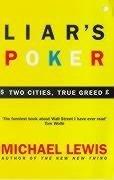
Michael Lewis · 1989

Life on Salomon Brothers' bond trading floor in the 1980s mortgage-bond boom.

“I do believe, as Michael Lewis writes in his intriguing 1989 book, "Liar's Poker," that it is unlikely that an individual unable to buck convention in one's life will suddenly be able to buck…” — Michael Burry

Source: MSN Money Strategy Lab journal, March 2, 2001 — archived

Recommended by: Michael Burry, Mohnish Pabrai, Nat Eliason and 3 others

Michael Lewis · 1991

Collected 1980s finance essays

Mauro F. Guillen, Adrian Tschoegl · 2008

How Banco Santander grew from a Spanish regional bank into a global one.

Stephen Aris · 1994

Commissioned history, written long before the run.
Where it sits in the reference 2

Companies
Financial history

Topics

Company HistoriesFinance and Markets