Updates

  1. Person pages list letters, writing, profiles and links as sortable tables with filters, and show each person's companies as links; Fund letters show each letter's description in its own column.
  2. Experts show a checked job title and a short description of each person; 30 more people have photographs.
  3. Every company, fund, university and publication the experts work for has a page listing the people there.
  4. Fund letters show each letter's thesis and filter by it; 225 person pages list the essays, columns and newsletter issues the person wrote.
  5. Person pages list every essay and newsletter issue a person wrote, and their own books as a table in List view.
  6. Recommends shows the five largest kinds of book and the rest under More; browse pictures load sooner.
  7. Podcasts and talks link the original episode, filter by Audio and video or Press, and list each publisher once.
  8. Pages are wider, Recommends has List and Grid, and a filter clicked again turns off.
  9. Book cards sit in a ruled grid with Open Library and Goodreads links and each book's one-line note.
  10. Funds is now Investors; each investor's styles are buttons that filter the table.
  11. Podcasts and talks on a person's page filter by year and publisher and show as a list or a grid of pictures.
  12. Quotes show only people's own words: 472 summaries written by list sites are gone.
  13. Country pages open from Browse again, and every link on the shelf lands on a page.
  14. Subject and person pages show their sections as tabs, and each book appears once on a person's page.
  15. Book cards show the quote, who said it and the source; grids show five cards to a row.
  16. On a phone, a menu holds the sections, search, Updates, Feedback and dark mode.
  17. Feedback takes a screenshot of the page with no browser prompt, opens a screenshot full size when you click it, and clears itself once sent.
  18. Book cards are centred, search names the topic each book sits in, and any text cut short shows whole on hover.
  19. Search groups its results by kind: people, companies, geographies, subjects, topics, books, funds, fund letters and papers.
  20. The Books table lists who recommended each book by name, and the browser tab names the section you are in.
  21. Feedback can take a screenshot of the page, or one you paste or choose, and opens in the corner beside Updates.
  22. Each rail button reopens its section where you left it, and Browse, Table and People show on every book and subject page.
  23. Filters grey out choices that hold nothing instead of hiding them, and Books › People filters by authors or recommenders.
  24. Feedback takes a subject line and up to three screenshots.
  25. Biographies are grouped by the person they are about: 41 new pages, from Abraham Lincoln to Lee Kuan Yew.
  26. Sport splits into 23 sports, and Religion into one topic per faith.
  27. Book lists show as cards: the cover, one recommendation quote and every recommender by name.
  28. Seventeen subjects that had two or three pages under different names now have one page each.
  29. Every page lists its Experts as authors and recommenders, with a link to them on the Experts tab.
  30. Economics, Financial history, Financial panics and Accounting are subjects of their own, with one page per financial crisis.
  31. Book, person and subject pages open inside the app, so the tabs stay in view.
  32. 996 more book covers, and photographs or logos for 227 more people and companies.
  33. Books › Browse shows every subject as cards, and the rail holds Fund letters, Papers, Experts, Books and Funds.
  34. Every topic over 150 books splits into narrower topics, each with a page of its own.

Send feedback

What is it?
Screenshots, up to 3 (optional)
or paste one with Ctrl+V

We use your email only to reply to you.

Building a Global Bank

Building a Global Bank

Mauro F. Guillen, Adrian Tschoegl
2008
T2 273 pages · about 4h 33m to read Open Librarygoodreads

How Santander went from domestic lender to global acquirer.

Summary

Guillen and Tschoegl, both academics at Wharton, wrote a study of Banco Santander's expansion from a mid-sized Spanish regional bank into one of the largest banks in the world.

The analytical question is how a bank from a peripheral European economy achieved this when banks from larger economies did not. Their answer combines several factors. The Botin family's continuous control across generations supplied strategic consistency that professionally managed competitors could not match. The Spanish domestic market's deregulation in the 1980s forced consolidation, and Santander was aggressive in it, using a high-rate deposit account to take share and then acquiring rivals including Banesto and later Banco Central Hispano.

The international expansion followed a specific logic. Santander entered Latin America early and heavily, acquiring banks in Brazil, Mexico, Chile and Argentina, on the argument that language, legal traditions and the presence of Spanish corporate customers gave it advantages that American or British banks lacked. It then entered Britain through Abbey National and later Alliance and Leicester and Bradford and Bingley.

The operating model the authors emphasise is retail banking as a standardised business. Santander built a common technology platform and imposed it on acquisitions, treated retail banking as a cost and efficiency business rather than a relationship business, and measured acquisitions by whether they could be integrated onto the platform and their cost-to-income ratio reduced.

The book was published in 2008, before the Spanish property collapse and the eurozone crisis tested the model, and before Santander's subsequent difficulties in Britain and the changing economics of retail banking. The account of platform-driven acquisition integration is the durable part.

Key takeaways 7

  1. Family control across generations supplied strategic consistency that professionally managed competitors could not match.
  2. Santander treated retail banking as a standardised cost and efficiency business rather than as a relationship business.
  3. A common technology platform imposed on every acquisition was the mechanism that made serial acquisition work.
  4. Acquisitions were evaluated by whether they could be integrated onto the platform and their cost-to-income ratio reduced.
  5. Latin American entry rested on language, legal tradition and existing Spanish corporate customers rather than on capital alone.
  6. Domestic deregulation forced consolidation, and being aggressive during that period supplied the scale for international expansion.
  7. A bank from a peripheral economy achieved global scale by choosing markets where its specific advantages applied rather than by competing everywhere.

Who should read it

Operators and investors in banking and in serial acquisition strategies who want a documented account of platform-driven integration across borders.

Similar books 6

Chosen by shared topics, the entries that hold them, and the people who recommended both.

Stephen Aris · 1994

Commissioned history, written long before the run.

Lisa Endlich · 1999

Goldman Sachs to its 1999 IPO, with a focus on its partnership culture.

Recommended by: Mohnish Pabrai
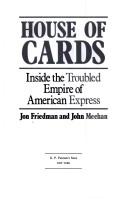
Jon Friedman, John Meehan · 1992

The Robinson years, Shearson, and the boardroom unravelling.
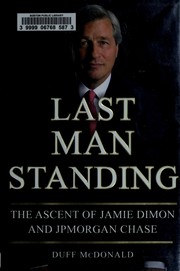
Duff McDonald · 2009

Jamie Dimon's career and how JPMorgan Chase came through the 2008 crisis.

Robert Sobel · 1986

Commissioned institutional history, written before the fall.

Where it sits in the reference 2

Geographies
Financial history

Topics

Company HistoriesFinance and Markets