Updates

  1. Person pages list letters, writing, profiles and links as sortable tables with filters, and show each person's companies as links; Fund letters show each letter's description in its own column.
  2. Experts show a checked job title and a short description of each person; 30 more people have photographs.
  3. Every company, fund, university and publication the experts work for has a page listing the people there.
  4. Fund letters show each letter's thesis and filter by it; 225 person pages list the essays, columns and newsletter issues the person wrote.
  5. Person pages list every essay and newsletter issue a person wrote, and their own books as a table in List view.
  6. Recommends shows the five largest kinds of book and the rest under More; browse pictures load sooner.
  7. Podcasts and talks link the original episode, filter by Audio and video or Press, and list each publisher once.
  8. Pages are wider, Recommends has List and Grid, and a filter clicked again turns off.
  9. Book cards sit in a ruled grid with Open Library and Goodreads links and each book's one-line note.
  10. Funds is now Investors; each investor's styles are buttons that filter the table.
  11. Podcasts and talks on a person's page filter by year and publisher and show as a list or a grid of pictures.
  12. Quotes show only people's own words: 472 summaries written by list sites are gone.
  13. Country pages open from Browse again, and every link on the shelf lands on a page.
  14. Subject and person pages show their sections as tabs, and each book appears once on a person's page.
  15. Book cards show the quote, who said it and the source; grids show five cards to a row.
  16. On a phone, a menu holds the sections, search, Updates, Feedback and dark mode.
  17. Feedback takes a screenshot of the page with no browser prompt, opens a screenshot full size when you click it, and clears itself once sent.
  18. Book cards are centred, search names the topic each book sits in, and any text cut short shows whole on hover.
  19. Search groups its results by kind: people, companies, geographies, subjects, topics, books, funds, fund letters and papers.
  20. The Books table lists who recommended each book by name, and the browser tab names the section you are in.
  21. Feedback can take a screenshot of the page, or one you paste or choose, and opens in the corner beside Updates.
  22. Each rail button reopens its section where you left it, and Browse, Table and People show on every book and subject page.
  23. Filters grey out choices that hold nothing instead of hiding them, and Books › People filters by authors or recommenders.
  24. Feedback takes a subject line and up to three screenshots.
  25. Biographies are grouped by the person they are about: 41 new pages, from Abraham Lincoln to Lee Kuan Yew.
  26. Sport splits into 23 sports, and Religion into one topic per faith.
  27. Book lists show as cards: the cover, one recommendation quote and every recommender by name.
  28. Seventeen subjects that had two or three pages under different names now have one page each.
  29. Every page lists its Experts as authors and recommenders, with a link to them on the Experts tab.
  30. Economics, Financial history, Financial panics and Accounting are subjects of their own, with one page per financial crisis.
  31. Book, person and subject pages open inside the app, so the tabs stay in view.
  32. 996 more book covers, and photographs or logos for 227 more people and companies.
  33. Books › Browse shows every subject as cards, and the rail holds Fund letters, Papers, Experts, Books and Funds.
  34. Every topic over 150 books splits into narrower topics, each with a page of its own.

Send feedback

What is it?
Screenshots, up to 3 (optional)
or paste one with Ctrl+V

We use your email only to reply to you.

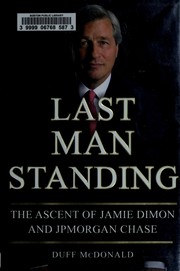
Last Man Standing: The Ascent of Jamie Dimon

Last Man Standing: The Ascent of Jamie Dimon and JPMorgan Chase

Duff McDonald
2009
T2 352 pages · about 5h 52m to read Open Librarygoodreads

Summary

Duff McDonald wrote this biography of Jamie Dimon with Dimon's cooperation, publishing it in 2009 when Dimon's reputation was at its peak because JPMorgan Chase had come through the crisis better than its competitors. It covers the career from Dimon's start with Sandy Weill at Commercial Credit, through the building of Travelers and its merger with Citicorp, his dismissal in 1998, the Bank One turnaround, the 2004 merger with JPMorgan, and the 2008 acquisitions of Bear Stearns and Washington Mutual.

The operational content concerns Dimon's method, which McDonald presents consistently across three institutions: aggressive cost reduction, insistence on a single technology platform after each merger, detailed personal review of business-line financials, and a preference for holding excess capital. McDonald documents the specific decisions that kept JPMorgan out of the worst subprime exposures, including the 2006 decision to reduce subprime mortgage holdings after reviewing delinquency data, and the maintenance of what Dimon called a fortress balance sheet.

The book is admiring and was written before the London Whale losses in 2012, the mortgage settlements, and the various regulatory penalties that complicated the story. McDonald does not seriously examine whether JPMorgan's crisis performance reflected judgement or the accident of which businesses it happened to be in. Readers should treat it as a well-reported account of a management method, written at the moment of maximum credit to its subject.

Key takeaways 7

  1. Dimon's method across three institutions was the same: cut costs immediately, consolidate technology onto one platform, and review business-line numbers personally.
  2. JPMorgan reduced subprime mortgage exposure in 2006 after examining delinquency data that was available to every competitor.
  3. Holding capital above regulatory minimums cost the bank returns in good years and gave it the option to acquire in 2008.
  4. Merger integration failures usually originate in retained duplicate technology systems, which is why Dimon treated platform consolidation as the first task.
  5. Weill and Dimon built Travelers through serial acquisition of undermanaged financial firms bought at low multiples.
  6. Dimon's dismissal from Citigroup in 1998 was a personal conflict rather than a performance failure, and it gave him Bank One.
  7. The Bear Stearns and Washington Mutual acquisitions were made possible by capital held for reasons unrelated to those opportunities.

Who should read it

Investors in banks and operators managing serial acquisitions who want a detailed account of one executive's integration and capital discipline.

Similar books 6

Chosen by shared topics, the entries that hold them, and the people who recommended both.

David Rockefeller · 2002

Life as John D. Rockefeller Jr.'s youngest son, from Harvard to wartime intelligence.

Jean Strouse · 1999

J. Pierpont Morgan's life, drawn from family and business papers others had not used.
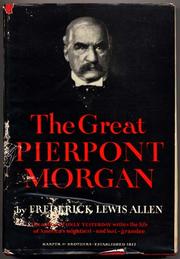
Frederick Lewis Allen · 1949

J. P. Morgan from the Civil War to 1913: railroads, US Steel and rescues.
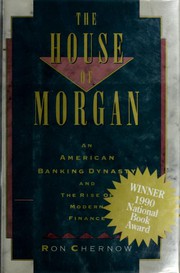
Ron Chernow · 1990

The Morgan banks from 1830s London to J.P. Morgan and Morgan Stanley in the 1980s.

Recommended by: Mohnish Pabrai, Paul Graham

Where it sits in the reference 3

Companies
Biographies
Financial history

Topics

Biography and MemoirCompany HistoriesFinance and Markets