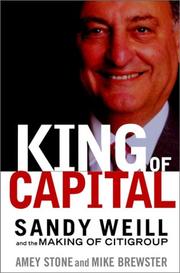
The King of Capital: Sandy Weill and the Making of Citigroup
Summary
Stone and Brewster, both business journalists, trace Sanford Weill's career from a back-office job through the assembly of Citigroup. The narrative runs through Carter, Berlind, Potoma and Weill in the 1960s, the roll-up of brokerage firms into Shearson, the sale to American Express in 1981, Weill's departure after losing the internal contest there, his restart at Commercial Credit in Baltimore in 1986, and the sequence of acquisitions through Primerica, Smith Barney, Travelers, Salomon Brothers and finally Citicorp in 1998.
The authors argue that Weill's skill was not investing or product innovation but deal-making combined with severe cost discipline. He bought firms in distress, cut expenses hard and fast, used his own rising stock as acquisition currency, and repeated the pattern. They also present the financial supermarket thesis, that one firm should sell banking, brokerage, insurance and investment banking to the same customer, and note that the Citicorp merger required Congress to repeal the remaining Glass-Steagall restrictions.
The book is sympathetic and was published before the outcome was known. Citigroup subsequently proved that the supermarket produced few cross-selling gains and considerable risk, needed a government rescue in 2008, and spent the next decade selling off what Weill assembled. Weill himself later said the repeal of Glass-Steagall was a mistake.
Read it for the mechanics of serial acquisition and expense-driven integration, not for a verdict on the strategy.
Key takeaways 7
- Weill built value through repeated acquisitions of distressed firms followed by aggressive expense reduction, not through organic growth.
- A rising share price is the essential input to a serial acquisition strategy because it is the currency.
- The financial supermarket thesis held that owning banking, insurance and securities under one roof would produce cross-selling revenue.
- The Citicorp-Travelers merger was announced before the law permitting it existed, and the law was then changed.
- Weill's cost cutting was applied to acquired firms immediately rather than after a period of study.
- Personal loyalty and a small circle of repeatedly rehired lieutenants carried across every firm Weill ran.
- Losing the succession contest at American Express set the pattern for Weill's insistence on control at every later firm.
Who should read it
Operators and investors studying serial acquisition and post-merger integration, who should pair it with an account of what happened to Citigroup after 2007.
Who recommended it 1 · 1 direct
Similar books 6
Chosen by shared topics, the entries that hold them, and the people who recommended both.
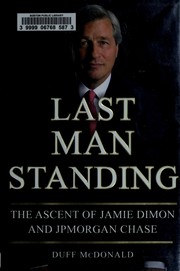
Jamie Dimon's career and how JPMorgan Chase came through the 2008 crisis.

Goldman Sachs to its 1999 IPO, with a focus on its partnership culture.
Recommended by: Mohnish Pabrai

Siegmund Warburg, who fled Germany and founded S.G. Warburg in London.
Recommended by: Mohnish Pabrai
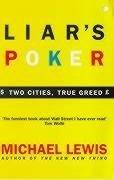
Life on Salomon Brothers' bond trading floor in the 1980s mortgage-bond boom.
“I do believe, as Michael Lewis writes in his intriguing 1989 book, "Liar's Poker," that it is unlikely that an individual unable to buck convention in one's life will suddenly be able to buck…” — Michael Burry
Source: MSN Money Strategy Lab journal, March 2, 2001 — archived
Recommended by: Michael Burry, Mohnish Pabrai, Nat Eliason and 3 others

A trader's memoir of Wall Street's after-hours world of drugs, sex and commissions.
Recommended by: Mohnish Pabrai
Where it sits in the reference 2
Topics