Updates

  1. Person pages list letters, writing, profiles and links as sortable tables with filters, and show each person's companies as links; Fund letters show each letter's description in its own column.
  2. Experts show a checked job title and a short description of each person; 30 more people have photographs.
  3. Every company, fund, university and publication the experts work for has a page listing the people there.
  4. Fund letters show each letter's thesis and filter by it; 225 person pages list the essays, columns and newsletter issues the person wrote.
  5. Person pages list every essay and newsletter issue a person wrote, and their own books as a table in List view.
  6. Recommends shows the five largest kinds of book and the rest under More; browse pictures load sooner.
  7. Podcasts and talks link the original episode, filter by Audio and video or Press, and list each publisher once.
  8. Pages are wider, Recommends has List and Grid, and a filter clicked again turns off.
  9. Book cards sit in a ruled grid with Open Library and Goodreads links and each book's one-line note.
  10. Funds is now Investors; each investor's styles are buttons that filter the table.
  11. Podcasts and talks on a person's page filter by year and publisher and show as a list or a grid of pictures.
  12. Quotes show only people's own words: 472 summaries written by list sites are gone.
  13. Country pages open from Browse again, and every link on the shelf lands on a page.
  14. Subject and person pages show their sections as tabs, and each book appears once on a person's page.
  15. Book cards show the quote, who said it and the source; grids show five cards to a row.
  16. On a phone, a menu holds the sections, search, Updates, Feedback and dark mode.
  17. Feedback takes a screenshot of the page with no browser prompt, opens a screenshot full size when you click it, and clears itself once sent.
  18. Book cards are centred, search names the topic each book sits in, and any text cut short shows whole on hover.
  19. Search groups its results by kind: people, companies, geographies, subjects, topics, books, funds, fund letters and papers.
  20. The Books table lists who recommended each book by name, and the browser tab names the section you are in.
  21. Feedback can take a screenshot of the page, or one you paste or choose, and opens in the corner beside Updates.
  22. Each rail button reopens its section where you left it, and Browse, Table and People show on every book and subject page.
  23. Filters grey out choices that hold nothing instead of hiding them, and Books › People filters by authors or recommenders.
  24. Feedback takes a subject line and up to three screenshots.
  25. Biographies are grouped by the person they are about: 41 new pages, from Abraham Lincoln to Lee Kuan Yew.
  26. Sport splits into 23 sports, and Religion into one topic per faith.
  27. Book lists show as cards: the cover, one recommendation quote and every recommender by name.
  28. Seventeen subjects that had two or three pages under different names now have one page each.
  29. Every page lists its Experts as authors and recommenders, with a link to them on the Experts tab.
  30. Economics, Financial history, Financial panics and Accounting are subjects of their own, with one page per financial crisis.
  31. Book, person and subject pages open inside the app, so the tabs stay in view.
  32. 996 more book covers, and photographs or logos for 227 more people and companies.
  33. Books › Browse shows every subject as cards, and the rail holds Fund letters, Papers, Experts, Books and Funds.
  34. Every topic over 150 books splits into narrower topics, each with a page of its own.

Send feedback

What is it?
Screenshots, up to 3 (optional)
or paste one with Ctrl+V

We use your email only to reply to you.

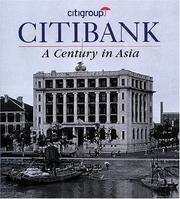
Citibank: A Century In Asia

Citibank: A Century In Asia

Peter Starr
2003
T3 216 pages · about 3h 36m to read Open Librarygoodreads

Summary

The reference has not verified this book in detail; the summary states only what the title, author and subject establish.

Starr wrote this as a commissioned history marking Citibank's hundred years of operation in Asia, from the opening of the International Banking Corporation's Shanghai branch in 1902 through the early 2000s.

The reference has not verified the specific contents of this volume, which was produced for the bank's centenary and is not widely available. What the occasion and subject establish is a corporate history covering the bank's entry into Asian markets, its operations through the Chinese revolution, the Second World War, decolonisation, the Japanese and Korean industrialisations, the Asian financial crisis of 1997, and the expansion of consumer banking across the region.

Citibank's Asian history is genuinely significant: it was among the first American banks to build a substantial international branch network, it pioneered consumer banking products in several Asian markets, and its presence through a century of political upheaval means the institutional history intersects with most of the region's major events.

Commissioned corporate histories are promotional documents and should be read as such. Readers wanting an independent account of Citibank should use Phillip Zweig's biography of Walter Wriston or the critical literature on the bank's periodic crises. This volume's interest is as a company-produced record of a long international presence, and its claims should be verified against independent sources before being relied on.

Key takeaways 7

  1. Citibank's Asian presence began with the International Banking Corporation's Shanghai branch in 1902 and continued through a century of political upheaval.
  2. The bank was among the first American institutions to build a substantial international branch network rather than serving foreign markets through correspondents.
  3. A branch network operating through revolutions, wars and decolonisation requires the institution to survive the loss of assets and staff repeatedly.
  4. Citibank introduced consumer banking products in several Asian markets before local institutions offered them.
  5. This is a commissioned centenary history and should be read as a company-produced document.
  6. The reference has not verified the specific contents or claims of this volume.
  7. Independent accounts of Citibank, including biographies of Walter Wriston and the critical literature on the bank's crises, should be consulted alongside it.

Who should read it

Readers with a specific interest in Citibank's Asian operations, treated as a commissioned corporate history requiring independent verification.

Who recommended it 1 · 1 direct

Similar books 6

Chosen by shared topics, the entries that hold them, and the people who recommended both.
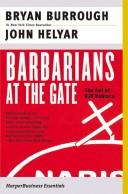
Bryan Burrough, John Helyar · 1989

The 1988 bidding war for RJR Nabisco, the largest leveraged buyout to that date.

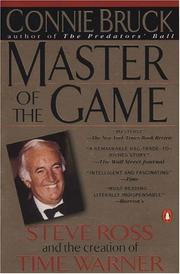
Connie Bruck · 1994

Steve Ross's path from funeral homes and parking lots to the Time Warner merger.

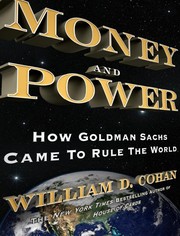
William D. Cohan · 2011

Goldman Sachs from Marcus Goldman to the 2008 crisis, from internal documents.

Recommended by: Mohnish Pabrai
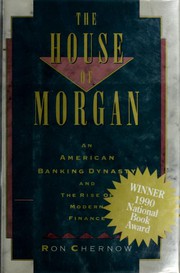
Ron Chernow · 1990

The Morgan banks from 1830s London to J.P. Morgan and Morgan Stanley in the 1980s.

Recommended by: Mohnish Pabrai, Paul Graham
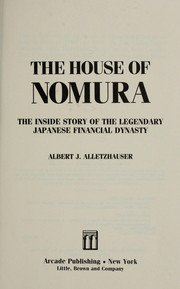
Al Alletzhauser · 1990

The inside story of Nomura, the Japanese securities house.

Recommended by: Mohnish Pabrai

Where it sits in the reference 2

Companies
Financial history

Topics

Company HistoriesFinancial History