Updates

  1. Person pages list letters, writing, profiles and links as sortable tables with filters, and show each person's companies as links; Fund letters show each letter's description in its own column.
  2. Experts show a checked job title and a short description of each person; 30 more people have photographs.
  3. Every company, fund, university and publication the experts work for has a page listing the people there.
  4. Fund letters show each letter's thesis and filter by it; 225 person pages list the essays, columns and newsletter issues the person wrote.
  5. Person pages list every essay and newsletter issue a person wrote, and their own books as a table in List view.
  6. Recommends shows the five largest kinds of book and the rest under More; browse pictures load sooner.
  7. Podcasts and talks link the original episode, filter by Audio and video or Press, and list each publisher once.
  8. Pages are wider, Recommends has List and Grid, and a filter clicked again turns off.
  9. Book cards sit in a ruled grid with Open Library and Goodreads links and each book's one-line note.
  10. Funds is now Investors; each investor's styles are buttons that filter the table.
  11. Podcasts and talks on a person's page filter by year and publisher and show as a list or a grid of pictures.
  12. Quotes show only people's own words: 472 summaries written by list sites are gone.
  13. Country pages open from Browse again, and every link on the shelf lands on a page.
  14. Subject and person pages show their sections as tabs, and each book appears once on a person's page.
  15. Book cards show the quote, who said it and the source; grids show five cards to a row.
  16. On a phone, a menu holds the sections, search, Updates, Feedback and dark mode.
  17. Feedback takes a screenshot of the page with no browser prompt, opens a screenshot full size when you click it, and clears itself once sent.
  18. Book cards are centred, search names the topic each book sits in, and any text cut short shows whole on hover.
  19. Search groups its results by kind: people, companies, geographies, subjects, topics, books, funds, fund letters and papers.
  20. The Books table lists who recommended each book by name, and the browser tab names the section you are in.
  21. Feedback can take a screenshot of the page, or one you paste or choose, and opens in the corner beside Updates.
  22. Each rail button reopens its section where you left it, and Browse, Table and People show on every book and subject page.
  23. Filters grey out choices that hold nothing instead of hiding them, and Books › People filters by authors or recommenders.
  24. Feedback takes a subject line and up to three screenshots.
  25. Biographies are grouped by the person they are about: 41 new pages, from Abraham Lincoln to Lee Kuan Yew.
  26. Sport splits into 23 sports, and Religion into one topic per faith.
  27. Book lists show as cards: the cover, one recommendation quote and every recommender by name.
  28. Seventeen subjects that had two or three pages under different names now have one page each.
  29. Every page lists its Experts as authors and recommenders, with a link to them on the Experts tab.
  30. Economics, Financial history, Financial panics and Accounting are subjects of their own, with one page per financial crisis.
  31. Book, person and subject pages open inside the app, so the tabs stay in view.
  32. 996 more book covers, and photographs or logos for 227 more people and companies.
  33. Books › Browse shows every subject as cards, and the rail holds Fund letters, Papers, Experts, Books and Funds.
  34. Every topic over 150 books splits into narrower topics, each with a page of its own.

Send feedback

What is it?
Screenshots, up to 3 (optional)
or paste one with Ctrl+V

We use your email only to reply to you.

Chasing Goldman Sachs

Chasing Goldman Sachs

Suzanne McGee
2010
T3 Open Librarygoodreads

Summary

McGee, a financial journalist, argued that Wall Street abandoned its economic function and that the crisis followed from that abandonment rather than from any single product or decision.

Her framing is that the financial system exists to perform a utility function: connecting people with capital to people who need it, allocating that capital, and managing risk on behalf of clients. She argues that this function generates modest returns, and that from the 1980s onward the major firms progressively replaced it with activities generating higher returns, principally proprietary trading, principal investment and the manufacture and distribution of complex products.

The Goldman Sachs of her title is the reference point. She argues that Goldman's returns, achieved substantially through principal risk-taking, became the benchmark every other firm measured itself against, and that firms without Goldman's risk management capability, its client franchise or its culture nonetheless pursued the same returns, which is how Bear Stearns, Lehman, Merrill Lynch and others ended up with balance sheets they could not manage.

The structural argument covers the shift from partnership to public ownership, which moved the risk from partners' own capital to shareholders; the compensation structures that paid on annual revenue regardless of the position's eventual outcome; and the movement of talent toward the highest-paying activities regardless of their economic function.

The book is journalism built on interviews with practitioners and it does not model the economics. Its central framing, that finance has a utility function and that departing from it caused the crisis, is a position rather than a finding, and readers may argue that principal risk-taking is part of intermediation rather than opposed to it. The account of how one firm's returns set an unattainable benchmark for its competitors is the most useful part.

Key takeaways 7

  1. Finance has a utility function connecting capital to those who need it, and that function generates modest returns.
  2. Firms progressively replaced the utility function with proprietary trading and principal investment because the returns were higher.
  3. Goldman Sachs's returns became a benchmark that firms without its risk capability nonetheless attempted to match.
  4. Pursuing another firm's returns without its capabilities is how several institutions acquired balance sheets they could not manage.
  5. The shift from partnership to public ownership moved risk from partners' own capital to outside shareholders.
  6. Compensation paid on annual revenue regardless of a position's eventual outcome rewarded taking risk that had not yet resolved.
  7. Talent moved toward the highest-paying activities regardless of whether those activities performed any economic function.

Who should read it

Readers who want an argument about what investment banking is for and how the pursuit of one firm's returns damaged its competitors.

Similar books 6

Chosen by shared topics, the entries that hold them, and the people who recommended both.

Lisa Endlich · 1999

Goldman Sachs to its 1999 IPO, with a focus on its partnership culture.

Recommended by: Mohnish Pabrai

Steven G. Mandis · 2013

Ex-banker turned sociologist on organizational drift.
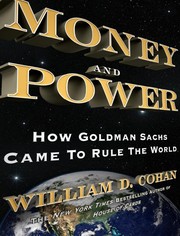
William D. Cohan · 2011

Goldman Sachs from Marcus Goldman to the 2008 crisis, from internal documents.

Recommended by: Mohnish Pabrai
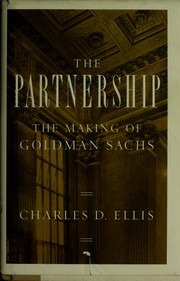
Charles D. Ellis · 2008

Goldman Sachs from Marcus Goldman's commercial paper to its 1999 public offering.

Recommended by: Mohnish Pabrai

Greg Smith · 2012

Insider resignation memoir that began as an op-ed.

Where it sits in the reference 2

Companies
Financial history

Topics

Finance and MarketsCompany Histories