Updates

  1. Person pages list letters, writing, profiles and links as sortable tables with filters, and show each person's companies as links; Fund letters show each letter's description in its own column.
  2. Experts show a checked job title and a short description of each person; 30 more people have photographs.
  3. Every company, fund, university and publication the experts work for has a page listing the people there.
  4. Fund letters show each letter's thesis and filter by it; 225 person pages list the essays, columns and newsletter issues the person wrote.
  5. Person pages list every essay and newsletter issue a person wrote, and their own books as a table in List view.
  6. Recommends shows the five largest kinds of book and the rest under More; browse pictures load sooner.
  7. Podcasts and talks link the original episode, filter by Audio and video or Press, and list each publisher once.
  8. Pages are wider, Recommends has List and Grid, and a filter clicked again turns off.
  9. Book cards sit in a ruled grid with Open Library and Goodreads links and each book's one-line note.
  10. Funds is now Investors; each investor's styles are buttons that filter the table.
  11. Podcasts and talks on a person's page filter by year and publisher and show as a list or a grid of pictures.
  12. Quotes show only people's own words: 472 summaries written by list sites are gone.
  13. Country pages open from Browse again, and every link on the shelf lands on a page.
  14. Subject and person pages show their sections as tabs, and each book appears once on a person's page.
  15. Book cards show the quote, who said it and the source; grids show five cards to a row.
  16. On a phone, a menu holds the sections, search, Updates, Feedback and dark mode.
  17. Feedback takes a screenshot of the page with no browser prompt, opens a screenshot full size when you click it, and clears itself once sent.
  18. Book cards are centred, search names the topic each book sits in, and any text cut short shows whole on hover.
  19. Search groups its results by kind: people, companies, geographies, subjects, topics, books, funds, fund letters and papers.
  20. The Books table lists who recommended each book by name, and the browser tab names the section you are in.
  21. Feedback can take a screenshot of the page, or one you paste or choose, and opens in the corner beside Updates.
  22. Each rail button reopens its section where you left it, and Browse, Table and People show on every book and subject page.
  23. Filters grey out choices that hold nothing instead of hiding them, and Books › People filters by authors or recommenders.
  24. Feedback takes a subject line and up to three screenshots.
  25. Biographies are grouped by the person they are about: 41 new pages, from Abraham Lincoln to Lee Kuan Yew.
  26. Sport splits into 23 sports, and Religion into one topic per faith.
  27. Book lists show as cards: the cover, one recommendation quote and every recommender by name.
  28. Seventeen subjects that had two or three pages under different names now have one page each.
  29. Every page lists its Experts as authors and recommenders, with a link to them on the Experts tab.
  30. Economics, Financial history, Financial panics and Accounting are subjects of their own, with one page per financial crisis.
  31. Book, person and subject pages open inside the app, so the tabs stay in view.
  32. 996 more book covers, and photographs or logos for 227 more people and companies.
  33. Books › Browse shows every subject as cards, and the rail holds Fund letters, Papers, Experts, Books and Funds.
  34. Every topic over 150 books splits into narrower topics, each with a page of its own.

Send feedback

What is it?
Screenshots, up to 3 (optional)
or paste one with Ctrl+V

We use your email only to reply to you.

What Happened to Goldman Sachs

What Happened to Goldman Sachs

Steven G. Mandis
2013
T3 380 pages · about 6h 20m to read Open Librarygoodreads

Ex-banker turned sociologist on organizational drift.

Summary

Steven Mandis worked at Goldman Sachs for twelve years and then took a doctorate in sociology at Columbia, writing this as his research. The combination is the book's distinguishing feature: it applies organisational sociology to a firm the author knew from inside.

His central concept is organisational drift, taken from Diane Vaughan's work on the Challenger disaster: an organisation moves gradually away from its stated standards through a sequence of small adaptations, each defensible at the time, with no point at which anyone decides to change. Mandis argues that Goldman's shift from a client-focused partnership to a firm whose conduct produced the Abacus transaction and the resulting reputational damage occurred through drift rather than through decision.

The specific pressures he identifies are the change from partnership to public ownership, which replaced partners' unlimited liability with shareholders' limited liability and changed the time horizon; the growth in size, which made the informal cultural transmission of the partnership impossible; the shift from advisory to principal activities, which put the firm on the other side of trades from its clients; competitive pressure from firms with lower standards; and technology, which made client relationships more transactional. He is careful not to attribute the change to individual bad conduct. The book is measured and its central concept applies well beyond Goldman. Mandis is a former employee writing sympathetically, which readers should weigh.

Key takeaways 7

  1. Organisational drift means an institution moves away from its standards through small defensible adaptations with no point of decision.
  2. Converting from partnership to public ownership replaced unlimited personal liability with limited shareholder liability and changed the time horizon.
  3. Growth in headcount made the informal cultural transmission that a partnership relied on impossible.
  4. The shift from advisory work to principal trading put the firm on the other side of transactions from its own clients.
  5. Competitive pressure from firms with lower standards pulls conduct downward across an industry rather than only at the offending firm.
  6. Mandis argues that no individual decided to change the firm's standards, which is what makes drift difficult to detect or resist.
  7. Stated values persist unchanged while behaviour drifts, which is why the gap becomes visible only in a crisis.

Who should read it

Executives and investors interested in how institutional standards erode without anyone deciding to change them, applied to a well-known case.

Similar books 6

Chosen by shared topics, the entries that hold them, and the people who recommended both.

Lisa Endlich · 1999

Goldman Sachs to its 1999 IPO, with a focus on its partnership culture.

Recommended by: Mohnish Pabrai
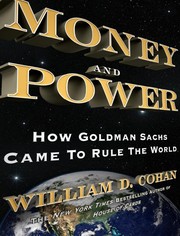
William D. Cohan · 2011

Goldman Sachs from Marcus Goldman to the 2008 crisis, from internal documents.

Recommended by: Mohnish Pabrai
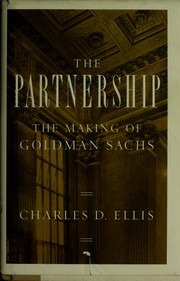
Charles D. Ellis · 2008

Goldman Sachs from Marcus Goldman's commercial paper to its 1999 public offering.

Recommended by: Mohnish Pabrai

Greg Smith · 2012

Insider resignation memoir that began as an op-ed.

Where it sits in the reference 2

Companies
Financial history

Topics

Company HistoriesFinance and Markets