Updates

  1. Person pages list letters, writing, profiles and links as sortable tables with filters, and show each person's companies as links; Fund letters show each letter's description in its own column.
  2. Experts show a checked job title and a short description of each person; 30 more people have photographs.
  3. Every company, fund, university and publication the experts work for has a page listing the people there.
  4. Fund letters show each letter's thesis and filter by it; 225 person pages list the essays, columns and newsletter issues the person wrote.
  5. Person pages list every essay and newsletter issue a person wrote, and their own books as a table in List view.
  6. Recommends shows the five largest kinds of book and the rest under More; browse pictures load sooner.
  7. Podcasts and talks link the original episode, filter by Audio and video or Press, and list each publisher once.
  8. Pages are wider, Recommends has List and Grid, and a filter clicked again turns off.
  9. Book cards sit in a ruled grid with Open Library and Goodreads links and each book's one-line note.
  10. Funds is now Investors; each investor's styles are buttons that filter the table.
  11. Podcasts and talks on a person's page filter by year and publisher and show as a list or a grid of pictures.
  12. Quotes show only people's own words: 472 summaries written by list sites are gone.
  13. Country pages open from Browse again, and every link on the shelf lands on a page.
  14. Subject and person pages show their sections as tabs, and each book appears once on a person's page.
  15. Book cards show the quote, who said it and the source; grids show five cards to a row.
  16. On a phone, a menu holds the sections, search, Updates, Feedback and dark mode.
  17. Feedback takes a screenshot of the page with no browser prompt, opens a screenshot full size when you click it, and clears itself once sent.
  18. Book cards are centred, search names the topic each book sits in, and any text cut short shows whole on hover.
  19. Search groups its results by kind: people, companies, geographies, subjects, topics, books, funds, fund letters and papers.
  20. The Books table lists who recommended each book by name, and the browser tab names the section you are in.
  21. Feedback can take a screenshot of the page, or one you paste or choose, and opens in the corner beside Updates.
  22. Each rail button reopens its section where you left it, and Browse, Table and People show on every book and subject page.
  23. Filters grey out choices that hold nothing instead of hiding them, and Books › People filters by authors or recommenders.
  24. Feedback takes a subject line and up to three screenshots.
  25. Biographies are grouped by the person they are about: 41 new pages, from Abraham Lincoln to Lee Kuan Yew.
  26. Sport splits into 23 sports, and Religion into one topic per faith.
  27. Book lists show as cards: the cover, one recommendation quote and every recommender by name.
  28. Seventeen subjects that had two or three pages under different names now have one page each.
  29. Every page lists its Experts as authors and recommenders, with a link to them on the Experts tab.
  30. Economics, Financial history, Financial panics and Accounting are subjects of their own, with one page per financial crisis.
  31. Book, person and subject pages open inside the app, so the tabs stay in view.
  32. 996 more book covers, and photographs or logos for 227 more people and companies.
  33. Books › Browse shows every subject as cards, and the rail holds Fund letters, Papers, Experts, Books and Funds.
  34. Every topic over 150 books splits into narrower topics, each with a page of its own.

Send feedback

What is it?
Screenshots, up to 3 (optional)
or paste one with Ctrl+V

We use your email only to reply to you.

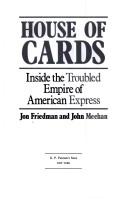
House of Cards: Inside the Troubled Empire o

House of Cards: Inside the Troubled Empire of American Express

Jon Friedman, John Meehan
1992
T3 272 pages · about 4h 32m to read Open Librarygoodreads

The Robinson years, Shearson, and the boardroom unravelling.

Summary

Jon Friedman and John Meehan report on American Express under James Robinson III, covering roughly 1977 to 1992. The company set out to build a financial supermarket, acquiring Shearson, then Lehman Brothers, then E.F. Hutton, alongside insurance and banking operations. The authors argue that the strategy failed because the acquired businesses had incompatible cultures and compensation structures, and because Amex management never established what the combined firm was supposed to do better than its parts.

The most damaging episode the book reports is the campaign against Edmond Safra, the banker who had sold Trade Development Bank to American Express and then competed with it. Amex executives helped place false stories in the press linking Safra to drug trafficking and organised crime. Robinson eventually apologised publicly and the company paid $8 million to charities Safra named. The authors use the affair to argue that the company's public reputation for probity concealed a management culture organised around image protection.

The reporting rests on interviews with executives and on contemporaneous documents; it is journalism written close to events and without the later archival record. Readers should note that it stops before the outcome, which included Robinson's removal in early 1993, Harvey Golub's turnaround and the spin-off of Lehman. Anyone studying financial conglomerates will find the diagnosis useful and the ending incomplete.

Key takeaways 6

  1. American Express assembled a financial supermarket without ever identifying a cost or revenue synergy that customers would pay for.
  2. Investment banking compensation norms are incompatible with those of a consumer brand company, and merging the two destroys retention in the bank.
  3. Robinson's management prized external reputation to the point of authorising a smear campaign against a private competitor.
  4. The core card business subsidised acquisitions that never earned their cost of capital.
  5. Shearson's serial acquisitions bought market share and legacy liabilities rather than durable advantage.
  6. Boards populated by chief executives of other large companies gave Robinson years of support that operating results did not justify.

Who should read it

Investors and directors examining why financial-services roll-ups usually fail to deliver the synergies their sponsors promise.

Similar books 6

Chosen by shared topics, the entries that hold them, and the people who recommended both.

Mauro F. Guillen, Adrian Tschoegl · 2008

How Banco Santander grew from a Spanish regional bank into a global one.

Stephen Aris · 1994

Commissioned history, written long before the run.

Lisa Endlich · 1999

Goldman Sachs to its 1999 IPO, with a focus on its partnership culture.

Recommended by: Mohnish Pabrai
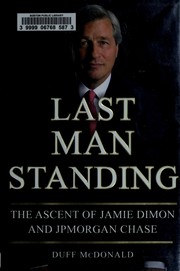
Duff McDonald · 2009

Jamie Dimon's career and how JPMorgan Chase came through the 2008 crisis.

Robert Sobel · 1986

Commissioned institutional history, written before the fall.

Where it sits in the reference 2

Companies
Financial history

Topics

Company HistoriesFinance and Markets