
Michael Lewis
Writes nonfiction on financial crises and behavioral finance; a contributing editor at Vanity Fair from 2009 to 2026, after working at Salomon Brothers from 1985 to 1989.
 Vanity Fair
 Salomon Brothers
Liar's Poker, The Big Short and Flash Boys are the primary narrative sources later writers build on for Wall Street of the 1980s, the subprime crisis and high-frequency trading.
19 books of their own · 27 articles
Start here
- Liar's Poker1989
- Pacific Rift1991
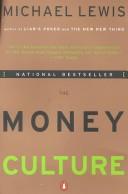
- The Money Culture1991
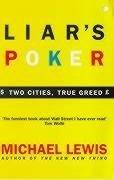
Life on Salomon Brothers' bond trading floor in the 1980s mortgage-bond boom.
“I do believe, as Michael Lewis writes in his intriguing 1989 book, "Liar's Poker," that it is unlikely that an individual unable to buck convention in one's life will suddenly be able to buck…” — Michael Burry
Source: MSN Money Strategy Lab journal, March 2, 2001 — archived
Recommended by: Michael Burry, Mohnish Pabrai, Nat Eliason and 3 others

The cultural rift between America and Japan, through people working across it.

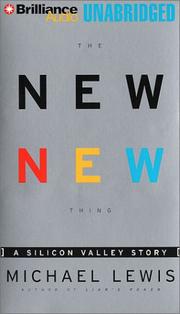
Jim Clark, founder of Silicon Graphics and Netscape, starts a third company in 1999.
Recommended by: Ryan Holiday, Andrew Chen, Austen Allred and 1 other
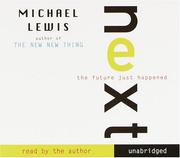
How the internet let amateurs topple old professions such as lawyers and stock gurus.
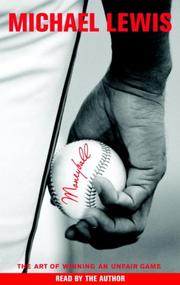
How the Oakland A's won on a small payroll by buying players the market undervalued.
“understanding how to buy undervalued players is very similar to buying undervalued stocks and so that's a really helpful book” — Joel Greenblatt
Source: Masters in Business transcript: Joel Greenblatt (2018)
Recommended by: Joel Greenblatt, Mohnish Pabrai, Ev Williams and 2 others

A boy from a poor, broken home discovers football and rises to the NFL.
Recommended by: Ev Williams
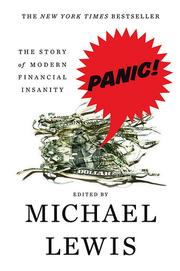
Journalism written during four crises, from the 1987 crash to LTCM's collapse.
Recommended by: Mohnish Pabrai, Seth Klarman

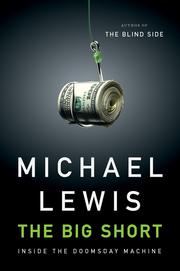
The few investors who saw subprime mortgage bonds would fail, and bet against them.
Recommended by: Mohnish Pabrai and 5 others
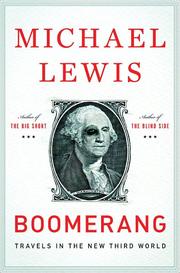
How Iceland, Greece, Ireland, Germany and California each spent cheap credit.
Recommended by: Mohnish Pabrai, Alfred Lin and 1 other

How a trader uncovered high-frequency front-running and built the IEX exchange.
Recommended by: Mohnish Pabrai, Nat Eliason
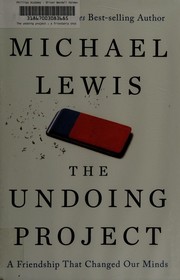
Michael Lewis's account of the Kahneman-Tversky collaboration works as intellectual biography and as a second path through the research for readers who find academic writing slow. The friendship and its eventual fracture clarifies how two very different minds produced work that neither could have done alone.
Recommended by: Andrew Wilkinson, Mohnish Pabrai, Ray Dalio and 6 others


Sam Bankman-Fried's rise through Jane Street, Alameda and FTX to its collapse.
Recommended by: Andrew Wilkinson

 Liar's Poker | Life on Salomon Brothers' bond trading floor in the 1980s mortgage-bond boom. | 1989 | T1 | Michael Burry, Mohnish Pabrai, Nat Eliason and 3 others |
 Pacific Rift | The cultural rift between America and Japan, through people working across it. | 1991 | – | |
 The Money Culture | Collected 1980s finance essays | 1991 | T3 | – |
 Trail Fever | Reissued as Losers | 1997 | – | |
 The New New Thing | Jim Clark, founder of Silicon Graphics and Netscape, starts a third company in 1999. | 1999 | T2 | Ryan Holiday, Andrew Chen, Austen Allred and 1 others |
 Next: The Future Just Happened | How the internet let amateurs topple old professions such as lawyers and stock gurus. | 2001 | – | |
 Moneyball | How the Oakland A's won on a small payroll by buying players the market undervalued. | 2003 | T1 | Joel Greenblatt, Mohnish Pabrai, Ev Williams and 2 others |
 Coach | – | 2005 | Mohnish Pabrai | |
 The Blind Side | A boy from a poor, broken home discovers football and rises to the NFL. | 2006 | Ev Williams | |
 Panic: The Story of Modern Financial Insanity | Journalism written during four crises, from the 1987 crash to LTCM's collapse. | 2008 | T4 | Mohnish Pabrai, Seth Klarman |
 Home Game | – | 2009 | Andrew Wilkinson, Sheryl Sandberg | |
 The Big Short | The few investors who saw subprime mortgage bonds would fail, and bet against them. | 2010 | T1 | Mohnish Pabrai, Rational Capital Investment Fund, Sheryl Sandberg and 3 others |
 Boomerang | How Iceland, Greece, Ireland, Germany and California each spent cheap credit. | 2011 | T1 | Mohnish Pabrai, Alfred Lin, The Barefoot Investor |
 Flash Boys | How a trader uncovered high-frequency front-running and built the IEX exchange. | 2014 | T4 | Mohnish Pabrai, Nat Eliason |
 The Undoing Project | Michael Lewis's account of the Kahneman-Tversky collaboration works as intellectual biography and as a second path through the research for readers who find academic writing slow. The friendship and its eventual fracture clarifies how two very different minds produced work that neither could have done alone. | 2016 | T3 | Andrew Wilkinson, Mohnish Pabrai, Ray Dalio and 6 others |
 The Fifth Risk | – | 2018 | Alfred Lin, Nick Crocker | |
 The Premonition | – | 2021 | – | |
 Going Infinite | Sam Bankman-Fried's rise through Jane Street, Alameda and FTX to its collapse. | 2023 | T2 | Andrew Wilkinson |
 Who Is Government? | Anthology edited by Lewis | 2025 | – |
| The insider: how Michael Lewis got a backstage pass for the fall of Sam Bankman-Fried | The Guardian | 2023 |
| Michael Lewis: the scourge of Wall Street | The Guardian | 2016 |
| Why It’s Good to Be Michael Lewis Paywall | New York Magazine | 2011 |