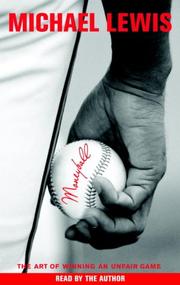
Moneyball
Mispriced player assets inside a payroll-constrained franchise.
Summary
Lewis follows the Oakland Athletics under general manager Billy Beane, a team with one of the lowest payrolls in baseball that repeatedly reached the playoffs by identifying players the market undervalued. The central argument is that the market for baseball players was inefficient because it priced traditional scouting judgments that did not predict run production.
The analytical content comes from Bill James and the sabermetric tradition. On-base percentage predicted run scoring better than batting average, and it was cheap because nobody valued walks. Defensive statistics were unreliable, so Oakland weighted them less. Stolen bases and sacrifice bunts destroyed expected runs more often than they created them. College players had larger and more reliable statistical records than high school players, which made them safer draft choices.
Lewis documents the internal resistance from scouts whose expertise was being displaced, the draft room arguments, and the acquisition of specific undervalued players including Scott Hatteberg, Chad Bradford and David Justice. The book's influence went far beyond baseball, into other sports and into business, where it became shorthand for using data against entrenched expert judgment.
The criticisms are substantial. Oakland's success depended heavily on three exceptional starting pitchers acquired through high draft picks, which the book underplays. The specific inefficiency in on-base percentage disappeared within a few years as other teams adopted the analysis, which demonstrates that the method rather than the metric was the lesson. Several scouts have disputed Lewis's portrayal. The team never won a World Series with this approach.
Key takeaways 8
- The market for baseball players priced traditional scouting judgments that did not predict the outcome the team was trying to buy.
- On-base percentage predicted run scoring better than batting average and was cheap because the market did not value walks.
- Buying the undervalued input rather than the recognised one is the mechanism, and it stops working once competitors adopt the same analysis.
- Expert intuition developed over decades can be systematically wrong when the experts have never had their judgments scored against outcomes.
- Actions that appear productive, including stolen bases and sacrifice bunts, reduced expected runs more often than they increased them.
- College players offered larger and more reliable statistical records than high school players, which made them lower-variance selections.
- The specific inefficiency disappeared within a few years as other teams adopted the analysis, which shows the method rather than the metric was the durable lesson.
- Oakland's results depended substantially on three exceptional pitchers acquired through high draft picks, which the book underweights.
Who should read it
Operators and investors looking for a case study in buying undervalued inputs against entrenched expert judgment, with the limits of the case understood.
About Michael Lewis
Financial journalist and author; former Salomon Brothers bond salesman
Liar's Poker, The Big Short and Flash Boys are the primary narrative sources later writers build on for Wall Street of the 1980s, the subprime crisis and high-frequency trading.
Who recommended it 5 · 2 direct
“understanding how to buy undervalued players is very similar to buying undervalued stocks and so that's a really helpful book”
Similar books 6
Chosen by shared topics, the entries that hold them, and the people who recommended both.
Complex problems yield to trial and error, not expert plans, and how to run it.
Recommended by: Mohnish Pabrai, Patrick O'Shaughnessy
The biases that distort managers' decisions, with exercises that show them.
Recommended by: Mohnish Pabrai, Charlie Munger and 1 other
Recommended by: Mohnish Pabrai
Recommended by: Mohnish Pabrai
How judging firms by their results corrupts most business research and advice.
“Phil Rosenzweig's must-read book, The Halo Effect, shows this idea is alive and well in the business world.” — Michael Mauboussin
Source: Was Harry Potter Inevitable? Cumulative Advantage, Counterfactuals, and the Halo Effect (Legg Mason)
Recommended by: Michael Mauboussin, Ev Williams and 1 other
How the way organisations divide work blinds them, and how some break down silos.
“Gillian Tett's new book the Silo Effect, a thoughtful discussion of the downside of narrow specialisation.” — Seth Klarman
Source: Klarman on Gillian Tett on the downside of specialisation
Recommended by: Seth Klarman
Where it sits in the reference 4
Topics