Judgment in Managerial Decision Making
The standard text on decision bias written for managers
Summary
Bazerman wrote the standard textbook applying behavioural decision research to management, now in many editions and used in business school courses. It is structured as a survey of biases with exercises that demonstrate each on the reader before the explanation is given.
The coverage includes the three heuristics from Kahneman and Tversky with their associated biases; the confirmation trap and the tendency to seek supporting rather than disconfirming evidence; framing effects and the reference point dependence of prospect theory; escalation of commitment to a failing course of action, which Bazerman researched directly with his dollar auction and other experiments; the winner's curse in competitive bidding, where the winning bid is systematically the most overoptimistic; the mythical fixed pie assumption in negotiation, which prevents integrative agreements; overconfidence in the calibration of estimates; and bounded ethicality, meaning the ways people act unethically without recognising it.
The negotiation chapters are the most applied, covering the failure to consider the other side's perspective and information, the effect of anchoring on first offers, and the conditions under which value can be created rather than divided. Bazerman's later work on noticing, covering how people fail to see information that is available, appears in recent editions.
The book is a textbook and reads as one, with exercises, review questions and a survey structure. Several classic findings it covers have replicated poorly, and recent editions address this unevenly. It is more systematic and less readable than the popular treatments, which is what makes it useful as a reference rather than as a book to read through.
Key takeaways 8
- Decision biases can be demonstrated on the reader directly, which establishes that knowing about them does not prevent them.
- People seek evidence confirming their existing position and do not seek the disconfirming evidence that would test it.
- Commitment to a failing course of action escalates as investment increases, and the escalation is driven by justification rather than by analysis.
- The winning bid in a competitive auction is systematically the most overoptimistic estimate, which is the winner's curse.
- Negotiators assume a fixed pie and therefore fail to find agreements that would benefit both parties.
- Estimates are systematically overconfident, with confidence intervals far too narrow across nearly every domain tested.
- People act unethically without recognising it, because the recognition would require an accurate view of their own motives.
- Available information is frequently not noticed, which is a separate failure from misinterpreting information that was noticed.
Who should read it
Managers and students who want a systematic reference on decision biases with exercises, rather than a narrative treatment.
Who recommended it 3 · 1 direct
Similar books 6
Chosen by shared topics, the entries that hold them, and the people who recommended both.
Complex problems yield to trial and error, not expert plans, and how to run it.
Recommended by: Mohnish Pabrai, Patrick O'Shaughnessy
How the wish for agreement in close groups led to fiascos like the Bay of Pigs.
“One of my favourite books, Groupthink by Irving Janis, breaks down how small, cohesive groups of very smart people can make very bad decisions.” — Adam Weiss
Source: Weiss naming Groupthink one of his favourite books
Recommended by: Adam Weiss, Barton Biggs
Recommended by: Mohnish Pabrai

Why people mistake luck for skill, above all in markets.
“Fooled by Randomness is a serious, intellectually sophisticated book, well worth reading carefully. At times, the book is condescending. Nevertheless, there are some great insights.” — Barton Biggs
Source: Biggs on a sophisticated book worth reading carefully
Recommended by: Barton Biggs, Michael Mauboussin and 11 others
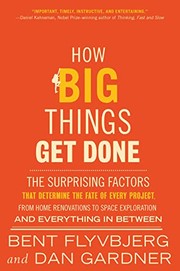
Why megaprojects overrun, and the reference-class forecasting correction.

A life across economics, psychology, organisations and artificial intelligence.
Recommended by: Charlie Munger, Mohnish Pabrai
Where it sits in the reference 4
Topics