
Groupthink
The original study of how cohesive groups suppress dissent
Summary
Janis, a Yale psychologist, coined the term groupthink and defined it as a mode of thinking that occurs when the desire for concurrence in a cohesive group overrides the realistic appraisal of alternatives. His method is the analysis of specific policy failures through the available records. The cases include the Bay of Pigs invasion, the failure to anticipate Pearl Harbor, the escalation in Vietnam, and the Korean War decision to cross the thirty-eighth parallel. His contrasting cases, where the same institutions produced good decisions, are the Cuban missile crisis and the Marshall Plan.
He identifies eight symptoms grouped into three types: overestimation of the group, including an illusion of invulnerability and a belief in its inherent morality; closed-mindedness, including collective rationalisation and stereotyped views of opponents; and pressure toward uniformity, including self-censorship, an illusion of unanimity, direct pressure on dissenters and self-appointed mindguards who protect the group from contrary information.
His prescriptions include that the leader should withhold their own preference until others have spoken, that the group should assign someone to argue the opposing case, that subgroups should work separately and reconvene, that outside experts should be brought in to challenge, and that a second-chance meeting should be held after a preliminary decision to air remaining doubts.
The Kennedy administration adopted several of these after the Bay of Pigs, and Janis attributes the different quality of the missile crisis decisions to them. The methodology is retrospective case analysis, and experimental support for groupthink as a unified construct has been weak. The individual mechanisms including self-censorship and conformity pressure are well supported separately.
Key takeaways 8
- A cohesive group's desire for agreement can override realistic appraisal of alternatives, which produces decisions no member individually supported.
- Self-censorship by members who have doubts creates an illusion of unanimity that reinforces the group's confidence.
- Members who protect the group from contrary information act as mindguards, which prevents disconfirming evidence from reaching the discussion.
- A leader who states their preference first determines the discussion, so the leader should withhold their view until others have spoken.
- Assigning someone to argue the opposing case produces the challenge that voluntary dissent will not.
- Subgroups working separately and then reconvening produce genuinely different assessments rather than convergence.
- A second meeting held after a preliminary decision, specifically to air remaining doubts, catches objections that were suppressed the first time.
- The Kennedy administration adopted several of these practices after the Bay of Pigs and produced different decisions during the missile crisis.
Who should read it
Leaders of decision-making groups who want the specific mechanisms that suppress dissent and the procedural remedies for each.
Who recommended it 2 · 2 direct
“One of my favourite books, Groupthink by Irving Janis, breaks down how small, cohesive groups of very smart people can make very bad decisions.”
“Years ago Irving Janis, a Yale psychologist, wrote a wonderful little book called Groupthink, which compellingly highlights its dangers. It is full of fascinating case studies of the phenomenon, but…”
Similar books 6
Chosen by shared topics, the entries that hold them, and the people who recommended both.

Complex problems yield to trial and error, not expert plans, and how to run it.
Recommended by: Mohnish Pabrai, Patrick O'Shaughnessy

The biases that distort managers' decisions, with exercises that show them.
Recommended by: Mohnish Pabrai, Charlie Munger and 1 other
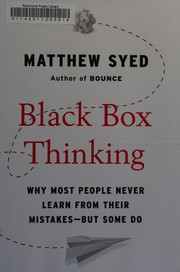
Why aviation learns from every failure while fields like medicine hide theirs.
Recommended by: Richard Branson, Daniel Ek

Builds out Munger's latticework idea from primary sources.
“…books I've recommended, highlighted to death, or forced on friends.” — Andrew Wilkinson
Source: Andrew Wilkinson's Bookshelf, neverenough.com
Recommended by: Andrew Wilkinson, Nat Eliason and 8 others
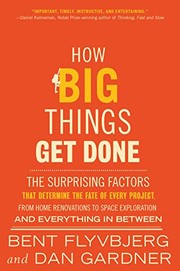
Why megaprojects overrun, and the reference-class forecasting correction.
Where it sits in the reference 4
Topics