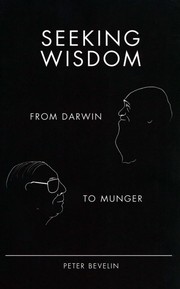
Seeking Wisdom: From Darwin to Munger
Builds out Munger's latticework idea from primary sources.
Summary
Bevelin assembles a structured treatment of human misjudgment and of thinking tools, built largely from Munger, Buffett, Darwin and Feynman, with heavy quotation throughout. The book has four parts: what influences our thinking, the psychology of misjudgment, the physics and mathematics of misjudgment, and guidelines for better thinking.
The psychology section expands Munger's list of misjudgment causes into a longer catalogue with supporting research and examples, covering bias from incentives, self-interest, association, liking, consistency, deprival, envy, contrast, authority, social proof and stress. The physics and mathematics section covers systems thinking, scale effects, the difference between correlation and causation, base rates, regression to the mean, compound interest arithmetic and probability errors.
The final section is the practical one. Bevelin gives guidelines including inversion, working out the base rate before assessing a specific case, using checklists, defining the circle of competence, simplifying by avoiding problems rather than solving them, and thinking about second-order consequences by asking what happens next.
The book is essentially a well-organised compilation rather than an original work, and Bevelin says so. Readers who have read Munger's Psychology of Human Misjudgment and Kahneman will find much of it familiar. The quotation density makes it read as a commonplace book, which suits reference use better than sequential reading. Some of the psychology citations date from before the replication crisis and should be checked. Its value is the organisation, which is better than the sources it draws on.
Key takeaways 8
- Human misjudgment follows a limited number of recurring causes, and a person can learn them as a list and check against it.
- Incentives explain more behaviour than any other single factor, so the first question about any decision should be who benefits.
- Inverting a problem, by asking what would produce failure and then avoiding it, is more reliable than pursuing success directly.
- Base rates should be established before any specific case is assessed, because case detail crowds out statistical information.
- Avoiding difficult problems produces better results than solving them, because the returns to avoiding error exceed the returns to brilliance.
- Second-order consequences matter more than first-order ones and are systematically ignored because they require the additional question of what happens next.
- Checklists compensate for the fact that knowing about an error does not prevent committing it.
- A person should stay inside a clearly defined circle of competence and treat the boundary as more important than the size of the circle.
Who should read it
Investors building a personal checklist of recurring errors, who want Munger's framework organised and expanded with sources.
About Peter Bevelin
Swedish investor and author who assembles the psychology, physics and biology behind Charlie Munger's approach to thinking.
Seeking Wisdom collects the misjudgement patterns, cross-disciplinary principles and checklists underlying Munger's method, sourced back to Darwin, Feynman, Munger and Buffett with citations throughout. The Sherlock Holmes volume drills the same procedure as observation and inference practice.
Who recommended it 10 · 3 direct
“…books I've recommended, highlighted to death, or forced on friends.”
“We've added a few titles this year. Among them are Seeking Wisdom: From Darwin to Munger by Peter Bevelin”
Similar books 6
Chosen by shared topics, the entries that hold them, and the people who recommended both.
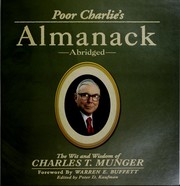
Speeches making the case for a latticework of mental models from many fields.
“…books I've recommended, highlighted to death, or forced on friends.” — Andrew Wilkinson
Source: Andrew Wilkinson's Bookshelf, neverenough.com
Recommended by: Andrew Wilkinson, Charlie Munger and 26 others
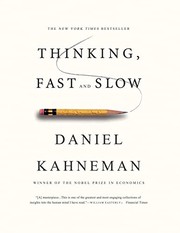
Kahneman's synthesis of behavioral economics is the cognitive science underpinning every negotiation tactic. Anchoring, loss aversion, framing effects, and the planning fallacy — understanding why these biases operate, not just that they exist, makes you harder to exploit and more honest about your own irrationality.
“…books I've recommended, highlighted to death, or forced on friends.” — Andrew Wilkinson
Source: Andrew Wilkinson's Bookshelf, neverenough.com
Recommended by: Andrew Wilkinson, Charles de Vaulx and 32 others

Dialogue form; Munger's inversion habit worked through systematically.

Bevelin distilling observation and inference habits from Sherlock Holmes
Recommended by: Mohnish Pabrai, Patrick O'Shaughnessy and 1 other
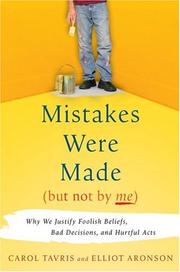
Tavris and Aronson focus on what happens after a bias fires: the self-justification, narrative revision, and escalating commitment that follow. Cognitive dissonance, they argue, is not a personality flaw but a universal mechanism, and understanding it explains police misconduct, political tribalism, and therapy failures in a single framework.
Recommended by: Mohnish Pabrai, Nat Eliason and 2 others
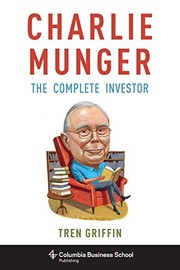
Synthesis of his mental-models framework, not a life.
“…books I've recommended, highlighted to death, or forced on friends.” — Andrew Wilkinson
Source: Andrew Wilkinson's Bookshelf, neverenough.com
Recommended by: Andrew Wilkinson, Christopher Bloomstran and 7 others
Where it sits in the reference 9
Topics