
Mistakes Were Made (But Not by Me)
Tavris and Aronson focus on what happens after a bias fires: the self-justification, narrative revision, and escalating commitment that follow. Cognitive dissonance, they argue, is not a personality flaw but a universal mechanism, and understanding it explains police misconduct, political tribalism, and therapy failures in a single framework.
Summary
Tavris and Aronson apply cognitive dissonance theory to self-justification, arguing that people who hold two conflicting cognitions, typically I am a competent and decent person and I did something incompetent or harmful, resolve the conflict by revising their view of the action rather than of themselves. The revision happens automatically and below awareness, which is why self-justification is not the same as lying.
The central image is the pyramid, in which two people who start close together make slightly different initial choices and then justify them, which moves them apart, and each subsequent justification widens the distance until they occupy opposite positions and cannot understand how the other arrived there.
The applications are the strongest part. They cover prosecutors and police who refuse to accept DNA exonerations, because accepting them requires accepting that they imprisoned an innocent person; therapists who elicited false memories of abuse and never retracted; doctors who cannot acknowledge diagnostic errors; the escalation of commitment in politics and war; and the dynamics of marriages where each partner justifies their own behaviour and reinterprets the other's history. They argue that memory itself is reconstructed to support the current self-image, so people are not lying when they misremember their own past positions.
The practical prescription is limited: separate mistakes from identity so that admitting error does not threaten self-worth, and build institutions that make acknowledgment cheap. The book offers no evidence that this works. Some of the supporting social psychology has replicated poorly, and dissonance research has itself been re-examined. The pyramid model and the accounts of institutional refusal to admit error are the durable parts and apply directly to investment decisions held past the evidence.
Key takeaways 8
- When actions conflict with self-image, people revise their view of the action rather than of themselves, and the revision happens without awareness.
- Self-justification differs from lying, because the person genuinely believes the revised account by the time they state it.
- Two people making slightly different initial choices will justify their way to opposite positions, each unable to understand how the other got there.
- The more a person has invested in a decision, the stronger the justification becomes, which makes reversal harder exactly as the evidence accumulates.
- Memory is reconstructed to support the current self-image, so people misremember their own past positions in good faith.
- Institutions built around the infallibility of their professionals, including prosecutors and doctors, cannot correct errors because acknowledgment threatens the whole structure.
- Separating the mistake from the identity, so that admitting error does not imply being a bad person, is what makes correction possible.
- An apology that includes justification is not an apology and produces more resentment than silence.
Who should read it
Investors and executives who need to understand why they and their colleagues defend positions that the evidence has already contradicted.
Who recommended it 4 · 2 direct
Similar books 6
Chosen by shared topics, the entries that hold them, and the people who recommended both.
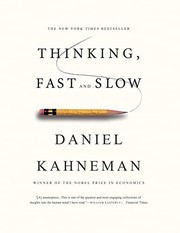
Kahneman's synthesis of behavioral economics is the cognitive science underpinning every negotiation tactic. Anchoring, loss aversion, framing effects, and the planning fallacy — understanding why these biases operate, not just that they exist, makes you harder to exploit and more honest about your own irrationality.
“…books I've recommended, highlighted to death, or forced on friends.” — Andrew Wilkinson
Source: Andrew Wilkinson's Bookshelf, neverenough.com
Recommended by: Andrew Wilkinson, Charles de Vaulx and 32 others

Builds out Munger's latticework idea from primary sources.
“…books I've recommended, highlighted to death, or forced on friends.” — Andrew Wilkinson
Source: Andrew Wilkinson's Bookshelf, neverenough.com
Recommended by: Andrew Wilkinson, Nat Eliason and 8 others
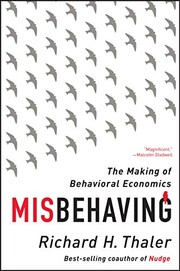
How behavioural economics was built against economists who assumed rational agents.
“He opens his new book, Misbehaving, with Vilfredo Pareto's assertion” — Howard Marks
Source: Oaktree memo 'On the Couch'
Recommended by: Howard Marks, Peter Mallouk, Tyler Cowen
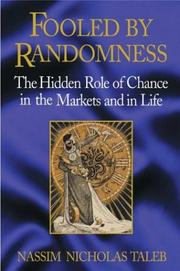
Why people mistake luck for skill, above all in markets.
“Fooled by Randomness is a serious, intellectually sophisticated book, well worth reading carefully. At times, the book is condescending. Nevertheless, there are some great insights.” — Barton Biggs
Source: Biggs on a sophisticated book worth reading carefully
Recommended by: Barton Biggs, Michael Mauboussin and 11 others
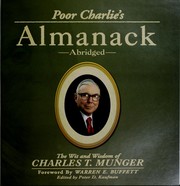
Speeches making the case for a latticework of mental models from many fields.
“…books I've recommended, highlighted to death, or forced on friends.” — Andrew Wilkinson
Source: Andrew Wilkinson's Bookshelf, neverenough.com
Recommended by: Andrew Wilkinson, Charlie Munger and 26 others

A working catalogue of 99 cognitive errors, organized so you can actually use it. Less academic than Kahneman, more encyclopedic than Duke. The format — one bias per short chapter — makes it useful as a pre-mortem checklist before consequential decisions.
Recommended by: Mohnish Pabrai
Where it sits in the reference 5
Topics