
Sunk Cost Fallacy
Money and effort already spent are gone and should not enter a forward decision, yet they reliably do, because abandoning a position feels like admitting error. In markets it shows up as averaging down on a broken thesis and as management defending a failed acquisition. The corrective is to ask what you would pay for the position today knowing nothing of what you paid before.
Start here
- Thinking in BetsAnnie Duke, 2018
- Mistakes Were Made (But Not by Me)Carol Tavris, Elliot Aronson, 2007
- Thinking, Fast and SlowDaniel Kahneman, 2011
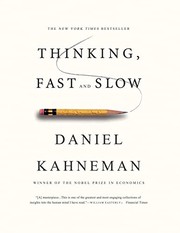
Kahneman's synthesis of behavioral economics is the cognitive science underpinning every negotiation tactic. Anchoring, loss aversion, framing effects, and the planning fallacy — understanding why these biases operate, not just that they exist, makes you harder to exploit and more honest about your own irrationality.
“…books I've recommended, highlighted to death, or forced on friends.” — Andrew Wilkinson
Source: Andrew Wilkinson's Bookshelf, neverenough.com
Recommended by: Andrew Wilkinson, Charles de Vaulx and 32 others
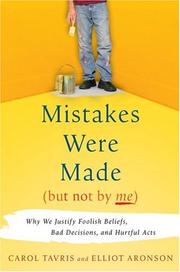
Tavris and Aronson focus on what happens after a bias fires: the self-justification, narrative revision, and escalating commitment that follow. Cognitive dissonance, they argue, is not a personality flaw but a universal mechanism, and understanding it explains police misconduct, political tribalism, and therapy failures in a single framework.
Recommended by: Mohnish Pabrai, Nat Eliason and 2 others
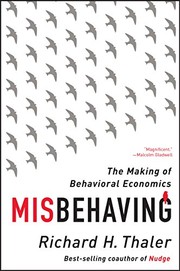
How behavioural economics was built against economists who assumed rational agents.
“He opens his new book, Misbehaving, with Vilfredo Pareto's assertion” — Howard Marks
Source: Oaktree memo 'On the Couch'
Recommended by: Howard Marks, Peter Mallouk, Tyler Cowen
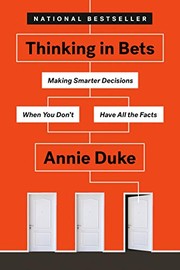
Judge decisions by their reasoning, not their outcomes, and think in odds.
Recommended by: Ev Williams, Ana Fabrega, Jason Fried and 5 others
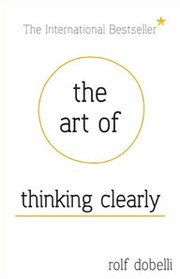
A working catalogue of 99 cognitive errors, organized so you can actually use it. Less academic than Kahneman, more encyclopedic than Duke. The format — one bias per short chapter — makes it useful as a pre-mortem checklist before consequential decisions.
Recommended by: Mohnish Pabrai

 Mohnish Pabrairecommends 3 books here
 Marc Andreessenrecommends 2 books here
 Ev Williamsrecommends 2 books here
 Charlie Mungerrecommends 1 book here
 Howard Marksrecommends 1 book here
 Nassim Nicholas Talebrecommends 1 book here
 Ray Daliorecommends 1 book here
 Seth Klarmanrecommends 1 book here
Show all 43
 Tyler Cowenrecommends 1 book here
 Albert Wengerrecommends 1 book here
 Alfred Linrecommends 1 book here
 Amy Hoodrecommends 1 book here
 Bill Gatesrecommends 1 book here
 Bryan Johnsonrecommends 1 book here
 Daniel Burkarecommends 1 book here
 Julie Zhuorecommends 1 book here
 Mike Cannon-Brookesrecommends 1 book here
 Naval Ravikantrecommends 1 book here
 Peter Attiarecommends 1 book here
 Ron Conwayrecommends 1 book here
 Sam Altmanrecommends 1 book here
 Satya Nadellarecommends 1 book here
 Stewart Brandrecommends 1 book here
 Tristan Harrisrecommends 1 book here
- Commitment and Consistency BiasShane Parrish · essay · Why stated positions harden into sunk-cost traps.
- Decision JournalsShane Parrish · essay · Recording the reasoning so hindsight cannot rewrite it.
- Mental LiquidityMorgan Housel · essay · The ability to change your mind as evidence changes.