
Behavioural Edge and Market Psychology
Treating other investors' predictable errors as the source of return, and one's own as the main risk.
Start here
- The Psychology of MoneyMorgan Housel, 2020
- Thinking, Fast and SlowDaniel Kahneman, 2011
- Your Money and Your BrainJason Zweig, 2007
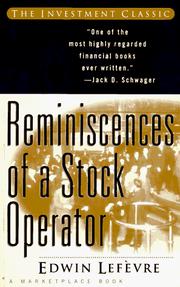
A speculator modelled on Jesse Livermore learns to read and trade the market.
“The finest trading book ever written is Reminiscences of a Stock Operator by Edwin LeFevre. It is colloquial reminiscences by a legendary speculator of the mistakes and lessons he learned over a…” — Barton Biggs
Source: Biggs calling it the finest trading book ever written
Recommended by: Barton Biggs, Bill Miller, Colm O'Shea and 5 others

Why Wall Street grows rich on fees while its clients' results stay ordinary.
“recommended reading for those with a healthy disdain for Wall Street and its practices as well as an interest in post-boom psychology” — Nick Sleep
Source: Nomad Investment Partnership, Interim Report for the period ended June 30th, 2002, p. 10
Recommended by: Mohnish Pabrai, Nick Sleep, Warren Buffett and 4 others

Markets as a game of crowd psychology, seen through 1960s go-go Wall Street.
“One of the great books about investing is Adam Smith's 'The Money Game' which was published in 1967.” — Barton Biggs
Source: Biggs on one of the great books about investing
Recommended by: Barton Biggs, Howard Marks, Mohnish Pabrai and 5 others
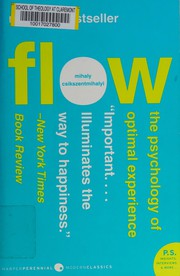
Flow, the state of full absorption in a hard task, and how to find it more often.
“…books I've recommended, highlighted to death, or forced on friends.” — Andrew Wilkinson
Source: Andrew Wilkinson's Bookshelf, neverenough.com
Recommended by: Andrew Wilkinson, Jim Collins and 2 others

Kahneman's synthesis of behavioral economics is the cognitive science underpinning every negotiation tactic. Anchoring, loss aversion, framing effects, and the planning fallacy — understanding why these biases operate, not just that they exist, makes you harder to exploit and more honest about your own irrationality.
“…books I've recommended, highlighted to death, or forced on friends.” — Andrew Wilkinson
Source: Andrew Wilkinson's Bookshelf, neverenough.com
Recommended by: Andrew Wilkinson, Charles de Vaulx and 32 others
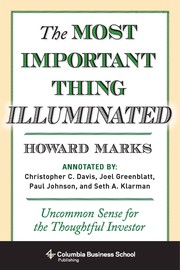
Second-level thinking on risk and cycles, with notes by Klarman and Greenblatt.
“…books I've recommended, highlighted to death, or forced on friends.” — Andrew Wilkinson
Source: Andrew Wilkinson's Bookshelf, neverenough.com
Recommended by: Andrew Wilkinson, Mohnish Pabrai and 3 others
Performing under pressure by quieting the self-interference that spoils play.
Recommended by: Bill Gates, Nat Eliason, Brad Feld and 1 other
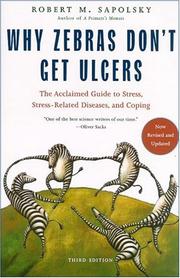
Chronic stress and how it affects the quality of decisions.
“it's a wonderful title and it's a wonderful book about the idea of stress” — Michael Mauboussin
Source: The Tim Ferriss Show #659 — official transcript
Recommended by: Michael Mauboussin

A value investor's memoir from the 1950s to the dot-com crash, on market psychology.
“Personal biographies, the histories, are the most interesting. I have Benjamin Graham's personal biography, also the biography of Leon Levy, The Mind of Wall Street. These are all great.” — Chris Mittleman
Source: Mittleman on why investor biographies are the most useful reading
Recommended by: Chris Mittleman
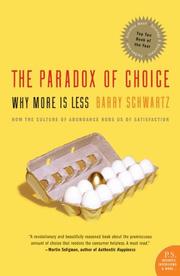
Beyond a point, more options make people less likely to choose and less satisfied.
“It is almost ten years since Barry Schwartz published his popular psychology book "The Paradox of Choice".” — Nick Sleep
Source: Nomad Investment Partnership, Annual Letter for the period ended December 31st, 2013, p. 216
Recommended by: Nat Eliason, Nick Sleep and 1 other
Neuroscience of investing decisions, written by Graham's modern editor.
Recommended by: Mohnish Pabrai

Value investing joined with behavioural finance, from a strategist's research notes.
Recommended by: Mohnish Pabrai

How testosterone feeds traders' winning streaks and appetite for risk.
Recommended by: Nassim Nicholas Taleb

The habit loop of cue, routine and reward, and how to change a habit by its routine.
“I love his [Charles Duhigg's] book. By the way I got his book and gave it to everyone in the company [Bridgewater].” — Ray Dalio
Source: Dalio on giving Duhigg's book to everyone at Bridgewater
Recommended by: Mohnish Pabrai, Nat Eliason, Naval Ravikant and 6 others
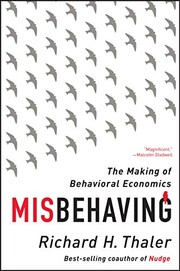
How behavioural economics was built against economists who assumed rational agents.
“He opens his new book, Misbehaving, with Vilfredo Pareto's assertion” — Howard Marks
Source: Oaktree memo 'On the Couch'
Recommended by: Howard Marks, Peter Mallouk, Tyler Cowen
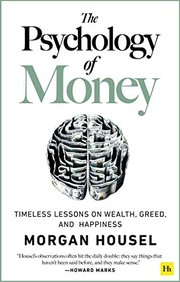
Twenty short essays on why behaviour matters more than knowledge with money.
“…books I've recommended, highlighted to death, or forced on friends.” — Andrew Wilkinson
Source: Andrew Wilkinson's Bookshelf, neverenough.com
Recommended by: Andrew Wilkinson, Nat Eliason, Ali Abdaal and 10 others

Common investing mistakes catalogued by a working asset manager
“Barry Ritholtz dreamed up the perfect concept and wrote the perfect book to suit it” — Christopher Bloomstran
Source: Semper Augustus 2025 Letter to Clients, 'Books and Music', p. 88
Recommended by: Christopher Bloomstran
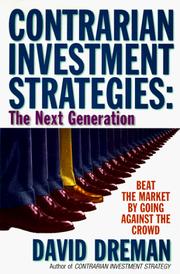
Data showing that low-expectation stocks beat popular ones over the long run.
“all these people really were helpful in forming and getting me involved in investing” — Joel Greenblatt
Source: Masters in Business transcript: Joel Greenblatt (2018)
Recommended by: Joel Greenblatt, Mohnish Pabrai and 1 other
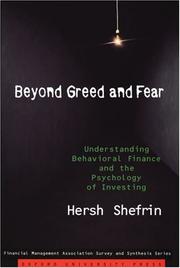
Behavioural finance for practitioners: mental shortcuts, framing and market errors.
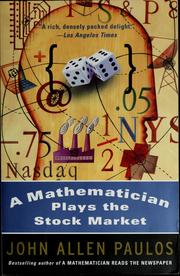
A mathematician's own losses used to explain market probability errors
Recommended by: Mohnish Pabrai
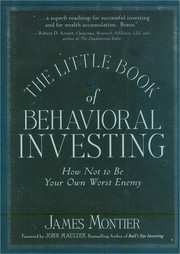
Practical countermeasures rather than a catalogue of biases.
Recommended by: Mohnish Pabrai
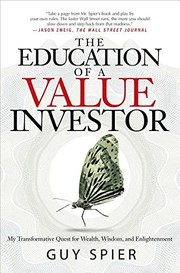
Spier on the psychology and habits behind durable value investing.
“…books I've recommended, highlighted to death, or forced on friends.” — Andrew Wilkinson
Source: Andrew Wilkinson's Bookshelf, neverenough.com
Recommended by: Andrew Wilkinson, Christopher Bloomstran and 1 other
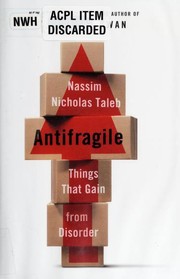
Incerto volume 4
“Nassim Taleb, author of the new book Antifragile, praises volatility and criticises those who would artificially damp it at great unseen cost. Taleb advises us to be 'anti-fragile'. This is exactly…” — Seth Klarman
Source: Klarman on Taleb's praise of volatility and what Baupost strives for
Recommended by: Mohnish Pabrai, Nat Eliason and 25 others

Why money is hard to think about, and the errors people make in spending.
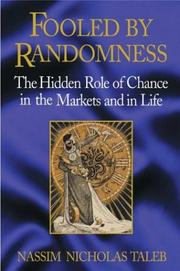
Why people mistake luck for skill, above all in markets.
“Fooled by Randomness is a serious, intellectually sophisticated book, well worth reading carefully. At times, the book is condescending. Nevertheless, there are some great insights.” — Barton Biggs
Source: Biggs on a sophisticated book worth reading carefully
Recommended by: Barton Biggs, Michael Mauboussin and 11 others
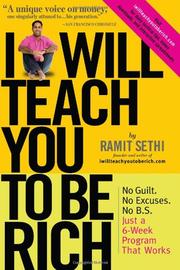
A six-week programme to automate banking, credit, saving and investing.
Recommended by: Mohnish Pabrai, Nat Eliason and 3 others
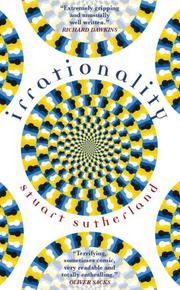
Experiments from psychology showing the systematic errors in how people reason.

Klontz and Klontz introduced the concept of money scripts — inherited, often unconscious beliefs about money formed in childhood — and this book is the clearest account of the four script types: money avoidance, money worship, money status, and money vigilance. The clinical case material grounds the theory in ways that purely empirical books don't.

Tavris and Aronson focus on what happens after a bias fires: the self-justification, narrative revision, and escalating commitment that follow. Cognitive dissonance, they argue, is not a personality flaw but a universal mechanism, and understanding it explains police misconduct, political tribalism, and therapy failures in a single framework.
Recommended by: Mohnish Pabrai, Nat Eliason and 2 others
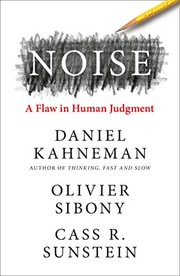
Kahneman died 27 March 2024; this was his last book.
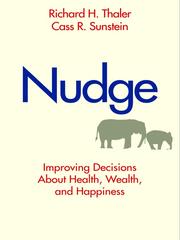
Nudge: The Final Edition published 2021.
Recommended by: Tristan Harris
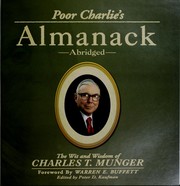
Speeches making the case for a latticework of mental models from many fields.
“…books I've recommended, highlighted to death, or forced on friends.” — Andrew Wilkinson
Source: Andrew Wilkinson's Bookshelf, neverenough.com
Recommended by: Andrew Wilkinson, Charlie Munger and 26 others
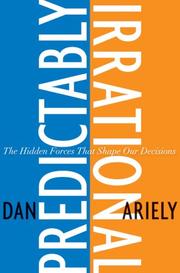
Experiments showing that people depart from rational choice in repeatable ways.
Recommended by: Mohnish Pabrai, Alfred Lin, Anna Cheng and 6 others

Mullainathan and Shafir's research on cognitive bandwidth shows that financial scarcity — not just poverty but any experience of not having enough — tunnels attention in ways that make long-term planning harder and short-term mistakes more likely. It reframes willpower-based explanations of financial failure without excusing the structural causes.
Recommended by: Mohnish Pabrai, Daniel Kahneman and 1 other
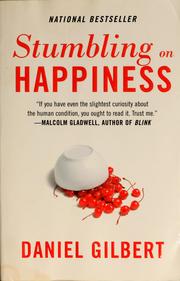
Daniel Gilbert's accessible account of affective forecasting — our poor ability to predict what will make us happy. His research on immune neglect and focalism is less cited than Kahneman's work but equally well-evidenced.
Recommended by: Andrew Wilkinson, Mohnish Pabrai and 3 others

Experiments showing most cheating is many people cheating a little.
Recommended by: Mohnish Pabrai
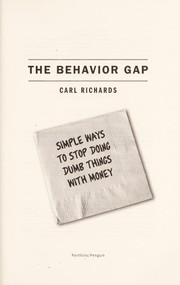
Sketches of the gap between what people know to do with money and what they do.
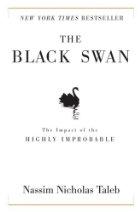
Rare, unforeseen, high-impact events drive history, explained only after the fact.
“The message of The Black Swan is how important it is to realize that the things everyone rules out can still come to pass.” — Howard Marks
Source: Oaktree memo 'The Limits to Negativism'
Recommended by: Howard Marks, Marc Andreessen, Nat Eliason and 18 others

Hanson and Simler make the most provocative claim in this list: that self-deception is not a flaw but an adaptive strategy — we hide our real motives from ourselves so we can more convincingly hide them from others. If true, the entire bias-correction project has a ceiling. This book belongs at the end so it reframes everything before it.
Recommended by: Nat Eliason, Ali Abdaal, Emmett Shear and 3 others
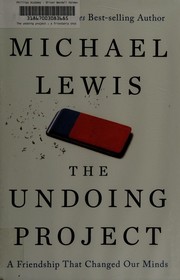
Michael Lewis's account of the Kahneman-Tversky collaboration works as intellectual biography and as a second path through the research for readers who find academic writing slow. The friendship and its eventual fracture clarifies how two very different minds produced work that neither could have done alone.
Recommended by: Andrew Wilkinson, Mohnish Pabrai, Ray Dalio and 6 others
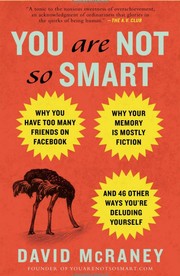
One mental bias per chapter, the research behind it and how people fall for it.
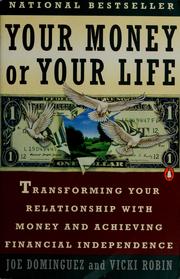
A nine-step programme that counts spending in hours of life energy.
Recommended by: Ali Abdaal, Graham Stephan and 1 other
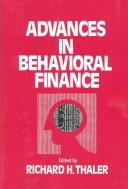

Life as speculation, with lessons on markets, games, careers and relationships.
Recommended by: Mohnish Pabrai
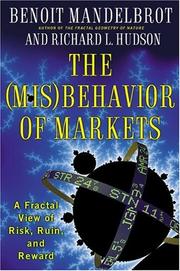
Why standard finance models understate market risk, from fractal geometry's creator.
Recommended by: Mohnish Pabrai, Nassim Nicholas Taleb and 1 other
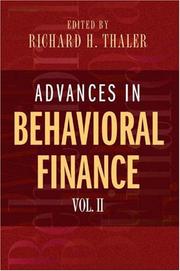
Edited volume.
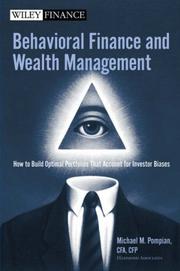
Applies behavioural finance to building portfolios for real clients.

Classifies investors into behavioural types for advice and design.
 Richard H. Thalerwrote 4 books here
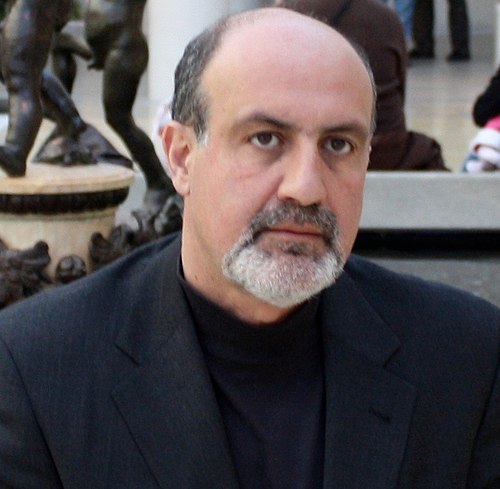 Nassim Nicholas Talebwrote 3 books here
 Dan Arielywrote 3 books here
 Daniel Kahnemanwrote 2 books here
 Adam Smithwrote 1 book here
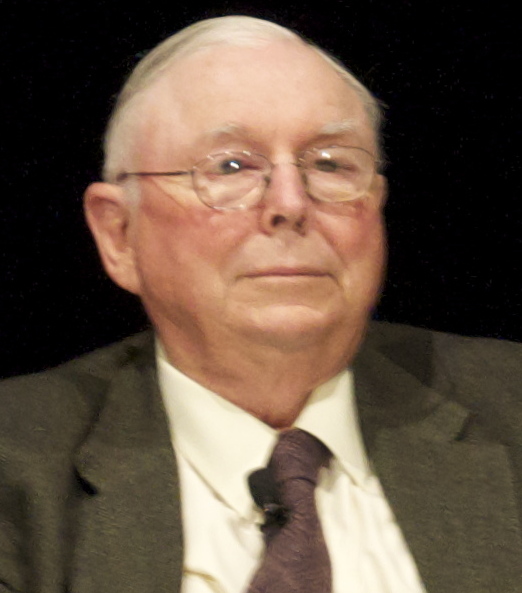 Charlie Mungerwrote 1 book here
 Edwin Lefevrewrote 1 book here
 Howard Markswrote 1 book here
 Michael Lewiswrote 1 book here
 Mohnish Pabrairecommends 24 books here
 Naval Ravikantrecommends 7 books hereNassim Nicholas Talebrecommends 6 books hereHoward Marksrecommends 5 books here
 Patrick Collisonrecommends 5 books here
 Marc Andreessenrecommends 4 books here
 Warren Buffettrecommends 4 books here
 Bill Gatesrecommends 4 books here
Show all 112
 Ev Williamsrecommends 4 books here
 Matt Mullenwegrecommends 4 books here
 Ray Daliorecommends 3 books here
 Tyler Cowenrecommends 3 books here
 Alfred Linrecommends 3 books here
 James Altucherrecommends 3 books here
 Tim Ferrissrecommends 3 books here
 Tristan Harrisrecommends 3 books hereCharlie Mungerrecommends 2 books here
 Seth Klarmanrecommends 2 books here
 Guy Spierrecommends 2 books here
 Ryan Holidayrecommends 2 books here
 Albert Wengerrecommends 2 books here
 Peter Attiarecommends 2 books here
 Ryan Petersonrecommends 2 books here
 Sam Altmanrecommends 2 books here
 Tom Bilyeurecommends 2 books here
 Vlad Tenevrecommends 2 books hereDaniel Kahnemanrecommends 1 book here
 Jim Collinsrecommends 1 book here
 Peter Thielrecommends 1 book here
 Brad Feldrecommends 1 book here
 Paul Tudor Jonesrecommends 1 book here
 Simon Sinekrecommends 1 book here
 Amy Hoodrecommends 1 book here
 Bryan Johnsonrecommends 1 book here
 Changpeng Zhaorecommends 1 book here
 Daniel Burkarecommends 1 book here
 Daniel Ekrecommends 1 book here
 Drew Houstonrecommends 1 book here
 Emmett Shearrecommends 1 book here
 Esther Dysonrecommends 1 book here
 Graham Stephanrecommends 1 book here
 Jeff Bezosrecommends 1 book here
 Julie Zhuorecommends 1 book here
 Keith Raboisrecommends 1 book here
 Mark Cubanrecommends 1 book here
 Max Levchinrecommends 1 book here
 Michael Bloombergrecommends 1 book here
 Nir Eyalrecommends 1 book here
 Ramit Sethirecommends 1 book here
 Ron Conwayrecommends 1 book here
 Satya Nadellarecommends 1 book here
 Stewart Brandrecommends 1 book here
 Tobi Lütkerecommends 1 book here
 Vinod Khoslarecommends 1 book here