
The Power of Habit
Habit loops in people and companies; why routines drive repeat purchase
Summary
Duhigg presents the habit loop, consisting of cue, routine and reward, with craving as the mechanism that makes the loop automatic. He argues that habits are stored in the basal ganglia and continue to run even when the parts of the brain responsible for memory and decision-making are damaged, which is why habits persist without conscious involvement.
The book has three sections covering individuals, organisations and societies. The individual section explains the golden rule of habit change, which is that a habit cannot be eliminated but its routine can be replaced while the same cue and reward remain. He uses Alcoholics Anonymous and habit reversal therapy as examples, and adds belief as a necessary component for change to hold under stress.
The organisational section is the part most relevant to operators. Duhigg introduces keystone habits, meaning single changes that cascade into others, using Paul O'Neill's focus on worker safety at Alcoa, which he argues transformed the company's communication structures and financial performance. He also covers institutional habits at Rhode Island Hospital and at London Underground during the King's Cross fire, where organisational routines determined outcomes, and Starbucks' training in self-discipline through the LATTE method.
The third section covers Target's pregnancy prediction from purchase data and Rosa Parks and the Montgomery bus boycott, which is the weakest application. The research is reported secondhand and some of it has weakened. The willpower-as-muscle material rests on ego depletion, which has largely failed to replicate. The keystone habit concept is not an established finding but a narrative device. The habit loop itself is well supported. Clear's Atomic Habits gives more practical instruction and less explanation.
Key takeaways 8
- Habits run as a loop of cue, routine and reward, and the craving that develops between cue and reward is what makes the behaviour automatic.
- A habit cannot be removed, only replaced, and the replacement must satisfy the same craving through the same cue.
- Belief, usually supplied by a group, is required for a changed habit to survive periods of stress.
- Some habits produce disproportionate change by shifting other patterns, and finding those is more effective than attempting broad reform.
- Organisations run on routines that determine responses in a crisis, and those routines are usually undocumented until they fail.
- Institutional routines also encode truces between competing internal groups, which is why changing them provokes resistance unrelated to the stated objection.
- A crisis creates the only reliable window for changing organisational habits, and leaders who do not use it lose the opportunity.
- Companies can identify individual behaviour changes from purchase data accurately enough to predict life events before customers disclose them.
Who should read it
Operators who want the mechanism behind individual and organisational habit, particularly the material on routines that determine crisis response.
Who recommended it 9 · 5 direct
“I love his [Charles Duhigg's] book. By the way I got his book and gave it to everyone in the company [Bridgewater].”
Similar books 6
Chosen by shared topics, the entries that hold them, and the people who recommended both.
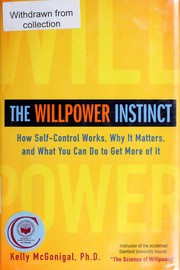
Self-control as a physical capacity, and how to build it, from a Stanford course.
Recommended by: Mohnish Pabrai, Nat Eliason, Jane McGonigal and 2 others
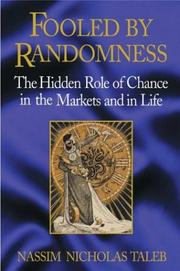
Why people mistake luck for skill, above all in markets.
“Fooled by Randomness is a serious, intellectually sophisticated book, well worth reading carefully. At times, the book is condescending. Nevertheless, there are some great insights.” — Barton Biggs
Source: Biggs on a sophisticated book worth reading carefully
Recommended by: Barton Biggs, Michael Mauboussin and 11 others
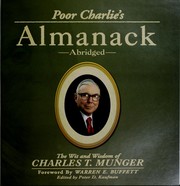
Speeches making the case for a latticework of mental models from many fields.
“…books I've recommended, highlighted to death, or forced on friends.” — Andrew Wilkinson
Source: Andrew Wilkinson's Bookshelf, neverenough.com
Recommended by: Andrew Wilkinson, Charlie Munger and 26 others
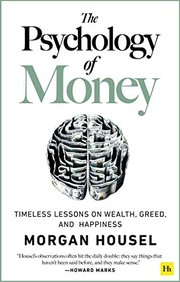
Twenty short essays on why behaviour matters more than knowledge with money.
“…books I've recommended, highlighted to death, or forced on friends.” — Andrew Wilkinson
Source: Andrew Wilkinson's Bookshelf, neverenough.com
Recommended by: Andrew Wilkinson, Nat Eliason, Ali Abdaal and 10 others
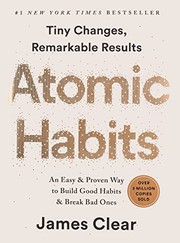
Build habits by making them obvious, attractive, easy and satisfying.
Recommended by: Ali Abdaal, Balaji S. Srinivasan and 21 others
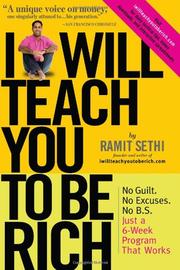
A six-week programme to automate banking, credit, saving and investing.
Recommended by: Mohnish Pabrai, Nat Eliason and 3 others
Where it sits in the reference 2
Topics