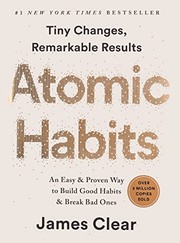
Atomic Habits
Summary
Clear presents a system for changing behaviour built on four laws: make it obvious, make it attractive, make it easy and make it satisfying, with their inversions for breaking habits. Each law maps to a stage of the cue, craving, response, reward loop taken from behavioural psychology and from Charles Duhigg's earlier work.
The framing argument is that outcomes lag behind systems, and that a one percent daily improvement compounds to roughly thirty-seven times over a year. Clear argues for identity-based habits, in which a person decides what kind of person they want to be and treats each action as a vote for that identity, rather than outcome-based habits organised around a goal. He argues that goals are shared by winners and losers alike, so systems rather than goals explain the difference.
The practical content is specific and usable. Clear covers implementation intentions, in which the person writes when and where they will act, habit stacking, environment design, the two-minute rule for starting, temptation bundling, habit tracking, and accountability contracts. He also discusses the plateau of latent potential, the period where effort produces no visible result, and the Goldilocks zone of difficulty.
The research base is secondhand and sometimes loose. The often-quoted twenty-one days figure is corrected here, but other claims are drawn from popular summaries rather than primary literature, and the compounding arithmetic is illustrative rather than empirical. The material largely repeats findings from BJ Fogg, Duhigg, Wendy Wood and Peter Gollwitzer, organised better than any of them managed. Read it as a well-built manual rather than as a contribution to the science.
Key takeaways 8
- Systems produce results and goals do not, because winners and losers set the same goals and differ only in the processes they run.
- Small improvements compound, so habits matter through accumulation rather than through any single instance.
- Behaviour change lasts when it is tied to identity, so the target should be becoming a type of person rather than achieving an outcome.
- Environment shapes behaviour more reliably than motivation does, so redesigning cues beats trying harder.
- Making a behaviour easier to start, ideally reducible to two minutes, matters more than planning the full version of it.
- Habits require immediate reward to persist, because the delayed benefits that justify them do not reinforce the behaviour.
- Habit stacking, which attaches a new behaviour to an existing one, provides a reliable cue without requiring new memory.
- Progress stalls visibly for a long period before results appear, and most people quit inside that period rather than after failure.
Who should read it
Operators who want a practical behaviour-change manual to apply personally or to a team, with the understanding that the underlying research sits elsewhere.
Who recommended it 23 · 3 direct
Similar books 6
Chosen by shared topics, the entries that hold them, and the people who recommended both.
Distraction comes from escaping discomfort, not technology, and how to manage it.
Recommended by: Nir Eyal, Alexis Ohanian, Allen Gannett and 4 others
Twenty short essays on why behaviour matters more than knowledge with money.
“…books I've recommended, highlighted to death, or forced on friends.” — Andrew Wilkinson
Source: Andrew Wilkinson's Bookshelf, neverenough.com
Recommended by: Andrew Wilkinson, Nat Eliason, Ali Abdaal and 10 others
The size of your thinking sets the size of your results, and how to think bigger.
Recommended by: Ali Abdaal, Mohnish Pabrai, Nat Eliason and 2 others
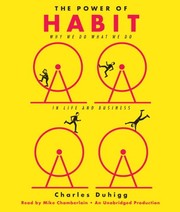
The habit loop of cue, routine and reward, and how to change a habit by its routine.
“I love his [Charles Duhigg's] book. By the way I got his book and gave it to everyone in the company [Bridgewater].” — Ray Dalio
Source: Dalio on giving Duhigg's book to everyone at Bridgewater
Recommended by: Mohnish Pabrai, Nat Eliason, Naval Ravikant and 6 others

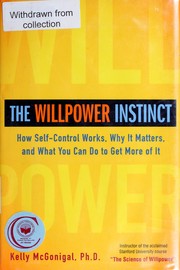
Self-control as a physical capacity, and how to build it, from a Stanford course.
Recommended by: Mohnish Pabrai, Nat Eliason, Jane McGonigal and 2 others
Where it sits in the reference 0
No entry holds this book yet. It reached the reference because someone recommended it.
Topics