George Hatzis
Product designer who works on web apps and design systems; at Eucalyptus, a parent company of healthcare brands, he built a multi-brand design system and presented it at Friends of Figma in Sydney in 2023.
19 books they recommend · 1 appearance
More 10
Why a business can stay small on purpose instead of chasing growth.
Also recommended by: Cal Newport, David Hellmann, Eric Jorgenson and 2 others
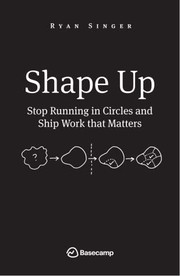
Singer's alternative to continuous sprints: fixed time, variable scope, with shaping work done in advance to reduce ambiguity before building begins. Whether or not the specific Basecamp process translates, the argument against infinite backlogs and the emphasis on appetite over estimation are worth wrestling with.
Also recommended by: Jason Fried, Jenny Chu
Also recommended by: Alfred Lin, Brad Feld, Naval Ravikant

The book that introduced affordances, signifiers, and feedback loops to a generation of designers. Norman's analysis of why doors, phones, and stoves confuse people is the clearest argument that bad design is a systems failure, not user error. Everything else on this list builds on this vocabulary.
Also recommended by: Ran Segall, Andrew Chen, Garry Tan and 8 others


A novel of nine people whose lives are bound up with trees and their defence.
Also recommended by: Andrew Wilkinson, Bill Gates, Tim Ferriss and 1 other

Steve Jobs's life and Apple's products, from forty interviews with him and many more.
Also recommended by: Mohnish Pabrai, Patrick Collison and 16 others
Coyle examines high-performing groups — SEAL teams, Pixar, the San Antonio Spurs — to identify the three skills that build strong cultures: building safety, sharing vulnerability, and establishing purpose. The research is descriptive rather than prescriptive, which makes it more credible than most culture books.
Also recommended by: Changpeng Zhao, David Cancel, Graham Duncan and 1 other
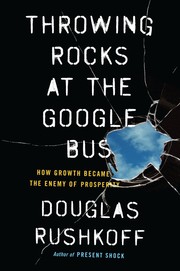

Wallace-Wells's inventory of worst-case climate projections is included here not as a climate book but as a case study in what happens when institutions consistently discount long-term risk. The scenarios he describes are already visible in the data; they were predictable decades ago. This is what the failure of long-term thinking looks like from inside it.
Also recommended by: Vinod Khosla

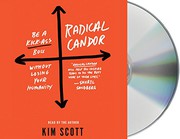
Scott's two-axis framework — care personally, challenge directly — gives a practical vocabulary for the feedback conversations managers routinely avoid. The quadrant model (Radical Candor, Ruinous Empathy, Obnoxious Aggression, Manipulative Insincerity) is one of the most operationally useful tools in management writing.
Also recommended by: Aileen Lee, Brett Adcock, David Cancel and 6 others
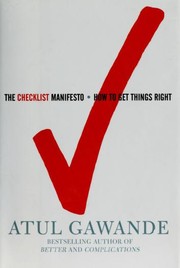
How checklists stop experts in complex fields failing to apply what they know.
Also recommended by: Michael Mauboussin, Mohnish Pabrai and 8 others
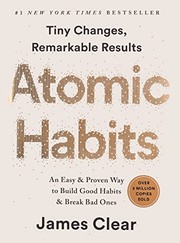
Build habits by making them obvious, attractive, easy and satisfying.
Also recommended by: Ali Abdaal, Balaji S. Srinivasan and 20 others
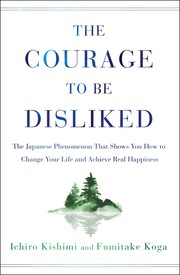
Alfred Adler's psychology taught through five nights of dialogue.
Also recommended by: Ali Abdaal, Andrew Wilkinson, Tim Ferriss and 10 others
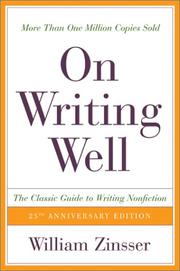
A manual for non-fiction: clear writing comes from clear thinking.
Also recommended by: Nat Eliason, Derek Sivers, Matt Mullenweg and 1 other
| Ep 33. George Hatzis on Product Design: Journey from Startups to Scale-Ups and Fractional Impact for Early-Stage Teams | Calling Operator with Laura Nicol | 2024-10-14 |