The Uninhabitable Earth: Life After Warming
Wallace-Wells's inventory of worst-case climate projections is included here not as a climate book but as a case study in what happens when institutions consistently discount long-term risk. The scenarios he describes are already visible in the data; they were predictable decades ago. This is what the failure of long-term thinking looks like from inside it.
Summary
David Wallace-Wells expanded a 2017 magazine article into this book, which sets out the consequences of warming at various levels and argues that public understanding of climate change substantially understates what is coming.
The structure is a sequence of chapters on distinct consequences, which he calls elements of chaos: heat death and the wet-bulb temperature threshold beyond which humans cannot survive outdoors, hunger from crop yield declines, drowning from sea level rise, wildfire, disasters that stop being natural, freshwater scarcity, dying oceans and acidification, unbreathable air, disease released and redistributed, economic collapse, climate conflict, and systems failure. His argument in structuring it this way is that these consequences interact and compound rather than arriving separately, and that assessments treating them individually understate the total.
The second half covers the politics, the psychology of how people respond to the information, the technological proposals including carbon removal and geoengineering, and the ethical questions. Wallace-Wells writes deliberately to alarm, which he defends explicitly as necessary given how the information has been received. Critics including several climate scientists argued that he presents high-end scenarios in ways that read as predictions and that the approach risks fatalism. The book is heavily sourced and the individual claims are drawn from published research; the framing is what is contested.
Key takeaways 7
- Climate consequences interact and compound rather than arriving separately, so assessments treating them individually understate the total.
- Wet-bulb temperature thresholds define conditions in which humans cannot survive outdoors regardless of shade or water.
- Crop yields decline measurably per degree of warming, which affects food supply before any other consequence becomes visible.
- Wallace-Wells argues that alarm is the appropriate response and defends writing to produce it.
- Warming already committed by past emissions determines a substantial share of the consequences regardless of future policy.
- Critics argue the book presents high-end scenarios in ways that read as predictions and risks producing fatalism.
- The individual claims are drawn from published research and the framing rather than the evidence is what is contested.
Who should read it
Investors and operators who want the consequences of warming assembled in one place, read with awareness that the framing is deliberately alarming.
Who recommended it 2
Similar books 6
Chosen by shared topics, the entries that hold them, and the people who recommended both.
Meadows wrote this before systems thinking became a popular phrase, and it remains the clearest account of why short-term interventions in complex systems so often backfire. The chapter on leverage points is the conceptual core of what long-term thinking actually requires from decision-makers.
Recommended by: Patrick O'Shaughnessy, Daniel Burka and 3 others
Brand's book is the founding document of institutional long-term thinking. It proposes a 10,000-year clock as a forcing function for civilizational patience, and along the way develops the concept of pace layers — the idea that different structures (fashion, commerce, governance, culture, nature) change at radically different speeds, and that confusing these speeds is the root of most short-termism.
Recommended by: Bret Victor, Phil Libin, Stewart Brand
Six ways of thinking that help people plan for generations ahead.
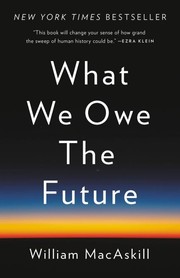
MacAskill's longtermist argument, grounded in effective altruism, is the most rigorous philosophical case for prioritizing future people. His core claim — that if the future contains vast numbers of people, influencing its trajectory matters more than almost anything we might do for the present — is informed by Derek Parfit's work on personal identity and is the most demanding version of the long-term thinking argument.
Recommended by: Andrew Wilkinson, Ali Abdaal
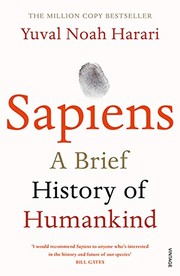
How shared fictions such as money, nations and gods let humans cooperate at scale.
“…books I've recommended, highlighted to death, or forced on friends.” — Andrew Wilkinson
Source: Andrew Wilkinson's Bookshelf, neverenough.com
Recommended by: Andrew Wilkinson, Bill Gates, Mohnish Pabrai and 38 others
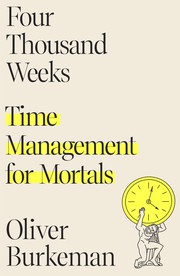
Burkeman's book on finitude is the necessary counterweight to grandiose civilizational thinking. Four thousand weeks is approximately an 80-year life, and Burkeman's argument — that productivity systems typically function as denial mechanisms against this fact — forces the question of how a mortal agent ought to orient toward long-term causes. The tension between personal finitude and multigenerational obligation is never fully resolved here, which is exactly right.
Recommended by: Andrew Wilkinson, The Barefoot Investor and 1 other
Where it sits in the reference 2
Topics