
The Good Ancestor
Krznaric surveys six ways of thinking that orient people toward longer horizons — from the cathedral builders of the medieval period to Iroquois seven-generation decision-making. His concept of 'acorn brain' versus 'marshmallow brain' is a useful diagnostic for why institutions favor short-term reward even when long-term thinking is available.
Similar books 6
Chosen by shared topics, the entries that hold them, and the people who recommended both.
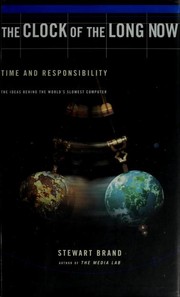
Brand's book is the founding document of institutional long-term thinking. It proposes a 10,000-year clock as a forcing function for civilizational patience, and along the way develops the concept of pace layers — the idea that different structures (fashion, commerce, governance, culture, nature) change at radically different speeds, and that confusing these speeds is the root of most short-termism.
Recommended by: Bret Victor, Phil Libin, Stewart Brand
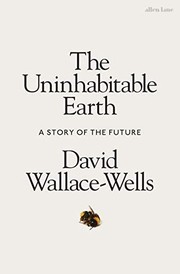
Wallace-Wells's inventory of worst-case climate projections is included here not as a climate book but as a case study in what happens when institutions consistently discount long-term risk. The scenarios he describes are already visible in the data; they were predictable decades ago. This is what the failure of long-term thinking looks like from inside it.
Recommended by: George Hatzis, Vinod Khosla

MacAskill's longtermist argument, grounded in effective altruism, is the most rigorous philosophical case for prioritizing future people. His core claim — that if the future contains vast numbers of people, influencing its trajectory matters more than almost anything we might do for the present — is informed by Derek Parfit's work on personal identity and is the most demanding version of the long-term thinking argument.
Recommended by: Andrew Wilkinson, Ali Abdaal

Burkeman's book on finitude is the necessary counterweight to grandiose civilizational thinking. Four thousand weeks is approximately an 80-year life, and Burkeman's argument — that productivity systems typically function as denial mechanisms against this fact — forces the question of how a mortal agent ought to orient toward long-term causes. The tension between personal finitude and multigenerational obligation is never fully resolved here, which is exactly right.
Recommended by: Andrew Wilkinson, The Barefoot Investor and 1 other

Diamond's central question — why did some civilizations come to dominate others over 10,000 years? — is precisely the kind of question that requires long-term thinking to even ask. The answer, rooted in geography and biology rather than culture or intelligence, is a model for how to reason about slow causes and fast effects.
“This is an insightful read on the pace at which societies develop and why.” — Christopher Bloomstran
Source: Semper Augustus 2023 Letter to Clients, 'Worldly Wisdom', p. 81
Recommended by: Charlie Munger, Christopher Bloomstran and 14 others

How shared fictions such as money, nations and gods let humans cooperate at scale.
“…books I've recommended, highlighted to death, or forced on friends.” — Andrew Wilkinson
Source: Andrew Wilkinson's Bookshelf, neverenough.com
Recommended by: Andrew Wilkinson, Bill Gates, Mohnish Pabrai and 38 others
Where it sits in the reference 1
Topics