
Compounding and Long-Term Holding
Why time and reinvestment rate dominate returns, and what makes a business worth holding through cycles.
Start here
- The Psychology of MoneyMorgan Housel, 2020
- 100 BaggersChristopher W. Mayer, 2015
- Common Stocks and Uncommon ProfitsPhilip A. Fisher, 1958
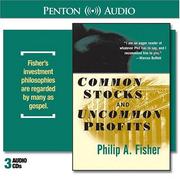
Buy a few outstanding growth companies, research them by scuttlebutt, and hold.
“The late Philip Fisher wrote several books that are very good [including] Common Stocks and Uncommon Profits.” — Arnold Van Den Berg
Source: Van Den Berg on Fisher's books
Recommended by: Arnold Van Den Berg, Bill Stewart and 10 others

US returns since 1802 show stocks beat bonds and cash over every long period.
“his book "Stocks for the Long Run" contributed greatly to the bull market's middle years” — Howard Marks
Source: Oaktree memo 'Irrational Exuberance'
Recommended by: Howard Marks

Stock, bond and bill returns for sixteen countries from 1900 to 2000.
Recommended by: Mohnish Pabrai

Buffett's life to 2008, written with full access to his files and his friends.
“…books I've recommended, highlighted to death, or forced on friends.” — Andrew Wilkinson
Source: Andrew Wilkinson's Bookshelf, neverenough.com
Recommended by: Andrew Wilkinson, Guy Spier, Mohnish Pabrai and 5 others
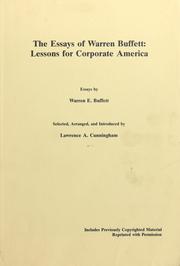
Berkshire's shareholder letters arranged by topic: governance, valuation, mergers.
“The resource is as valuable as Larry Cunningham's The Essays of Warren Buffett, which similarly organizes by subject matter” — Christopher Bloomstran
Source: Semper Augustus 2024 Letter to Clients, 'Books and Tunes for Walking', p. 96
Recommended by: Christopher Bloomstran, Francois Rochon and 11 others
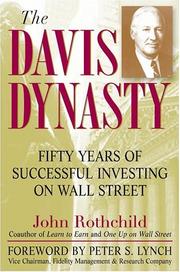
Three generations compounding a fortune through insurance stocks
“When John Rothchild combines history and biography with investing in one package, history illuminates the biography and investing. This is a sparkling book on each level, but even more so as an…” — Peter Bernstein
Source: Bernstein on Rothchild mixing history, biography and investing
Recommended by: Mohnish Pabrai, Peter Bernstein and 1 other

What makes a business high quality and worth owning for years at a fair price.
Recommended by: Patrick O'Shaughnessy
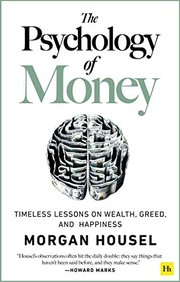
Twenty short essays on why behaviour matters more than knowledge with money.
“…books I've recommended, highlighted to death, or forced on friends.” — Andrew Wilkinson
Source: Andrew Wilkinson's Bookshelf, neverenough.com
Recommended by: Andrew Wilkinson, Nat Eliason, Ali Abdaal and 10 others

A fund manager of sixty years on investing, business and a long life.
Recommended by: Mohnish Pabrai

Subtitled Stocks That Return 100-to-1 and How to Find Them; expanded edition 2025.
Recommended by: Mohnish Pabrai

Lessons from 25 years of interviews with investors from Templeton to Munger.
“William has written the kind of book that we would love to have written but know that we lack the requisite skills.” — Nick Sleep
Recommended by: Nick Sleep

Burkeman's book on finitude is the necessary counterweight to grandiose civilizational thinking. Four thousand weeks is approximately an 80-year life, and Burkeman's argument — that productivity systems typically function as denial mechanisms against this fact — forces the question of how a mortal agent ought to orient toward long-term causes. The tension between personal finitude and multigenerational obligation is never fully resolved here, which is exactly right.
Recommended by: Andrew Wilkinson, The Barefoot Investor and 1 other

Diamond's central question — why did some civilizations come to dominate others over 10,000 years? — is precisely the kind of question that requires long-term thinking to even ask. The answer, rooted in geography and biology rather than culture or intelligence, is a model for how to reason about slow causes and fast effects.
“This is an insightful read on the pace at which societies develop and why.” — Christopher Bloomstran
Source: Semper Augustus 2023 Letter to Clients, 'Worldly Wisdom', p. 81
Recommended by: Charlie Munger, Christopher Bloomstran and 14 others

Harari's concern — that humans may cede decision-making to opaque systems through preference rather than coercion — reframes the alignment problem as a cultural and political challenge, not only a technical one. Less rigorous than Bostrom or Russell, but more widely read, making it a useful lens for understanding public discourse.
Recommended by: Andrew Wilkinson, Bill Gates, Nat Eliason and 7 others

How shared fictions such as money, nations and gods let humans cooperate at scale.
“…books I've recommended, highlighted to death, or forced on friends.” — Andrew Wilkinson
Source: Andrew Wilkinson's Bookshelf, neverenough.com
Recommended by: Andrew Wilkinson, Bill Gates, Mohnish Pabrai and 38 others
Dawkins narrates the whole of evolutionary history as a pilgrimage backward in time, meeting ancestors at each branching point. The cumulative effect is a felt sense of deep time that no abstract statement about 'billions of years' can produce. Reading this first recalibrates everything that follows.
Recommended by: Patrick Collison
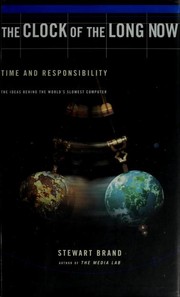
Brand's book is the founding document of institutional long-term thinking. It proposes a 10,000-year clock as a forcing function for civilizational patience, and along the way develops the concept of pace layers — the idea that different structures (fashion, commerce, governance, culture, nature) change at radically different speeds, and that confusing these speeds is the root of most short-termism.
Recommended by: Bret Victor, Phil Libin, Stewart Brand

Six ways of thinking that help people plan for generations ahead.
Wallace-Wells's inventory of worst-case climate projections is included here not as a climate book but as a case study in what happens when institutions consistently discount long-term risk. The scenarios he describes are already visible in the data; they were predictable decades ago. This is what the failure of long-term thinking looks like from inside it.
Recommended by: George Hatzis, Vinod Khosla
Meadows wrote this before systems thinking became a popular phrase, and it remains the clearest account of why short-term interventions in complex systems so often backfire. The chapter on leverage points is the conceptual core of what long-term thinking actually requires from decision-makers.
Recommended by: Patrick O'Shaughnessy, Daniel Burka and 3 others

MacAskill's longtermist argument, grounded in effective altruism, is the most rigorous philosophical case for prioritizing future people. His core claim — that if the future contains vast numbers of people, influencing its trajectory matters more than almost anything we might do for the present — is informed by Derek Parfit's work on personal identity and is the most demanding version of the long-term thinking argument.
Recommended by: Andrew Wilkinson, Ali Abdaal
Miller on buying rising-dividend businesses and holding them.

Recommended by: Mohnish Pabrai

Peris argues dividends, not multiple expansion, drive real returns.


Naval Ravikant's ideas on building wealth and being happy, gathered from his talks.
Recommended by: Balaji S. Srinivasan, Nat Eliason and 9 others
 Warren Buffettwrote 1 book here
 Jeremy Siegelwrote 1 book here
 Stewart Brandwrote 1 book here
 Mohnish Pabrairecommends 10 books hereWarren Buffettrecommends 4 books here
 Charlie Mungerrecommends 3 books here
 Marc Andreessenrecommends 3 books here
 Bill Gatesrecommends 3 books here
Show all 87
 Naval Ravikantrecommends 3 books hereStewart Brandrecommends 3 books here
 Vinod Khoslarecommends 3 books here
 Howard Marksrecommends 2 books here
 Ray Daliorecommends 2 books here
 Daniel Ekrecommends 2 books here
 Matt Mullenwegrecommends 2 books here
 Patrick Collisonrecommends 2 books here
 Richard Bransonrecommends 2 books here
 Scott Farquharrecommends 2 books here
 Jim Collinsrecommends 1 book here
 Reid Hoffmanrecommends 1 book here
 Tyler Cowenrecommends 1 book here
 Guy Spierrecommends 1 book here
 Simon Sinekrecommends 1 book here
 William Ackmanrecommends 1 book here
 Alfred Linrecommends 1 book here
 Balaji S. Srinivasanrecommends 1 book here
 Bret Victorrecommends 1 book here
 Brett Adcockrecommends 1 book here
 Changpeng Zhaorecommends 1 book here
 Daniel Burkarecommends 1 book here
 Demis Hassabisrecommends 1 book here
 James Cameronrecommends 1 book here
 Jamie Dimonrecommends 1 book here
 John Maedarecommends 1 book here
 Julie Zhuorecommends 1 book here
 Keith Raboisrecommends 1 book here
 Mark Zuckerbergrecommends 1 book here
 Melinda Gatesrecommends 1 book here
 Nir Eyalrecommends 1 book here
 Peter Attiarecommends 1 book here
 Phil Libinrecommends 1 book here
 Ryan Petersonrecommends 1 book here
 Tim Ferrissrecommends 1 book here
 Trevor Ncuberecommends 1 book here
 Zoë Foster Blakerecommends 1 book here