Updates

  1. Person pages list letters, writing, profiles and links as sortable tables with filters, and show each person's companies as links; Fund letters show each letter's description in its own column.
  2. Experts show a checked job title and a short description of each person; 30 more people have photographs.
  3. Every company, fund, university and publication the experts work for has a page listing the people there.
  4. Fund letters show each letter's thesis and filter by it; 225 person pages list the essays, columns and newsletter issues the person wrote.
  5. Person pages list every essay and newsletter issue a person wrote, and their own books as a table in List view.
  6. Recommends shows the five largest kinds of book and the rest under More; browse pictures load sooner.
  7. Podcasts and talks link the original episode, filter by Audio and video or Press, and list each publisher once.
  8. Pages are wider, Recommends has List and Grid, and a filter clicked again turns off.
  9. Book cards sit in a ruled grid with Open Library and Goodreads links and each book's one-line note.
  10. Funds is now Investors; each investor's styles are buttons that filter the table.
  11. Podcasts and talks on a person's page filter by year and publisher and show as a list or a grid of pictures.
  12. Quotes show only people's own words: 472 summaries written by list sites are gone.
  13. Country pages open from Browse again, and every link on the shelf lands on a page.
  14. Subject and person pages show their sections as tabs, and each book appears once on a person's page.
  15. Book cards show the quote, who said it and the source; grids show five cards to a row.
  16. On a phone, a menu holds the sections, search, Updates, Feedback and dark mode.
  17. Feedback takes a screenshot of the page with no browser prompt, opens a screenshot full size when you click it, and clears itself once sent.
  18. Book cards are centred, search names the topic each book sits in, and any text cut short shows whole on hover.
  19. Search groups its results by kind: people, companies, geographies, subjects, topics, books, funds, fund letters and papers.
  20. The Books table lists who recommended each book by name, and the browser tab names the section you are in.
  21. Feedback can take a screenshot of the page, or one you paste or choose, and opens in the corner beside Updates.
  22. Each rail button reopens its section where you left it, and Browse, Table and People show on every book and subject page.
  23. Filters grey out choices that hold nothing instead of hiding them, and Books › People filters by authors or recommenders.
  24. Feedback takes a subject line and up to three screenshots.
  25. Biographies are grouped by the person they are about: 41 new pages, from Abraham Lincoln to Lee Kuan Yew.
  26. Sport splits into 23 sports, and Religion into one topic per faith.
  27. Book lists show as cards: the cover, one recommendation quote and every recommender by name.
  28. Seventeen subjects that had two or three pages under different names now have one page each.
  29. Every page lists its Experts as authors and recommenders, with a link to them on the Experts tab.
  30. Economics, Financial history, Financial panics and Accounting are subjects of their own, with one page per financial crisis.
  31. Book, person and subject pages open inside the app, so the tabs stay in view.
  32. 996 more book covers, and photographs or logos for 227 more people and companies.
  33. Books › Browse shows every subject as cards, and the rail holds Fund letters, Papers, Experts, Books and Funds.
  34. Every topic over 150 books splits into narrower topics, each with a page of its own.

Send feedback

What is it?
Screenshots, up to 3 (optional)
or paste one with Ctrl+V

We use your email only to reply to you.

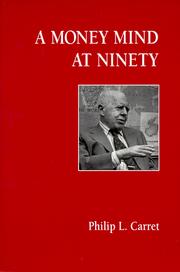
A Money Mind at Ninety

A Money Mind at Ninety

Philip L. Carret, Philip Carret
1995
T2 248 pages · about 4h 8m to read Open Librarygoodreads

Reflections from a fund manager with a fifty-five-year record

Summary

Carret founded the Pioneer Fund in 1928, one of the first mutual funds in the United States, and managed money for more than sixty years. He wrote this short book at ninety, and it collects his views on investing, business and his own long career.

His approach was long-horizon fundamental investing with a preference for companies with strong balance sheets, low debt, honest management and reinvestment opportunities, bought at reasonable prices and held for very long periods. He held some positions for decades. He was sceptical of trading, of market forecasting and of paying up for popularity, and he emphasised reading annual reports directly and visiting companies. He also wrote The Art of Speculation in 1930, which is the more substantial book, and readers wanting his method in developed form should go there.

The reference has not verified the specific performance claims and anecdotes in this volume, which is a memoir written at the end of a long life rather than a documented record. The book is brief and informal, mixing investment observations with reflections on business ethics, taxation and his own habits. Its interest is as a first-hand statement from someone whose career spanned the 1929 crash, the Depression, the postwar expansion and the 1987 crash, which is a longer continuous perspective than almost any other investor has recorded. It is not a method book and it contains no systematic framework.

Key takeaways 7

  1. Holding good businesses for decades rather than trading them is what produced Carret's long-run results.
  2. Balance sheet strength and low debt matter more than reported earnings growth, because they determine whether a company survives conditions it did not forecast.
  3. Management honesty is assessable from how a company reports bad news, and it should be weighted heavily by an outside investor.
  4. An investor should read annual reports directly rather than rely on intermediaries, since the primary documents contain what the summaries omit.
  5. Market forecasting is not a useful activity, and a long holding period removes the need for it.
  6. Paying a high price for a popular company destroys more capital than buying a mediocre business cheaply does.
  7. Patience over decades, rather than any analytical technique, is the scarce resource in investing.

Who should read it

Investors interested in a first-hand statement from one of the longest continuous careers in American fund management, read as memoir rather than method.

About Philip L. Carret

Founded the Pioneer Fund in 1928 and ran money for seven decades through Carret & Company; died in 1998, aged 101.

The Art of Speculation, published in 1930, made the case for buying securities on appraised value with a margin of safety two years before Graham and Dodd's Security Analysis, which places it at the start of the value tradition rather than downstream of it. A Money Mind at Ninety records the holding periods, position sizing and management assessments behind a record spanning the Depression and the post-war decades.

Pioneer Fund, Carret & Company

Who recommended it 1

Similar books 6

Chosen by shared topics, the entries that hold them, and the people who recommended both.
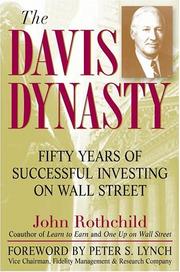
John Rothchild · 2001

Three generations compounding a fortune through insurance stocks

“When John Rothchild combines history and biography with investing in one package, history illuminates the biography and investing. This is a sparkling book on each level, but even more so as an…” — Peter Bernstein

Source: Bernstein on Rothchild mixing history, biography and investing

Recommended by: Mohnish Pabrai, Peter Bernstein and 1 other
Guy Spier · 2014

Spier on the psychology and habits behind durable value investing.

“…books I've recommended, highlighted to death, or forced on friends.” — Andrew Wilkinson

Source: Andrew Wilkinson's Bookshelf, neverenough.com

Recommended by: Andrew Wilkinson, Christopher Bloomstran and 1 other
Where it sits in the reference 3

Investors
Investment philosophy
Investment styles

Topics

InvestingBiography and MemoirInvestors, Traders and GamblersValue investors