Updates

  1. Person pages list letters, writing, profiles and links as sortable tables with filters, and show each person's companies as links; Fund letters show each letter's description in its own column.
  2. Experts show a checked job title and a short description of each person; 30 more people have photographs.
  3. Every company, fund, university and publication the experts work for has a page listing the people there.
  4. Fund letters show each letter's thesis and filter by it; 225 person pages list the essays, columns and newsletter issues the person wrote.
  5. Person pages list every essay and newsletter issue a person wrote, and their own books as a table in List view.
  6. Recommends shows the five largest kinds of book and the rest under More; browse pictures load sooner.
  7. Podcasts and talks link the original episode, filter by Audio and video or Press, and list each publisher once.
  8. Pages are wider, Recommends has List and Grid, and a filter clicked again turns off.
  9. Book cards sit in a ruled grid with Open Library and Goodreads links and each book's one-line note.
  10. Funds is now Investors; each investor's styles are buttons that filter the table.
  11. Podcasts and talks on a person's page filter by year and publisher and show as a list or a grid of pictures.
  12. Quotes show only people's own words: 472 summaries written by list sites are gone.
  13. Country pages open from Browse again, and every link on the shelf lands on a page.
  14. Subject and person pages show their sections as tabs, and each book appears once on a person's page.
  15. Book cards show the quote, who said it and the source; grids show five cards to a row.
  16. On a phone, a menu holds the sections, search, Updates, Feedback and dark mode.
  17. Feedback takes a screenshot of the page with no browser prompt, opens a screenshot full size when you click it, and clears itself once sent.
  18. Book cards are centred, search names the topic each book sits in, and any text cut short shows whole on hover.
  19. Search groups its results by kind: people, companies, geographies, subjects, topics, books, funds, fund letters and papers.
  20. The Books table lists who recommended each book by name, and the browser tab names the section you are in.
  21. Feedback can take a screenshot of the page, or one you paste or choose, and opens in the corner beside Updates.
  22. Each rail button reopens its section where you left it, and Browse, Table and People show on every book and subject page.
  23. Filters grey out choices that hold nothing instead of hiding them, and Books › People filters by authors or recommenders.
  24. Feedback takes a subject line and up to three screenshots.
  25. Biographies are grouped by the person they are about: 41 new pages, from Abraham Lincoln to Lee Kuan Yew.
  26. Sport splits into 23 sports, and Religion into one topic per faith.
  27. Book lists show as cards: the cover, one recommendation quote and every recommender by name.
  28. Seventeen subjects that had two or three pages under different names now have one page each.
  29. Every page lists its Experts as authors and recommenders, with a link to them on the Experts tab.
  30. Economics, Financial history, Financial panics and Accounting are subjects of their own, with one page per financial crisis.
  31. Book, person and subject pages open inside the app, so the tabs stay in view.
  32. 996 more book covers, and photographs or logos for 227 more people and companies.
  33. Books › Browse shows every subject as cards, and the rail holds Fund letters, Papers, Experts, Books and Funds.
  34. Every topic over 150 books splits into narrower topics, each with a page of its own.

Send feedback

What is it?
Screenshots, up to 3 (optional)
or paste one with Ctrl+V

We use your email only to reply to you.

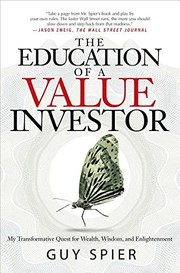
The Education of a Value Investor

The Education of a Value Investor

Guy Spier
2014
T3 219 pages · about 3h 39m to read Open Librarygoodreads

Spier on the psychology and habits behind durable value investing.

Summary

Spier runs Aquamarine Fund and writes an account of his own transformation from a Harvard Business School graduate working at what he describes as a predatory brokerage firm to a value investor, framed around the influence of Buffett and Munger and around the 650,000 dollar charity lunch he and Mohnish Pabrai bought with Buffett in 2008.

The practical content concerns environment and process rather than analysis. Spier argues that an investor's decisions are shaped far more by their surroundings than by their intelligence, and he made specific changes accordingly: he moved from New York to Zurich to remove himself from the professional consensus, restructured his day so that reading occurs before any market interaction, removed the Bloomberg terminal, stopped speaking to management before analysing a company, and refused to check prices during the day.

His rules include avoiding conversations with people who want to sell you something, never buying anything a broker suggests, doing the analysis before speaking to anyone about it, and using a written checklist derived from his own past errors rather than from a general framework. The personal narrative about the brokerage firm and the reputational cost of having worked there is unusually candid.

The book contains no investment analysis and a reader looking for method will not find it. The fund's returns have been reasonable rather than exceptional, which readers should weigh against the advice. Its contribution is the argument that process and environment matter more than analytical capability, stated by someone who restructured his life around that conclusion.

Key takeaways 8

  1. An investor's environment shapes their decisions more than their analytical capability does, which makes environment design a legitimate part of the process.
  2. Physical distance from the professional consensus removes the pressure to hold the same positions as everyone else.
  3. Reading and analysis should occur before any exposure to prices or news, since the order determines what conclusions are reachable.
  4. A checklist should be built from your own past errors rather than adopted from a general framework, because the errors are personal.
  5. Speaking to company management before completing your own analysis contaminates the analysis, since executives are selected for persuasiveness.
  6. Anyone who wants to sell you something should be excluded from your information sources entirely.
  7. Working at a firm with a poor reputation imposes a lasting cost that is invisible at the time of joining.
  8. Spier's own returns have been reasonable rather than exceptional, which readers should weigh against the confidence of the advice.

Who should read it

Investors interested in process and environment design rather than in analytical technique, from someone candid about his own errors.

About Guy Spier

Founder and Manager, Aquamarine Fund

One well-regarded book about the making of a value investor plus a fully public letter archive; his influence rests on the memoir rather than an outsized record.

Aquamarine Fund

Who recommended it 3 · 3 direct

“…books I've recommended, highlighted to death, or forced on friends.”

“his excellent memoir... As much a lesson on self-awareness as a super book on investing, Guy's book is a great read”

Similar books 6

Chosen by shared topics, the entries that hold them, and the people who recommended both.

Philip L. Carret, Philip Carret · 1995

A fund manager of sixty years on investing, business and a long life.

Recommended by: Mohnish Pabrai
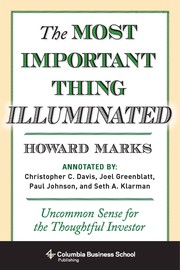
Howard Marks · 2012

Second-level thinking on risk and cycles, with notes by Klarman and Greenblatt.

“…books I've recommended, highlighted to death, or forced on friends.” — Andrew Wilkinson

Source: Andrew Wilkinson's Bookshelf, neverenough.com

Recommended by: Andrew Wilkinson, Mohnish Pabrai and 3 others

Where it sits in the reference 4

Investors
Investment philosophy
Investment styles
Investment styles

Topics

InvestingBiography and MemoirPhilosophyInvestors, Traders and GamblersMeaning and the good lifeValue investors