Updates

  1. Person pages list letters, writing, profiles and links as sortable tables with filters, and show each person's companies as links; Fund letters show each letter's description in its own column.
  2. Experts show a checked job title and a short description of each person; 30 more people have photographs.
  3. Every company, fund, university and publication the experts work for has a page listing the people there.
  4. Fund letters show each letter's thesis and filter by it; 225 person pages list the essays, columns and newsletter issues the person wrote.
  5. Person pages list every essay and newsletter issue a person wrote, and their own books as a table in List view.
  6. Recommends shows the five largest kinds of book and the rest under More; browse pictures load sooner.
  7. Podcasts and talks link the original episode, filter by Audio and video or Press, and list each publisher once.
  8. Pages are wider, Recommends has List and Grid, and a filter clicked again turns off.
  9. Book cards sit in a ruled grid with Open Library and Goodreads links and each book's one-line note.
  10. Funds is now Investors; each investor's styles are buttons that filter the table.
  11. Podcasts and talks on a person's page filter by year and publisher and show as a list or a grid of pictures.
  12. Quotes show only people's own words: 472 summaries written by list sites are gone.
  13. Country pages open from Browse again, and every link on the shelf lands on a page.
  14. Subject and person pages show their sections as tabs, and each book appears once on a person's page.
  15. Book cards show the quote, who said it and the source; grids show five cards to a row.
  16. On a phone, a menu holds the sections, search, Updates, Feedback and dark mode.
  17. Feedback takes a screenshot of the page with no browser prompt, opens a screenshot full size when you click it, and clears itself once sent.
  18. Book cards are centred, search names the topic each book sits in, and any text cut short shows whole on hover.
  19. Search groups its results by kind: people, companies, geographies, subjects, topics, books, funds, fund letters and papers.
  20. The Books table lists who recommended each book by name, and the browser tab names the section you are in.
  21. Feedback can take a screenshot of the page, or one you paste or choose, and opens in the corner beside Updates.
  22. Each rail button reopens its section where you left it, and Browse, Table and People show on every book and subject page.
  23. Filters grey out choices that hold nothing instead of hiding them, and Books › People filters by authors or recommenders.
  24. Feedback takes a subject line and up to three screenshots.
  25. Biographies are grouped by the person they are about: 41 new pages, from Abraham Lincoln to Lee Kuan Yew.
  26. Sport splits into 23 sports, and Religion into one topic per faith.
  27. Book lists show as cards: the cover, one recommendation quote and every recommender by name.
  28. Seventeen subjects that had two or three pages under different names now have one page each.
  29. Every page lists its Experts as authors and recommenders, with a link to them on the Experts tab.
  30. Economics, Financial history, Financial panics and Accounting are subjects of their own, with one page per financial crisis.
  31. Book, person and subject pages open inside the app, so the tabs stay in view.
  32. 996 more book covers, and photographs or logos for 227 more people and companies.
  33. Books › Browse shows every subject as cards, and the rail holds Fund letters, Papers, Experts, Books and Funds.
  34. Every topic over 150 books splits into narrower topics, each with a page of its own.

Send feedback

What is it?
Screenshots, up to 3 (optional)
or paste one with Ctrl+V

We use your email only to reply to you.

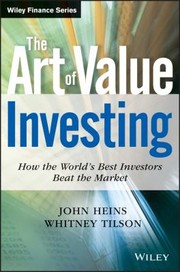
The Art of Value Investing: How the World's

The Art of Value Investing: How the World's Best Investors Beat the Market

Wiley edition confirmed elsewhere.

Summary

Tilson and Heins, who publish Value Investor Insight, assembled quotations from interviews with a large number of value investors and organised them by topic rather than by person.

The topics follow the investment process: developing a philosophy, generating ideas, assessing business quality, evaluating management, judging valuation, building a portfolio, sizing positions, managing risk, deciding when to sell, and handling mistakes and emotion. Within each, the book presents what many different practitioners said about the same question.

The format's value is that the disagreements are visible. On concentration versus diversification, on whether to meet management, on how much macroeconomic view to hold, on holding cash, and on when to sell, experienced practitioners with good records take opposing positions, and seeing that laid out is more instructive than any single manager's prescription. The areas of agreement, principally on temperament, on independence from consensus, on process discipline and on the necessity of a written thesis, stand out because of the contrast.

The contributors include a wide range of managers, most running concentrated long-biased equity strategies.

The book has no argument of its own and no analysis connecting the quotations. It is a compilation, and the selection is of investors with good records, so survivorship applies throughout. Its use is as a survey of how the same questions are answered differently by capable people, which is a useful corrective to seeking a single correct method.

Key takeaways 7

  1. Experienced value investors with good records take opposing positions on concentration, on meeting management, on holding cash and on when to sell.
  2. The absence of a single correct method is the most useful finding, since it means an approach must fit the person applying it.
  3. Practitioners agree far more on temperament and process discipline than on any analytical technique.
  4. A written investment thesis stating what would refute it is the practice most consistently recommended across different approaches.
  5. Selling is the least developed part of most investors' process and the one they report getting wrong most often.
  6. Independence from consensus is described as a temperament rather than a technique, and most practitioners doubt it can be acquired.
  7. The contributors were selected for having good records, so survivorship applies to every position expressed in the book.

Who should read it

Investors who want to see how capable practitioners answer the same process questions differently, as a corrective to seeking one method.

About Whitney Tilson

Founder, T2 Partners and Kase Capital 1999-2017; founder of Empire Financial Research; now lead editor, Stansberry Research

A prolific popularizer of value investing whose Art of Value Investing outlived its news cycle, though his own fund record was mixed and ended in 2017.

Stansberry Research, Empire Financial Research, T2 Partners, Kase Capital

Who recommended it 1 · 1 direct

Similar books 6

Chosen by shared topics, the entries that hold them, and the people who recommended both.
Philip L. Carret, Philip Carret · 1995

A fund manager of sixty years on investing, business and a long life.

Recommended by: Mohnish Pabrai
Guy Spier · 2014

Spier on the psychology and habits behind durable value investing.

“…books I've recommended, highlighted to death, or forced on friends.” — Andrew Wilkinson

Source: Andrew Wilkinson's Bookshelf, neverenough.com

Recommended by: Andrew Wilkinson, Christopher Bloomstran and 1 other
Where it sits in the reference 2

Investors
Investment styles

Topics

InvestingBiography and MemoirInvestors, Traders and GamblersValue investors