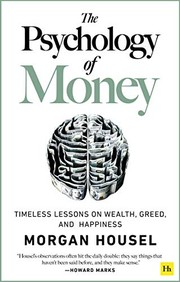
The Psychology of Money
Short essays on why behaviour beats analysis in determining outcomes.
Summary
Housel presents twenty short chapters on financial behaviour, arguing that outcomes depend far more on how people behave than on what they know. He states that finance is taught as a mathematical subject when it functions as a behavioural one, and that a person with no financial education who saves consistently will beat a trained professional who takes on risk they cannot survive.
The chapters make separate arguments rather than building a system. He contrasts Ronald Read, a janitor who left eight million dollars, with Richard Fuscone, a Harvard-educated Merrill Lynch executive who went bankrupt. He argues that reasonable beats rational, because a strategy a person can hold through a drawdown outperforms an optimal strategy they abandon. He explains tail-driven results using Heinz Berggruen's art collection and the fact that most of Buffett's wealth arrived after his sixtieth birthday. He treats saving as the only part of the return equation an investor controls, and defines wealth as the money not spent, which is invisible by construction.
The recurring practical claim is that room for error, meaning a margin between plan and requirement, matters more than precision, and that the highest return on money is the ability to control your own time.
The book is not research. Housel writes from selected anecdotes and his own reasoning, and readers looking for evidence will find little. The chapters overlap and some points appear three or four times. The advice is generic once extracted: save more, hold longer, avoid ruin, keep a buffer. What Housel adds is a set of explanations for why people fail to do those things, which is more useful than another explanation of compounding.
Key takeaways 8
- Financial outcomes depend on behaviour rather than on intelligence or education, so ordinary savers regularly outperform trained professionals.
- A reasonable plan a person will hold through a drawdown beats a mathematically optimal plan they will abandon.
- Everyone's financial decisions make sense given the world they grew up in, so apparently irrational behaviour usually reflects a different formative experience.
- Most investment returns come from a very small number of holdings and a very small number of days, which means tolerating long stretches where nothing works.
- Wealth is the money you do not spend, which makes it invisible, while the visible signals of wealth are evidence of spending rather than of assets.
- Room for error is the most important variable in a plan because it lets a person survive long enough for compounding to operate.
- Controlling your own time is the highest dividend money pays.
- Getting money and keeping money require opposite traits, since the first rewards risk-taking and the second requires paranoia.
Who should read it
Investors and founders who understand the arithmetic of compounding but keep making behavioural errors, and anyone teaching finance to non-specialists.
About Morgan Housel
Partner, Collaborative Fund; former columnist at The Motley Fool and The Wall Street Journal
The Psychology of Money reframed personal finance around behaviour rather than arithmetic and has outlived its news cycle as the standard modern introduction to the subject.
Collaborative Fund, The Motley Fool, The Wall Street Journal
Who recommended it 13 · 2 direct
“…books I've recommended, highlighted to death, or forced on friends.”
Similar books 6
Chosen by shared topics, the entries that hold them, and the people who recommended both.
A nine-step programme that counts spending in hours of life energy.
Recommended by: Ali Abdaal, Graham Stephan and 1 other
A six-week programme to automate banking, credit, saving and investing.
Recommended by: Mohnish Pabrai, Nat Eliason and 3 others
US returns since 1802 show stocks beat bonds and cash over every long period.
“his book "Stocks for the Long Run" contributed greatly to the bull market's middle years” — Howard Marks
Source: Oaktree memo 'Irrational Exuberance'
Recommended by: Howard Marks
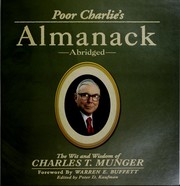
Speeches making the case for a latticework of mental models from many fields.
“…books I've recommended, highlighted to death, or forced on friends.” — Andrew Wilkinson
Source: Andrew Wilkinson's Bookshelf, neverenough.com
Recommended by: Andrew Wilkinson, Charlie Munger and 26 others
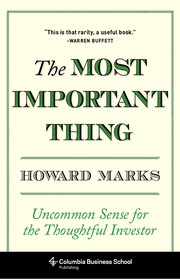
Second-level thinking, risk and market cycles, drawn from Oaktree's client memos.
Recommended by: Matt Mullenweg, Mohnish Pabrai, Nat Eliason and 3 others
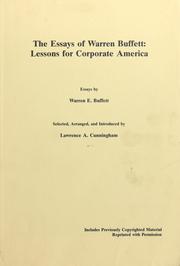
Berkshire's shareholder letters arranged by topic: governance, valuation, mergers.
“The resource is as valuable as Larry Cunningham's The Essays of Warren Buffett, which similarly organizes by subject matter” — Christopher Bloomstran
Source: Semper Augustus 2024 Letter to Clients, 'Books and Tunes for Walking', p. 96
Recommended by: Christopher Bloomstran, Francois Rochon and 11 others
Where it sits in the reference 8
Topics