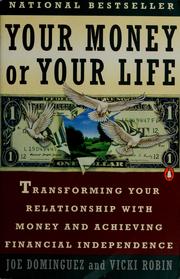
Your Money or Your Life
Robin and Dominguez reframe the core question from 'how do I manage money?' to 'what is money exchanged for?' The life-energy accounting method they introduce is less a budgeting tool than a values-clarification exercise — one that makes the link between spending and identity concrete and trackable.
Summary
Robin and Dominguez present a nine-step programme built on the argument that money is something people trade their life energy for, and that spending should therefore be evaluated in hours of life rather than in currency.
The steps include calculating everything you have ever earned and your current net worth; computing your real hourly wage by adding all work-related expenses and all work-related time including commuting and recovery to the calculation; tracking every unit of money that enters or leaves your life; evaluating each spending category by asking whether it produced fulfilment proportional to the life energy spent and whether it aligns with your values; plotting monthly income and expenses on a wall chart; minimising spending consciously rather than through deprivation; maximising income through work that serves the plan; and identifying the crossover point, meaning the moment when investment income exceeds expenses and paid work becomes optional.
The programme is the direct origin of the financial independence movement, and the crossover point concept and the practice of tracking against a chart are used widely by people who have never read it.
The investment advice in the original edition assumed United States Treasury bonds at interest rates that no longer exist, and later editions revised by Robin address index funds instead. The book's frugality framing does not address people whose income cannot cover expenses regardless of behaviour, and it assumes a level of earning that makes the arithmetic work. The reframing of price as hours of life, and the real hourly wage calculation, are the two elements that transfer directly.
Key takeaways 8
- Money is something people trade their life energy for, so a purchase should be evaluated in hours of life rather than in currency.
- The real hourly wage is far below the nominal one once commuting, work clothing, recovery time and work-related spending are included.
- Tracking every unit of money entering and leaving your life is the necessary precondition, and estimates are consistently wrong.
- Each spending category should be evaluated by whether the fulfilment it produced was proportional to the life energy it cost.
- Fulfilment from spending follows a curve that peaks and then declines, so additional spending in a category eventually reduces satisfaction.
- The crossover point occurs when investment income exceeds expenses, at which point paid work becomes a choice.
- Reducing expenses moves the crossover point closer more effectively than increasing income does, since it acts on both sides of the calculation.
- The original investment advice assumed Treasury bond rates that no longer exist and has been revised in later editions.
Who should read it
Anyone reconsidering the relationship between their work and their spending, particularly those interested in reaching a point where paid work is optional.
Who recommended it 3 · 1 direct
Similar books 6
Chosen by shared topics, the entries that hold them, and the people who recommended both.
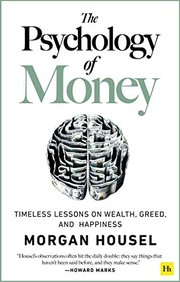
Twenty short essays on why behaviour matters more than knowledge with money.
“…books I've recommended, highlighted to death, or forced on friends.” — Andrew Wilkinson
Source: Andrew Wilkinson's Bookshelf, neverenough.com
Recommended by: Andrew Wilkinson, Nat Eliason, Ali Abdaal and 10 others
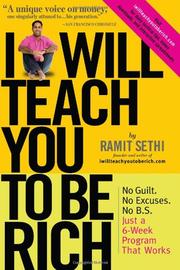
A six-week programme to automate banking, credit, saving and investing.
Recommended by: Mohnish Pabrai, Nat Eliason and 3 others

Common investing mistakes catalogued by a working asset manager
“Barry Ritholtz dreamed up the perfect concept and wrote the perfect book to suit it” — Christopher Bloomstran
Source: Semper Augustus 2025 Letter to Clients, 'Books and Music', p. 88
Recommended by: Christopher Bloomstran
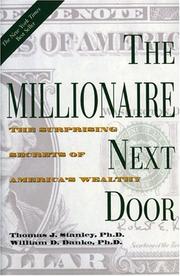
Survey research showing most American millionaires live modestly and save hard.
Recommended by: Mohnish Pabrai, Andrew Lokenauth and 2 others

JL Collins distilled his 'stock series' blog posts into this short, opinionated guide. The core advice is stark: invest in VTSAX, avoid debt, and ignore the noise. Collins wrote it as a letter to his daughter, and that framing keeps it practical rather than academic. The FIRE community treats it as essential background reading.
Recommended by: Mr. Money Mustache
Recommended by: Anthony Pompliano, Sophia Amoruso
Where it sits in the reference 3
Topics