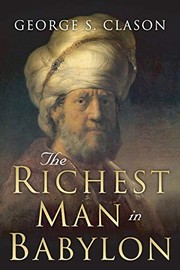
The Richest Man in Babylon
Summary
Clason wrote a series of pamphlets for banks and insurance companies in the 1920s, set in ancient Babylon and written in deliberately archaic language, and collected them as this book. The parables teach basic personal finance through characters including Arkad, the chariot builder's son who becomes the richest man in the city.
The substance is a small number of rules. Save at least ten percent of everything you earn before spending any of it. Control expenditure so that necessary expenses do not consume the whole income, and recognise that what people call necessary expenses expand to fill whatever they earn. Put savings to work earning a return rather than holding them idle. Protect capital from loss by investing only where the principal is safe and by taking advice from people competent in the field concerned rather than from those who are not. Own your home. Provide income for the future and for your family. Increase your earning capacity through developing skill.
The book is the origin of the pay yourself first formulation and it has sold continuously for a century. Its use is motivational and for teaching people who have no financial habits at all. It contains nothing about asset allocation, diversification, tax, inflation or compound return mathematics beyond the simplest cases, and the archaic style irritates many readers. The advice to seek counsel from those competent in the matter is sound and is also the sentence most often used to justify following whoever presents themselves as an expert. Treat it as a starter text on savings behaviour rather than an investment book.
Key takeaways 7
- A person should save at least ten percent of all income before paying any expense, which makes saving a fixed prior claim rather than a residual.
- Expenses expand to consume whatever income is available, so spending must be constrained deliberately rather than expected to leave a surplus.
- Savings must be put to work earning a return, because idle money contributes nothing and loses purchasing power.
- Capital should only be placed where the principal is secure, and the desire for high returns is the mechanism by which people lose everything.
- Advice should be taken only from people competent in the specific matter concerned, since a person expert in one field is not a guide in another.
- Increasing one's own earning capacity through developing skill is the most reliable way to increase wealth.
- Debt should be repaid systematically from a fixed share of income while savings continue, rather than by suspending saving until debts are cleared.
Who should read it
Readers with no established savings habits, or anyone teaching basic personal finance, rather than investors seeking method.
Who recommended it 2
Similar books 6
Chosen by shared topics, the entries that hold them, and the people who recommended both.
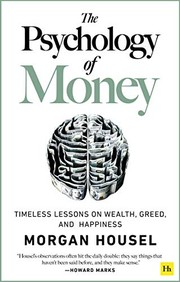
Twenty short essays on why behaviour matters more than knowledge with money.
“…books I've recommended, highlighted to death, or forced on friends.” — Andrew Wilkinson
Source: Andrew Wilkinson's Bookshelf, neverenough.com
Recommended by: Andrew Wilkinson, Nat Eliason, Ali Abdaal and 10 others
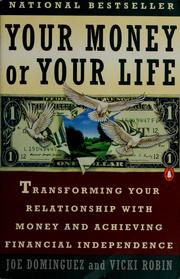
A nine-step programme that counts spending in hours of life energy.
Recommended by: Ali Abdaal, Graham Stephan and 1 other
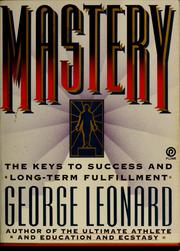
The plateau and long practice; mastery as a delayed reward
Recommended by: Ev Williams, Patrick O'Shaughnessy and 1 other
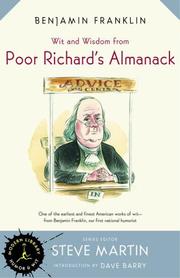
An almanac of proverbs and maxims urging thrift, industry and courtesy.
Recommended by: Tim Ferriss
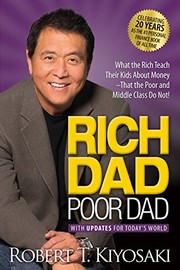
Two fathers contrasted to argue that schools fail to teach how money works.
Recommended by: Mohnish Pabrai, Andrew Lokenauth and 6 others
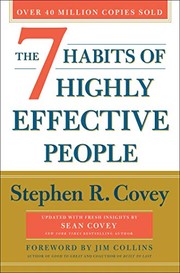
Seven habits, from being proactive to win-win, that build personal effectiveness.
“…books I've recommended, highlighted to death, or forced on friends.” — Andrew Wilkinson
Source: Andrew Wilkinson's Bookshelf, neverenough.com
Recommended by: Andrew Wilkinson, Jim Collins and 10 others
Where it sits in the reference 1
Topics