Updates

  1. Person pages list letters, writing, profiles and links as sortable tables with filters, and show each person's companies as links; Fund letters show each letter's description in its own column.
  2. Experts show a checked job title and a short description of each person; 30 more people have photographs.
  3. Every company, fund, university and publication the experts work for has a page listing the people there.
  4. Fund letters show each letter's thesis and filter by it; 225 person pages list the essays, columns and newsletter issues the person wrote.
  5. Person pages list every essay and newsletter issue a person wrote, and their own books as a table in List view.
  6. Recommends shows the five largest kinds of book and the rest under More; browse pictures load sooner.
  7. Podcasts and talks link the original episode, filter by Audio and video or Press, and list each publisher once.
  8. Pages are wider, Recommends has List and Grid, and a filter clicked again turns off.
  9. Book cards sit in a ruled grid with Open Library and Goodreads links and each book's one-line note.
  10. Funds is now Investors; each investor's styles are buttons that filter the table.
  11. Podcasts and talks on a person's page filter by year and publisher and show as a list or a grid of pictures.
  12. Quotes show only people's own words: 472 summaries written by list sites are gone.
  13. Country pages open from Browse again, and every link on the shelf lands on a page.
  14. Subject and person pages show their sections as tabs, and each book appears once on a person's page.
  15. Book cards show the quote, who said it and the source; grids show five cards to a row.
  16. On a phone, a menu holds the sections, search, Updates, Feedback and dark mode.
  17. Feedback takes a screenshot of the page with no browser prompt, opens a screenshot full size when you click it, and clears itself once sent.
  18. Book cards are centred, search names the topic each book sits in, and any text cut short shows whole on hover.
  19. Search groups its results by kind: people, companies, geographies, subjects, topics, books, funds, fund letters and papers.
  20. The Books table lists who recommended each book by name, and the browser tab names the section you are in.
  21. Feedback can take a screenshot of the page, or one you paste or choose, and opens in the corner beside Updates.
  22. Each rail button reopens its section where you left it, and Browse, Table and People show on every book and subject page.
  23. Filters grey out choices that hold nothing instead of hiding them, and Books › People filters by authors or recommenders.
  24. Feedback takes a subject line and up to three screenshots.
  25. Biographies are grouped by the person they are about: 41 new pages, from Abraham Lincoln to Lee Kuan Yew.
  26. Sport splits into 23 sports, and Religion into one topic per faith.
  27. Book lists show as cards: the cover, one recommendation quote and every recommender by name.
  28. Seventeen subjects that had two or three pages under different names now have one page each.
  29. Every page lists its Experts as authors and recommenders, with a link to them on the Experts tab.
  30. Economics, Financial history, Financial panics and Accounting are subjects of their own, with one page per financial crisis.
  31. Book, person and subject pages open inside the app, so the tabs stay in view.
  32. 996 more book covers, and photographs or logos for 227 more people and companies.
  33. Books › Browse shows every subject as cards, and the rail holds Fund letters, Papers, Experts, Books and Funds.
  34. Every topic over 150 books splits into narrower topics, each with a page of its own.

Send feedback

What is it?
Screenshots, up to 3 (optional)
or paste one with Ctrl+V

We use your email only to reply to you.

Mastery

Mastery

George Leonard
1991
T3 176 pages · about 2h 56m to read Open Librarygoodreads

The plateau and long practice; mastery as a delayed reward

Summary

This entry is credited to both George Leonard and Robert Greene, which conflates two different books with the same title, and the 1991 date points to Leonard's. Leonard was an aikido teacher and Esquire editor, and his book is short, roughly one hundred and seventy pages, arguing that mastery of any skill requires accepting long periods without visible progress.

His central observation comes from teaching aikido. Learning proceeds as a brief spurt of improvement followed by a slight decline and then a long plateau, repeated indefinitely. Most people quit during a plateau because they interpret the absence of progress as failure. Leonard argues that the person who masters a skill is the one who learns to practise during the plateau without requiring the reward of visible improvement.

He identifies three failure patterns: the dabbler, who loves beginnings and quits when the first plateau arrives; the obsessive, who forces progress and burns out or injures themselves; and the hacker, who reaches adequacy and stops. He gives five keys, which are instruction from a qualified teacher, practice as something you do rather than something you have, surrender to the teacher and to the awkwardness of being a beginner, intentionality meaning mental rehearsal and vision, and the edge, meaning occasional controlled pushing past current limits.

The book contains no research and is built entirely on Leonard's teaching experience and on the human potential movement he was part of at Esalen. Some passages on energy and consciousness will not persuade many readers. The plateau observation and the three failure types are the durable content, and both transfer directly to any skill acquired over years. Robert Greene's separate book of the same name is a different and much longer work about apprenticeship and creative development.

Key takeaways 8

  1. Learning proceeds through brief improvements followed by long plateaus, and the plateau is where skill consolidates rather than where progress stops.
  2. Most people quit during a plateau because they treat the absence of visible improvement as evidence of failure.
  3. Mastery requires practising for its own sake rather than for the reward of measurable progress.
  4. The dabbler quits at the first plateau, the obsessive forces progress until they break, and the hacker stops at adequacy, and all three patterns prevent mastery.
  5. Accepting instruction requires surrendering the identity of a competent person and tolerating being visibly bad at something.
  6. Mental rehearsal and a clear image of the intended performance measurably improve physical execution.
  7. Deliberate pushing past current limits should be occasional and controlled rather than constant, because constant pushing produces injury or burnout.
  8. The goal-oriented approach that works in short projects actively prevents the long-term development of a skill.

Who should read it

Anyone committing years to a skill who needs an account of why progress stops being visible and what to do during those periods.

Who recommended it 3

Ev Williamsreported
Tim Ferrissreported

Similar books 6

Chosen by shared topics, the entries that hold them, and the people who recommended both.

William J. Dawson · 2011

Edwardian essay on living deliberately below your means

Recommended by: Morgan Housel

Benjamin Franklin · 1732

An almanac of proverbs and maxims urging thrift, industry and courtesy.

Recommended by: Tim Ferriss
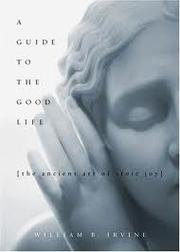
William B. Irvine · 2009

Modern Stoicism; desire management and negative visualisation

“…books I've recommended, highlighted to death, or forced on friends.” — Andrew Wilkinson

Source: Andrew Wilkinson's Bookshelf, neverenough.com

Recommended by: Andrew Wilkinson, Austen Allred and 7 others

Erin Loechner · 2016

Recommended by: Paul Jarvis

Where it sits in the reference 1

Mental models

Topics

Productivity and HabitsPhilosophyMeaning and the good lifeCareers, learning, creative work and simple living