Updates

  1. Person pages list letters, writing, profiles and links as sortable tables with filters, and show each person's companies as links; Fund letters show each letter's description in its own column.
  2. Experts show a checked job title and a short description of each person; 30 more people have photographs.
  3. Every company, fund, university and publication the experts work for has a page listing the people there.
  4. Fund letters show each letter's thesis and filter by it; 225 person pages list the essays, columns and newsletter issues the person wrote.
  5. Person pages list every essay and newsletter issue a person wrote, and their own books as a table in List view.
  6. Recommends shows the five largest kinds of book and the rest under More; browse pictures load sooner.
  7. Podcasts and talks link the original episode, filter by Audio and video or Press, and list each publisher once.
  8. Pages are wider, Recommends has List and Grid, and a filter clicked again turns off.
  9. Book cards sit in a ruled grid with Open Library and Goodreads links and each book's one-line note.
  10. Funds is now Investors; each investor's styles are buttons that filter the table.
  11. Podcasts and talks on a person's page filter by year and publisher and show as a list or a grid of pictures.
  12. Quotes show only people's own words: 472 summaries written by list sites are gone.
  13. Country pages open from Browse again, and every link on the shelf lands on a page.
  14. Subject and person pages show their sections as tabs, and each book appears once on a person's page.
  15. Book cards show the quote, who said it and the source; grids show five cards to a row.
  16. On a phone, a menu holds the sections, search, Updates, Feedback and dark mode.
  17. Feedback takes a screenshot of the page with no browser prompt, opens a screenshot full size when you click it, and clears itself once sent.
  18. Book cards are centred, search names the topic each book sits in, and any text cut short shows whole on hover.
  19. Search groups its results by kind: people, companies, geographies, subjects, topics, books, funds, fund letters and papers.
  20. The Books table lists who recommended each book by name, and the browser tab names the section you are in.
  21. Feedback can take a screenshot of the page, or one you paste or choose, and opens in the corner beside Updates.
  22. Each rail button reopens its section where you left it, and Browse, Table and People show on every book and subject page.
  23. Filters grey out choices that hold nothing instead of hiding them, and Books › People filters by authors or recommenders.
  24. Feedback takes a subject line and up to three screenshots.
  25. Biographies are grouped by the person they are about: 41 new pages, from Abraham Lincoln to Lee Kuan Yew.
  26. Sport splits into 23 sports, and Religion into one topic per faith.
  27. Book lists show as cards: the cover, one recommendation quote and every recommender by name.
  28. Seventeen subjects that had two or three pages under different names now have one page each.
  29. Every page lists its Experts as authors and recommenders, with a link to them on the Experts tab.
  30. Economics, Financial history, Financial panics and Accounting are subjects of their own, with one page per financial crisis.
  31. Book, person and subject pages open inside the app, so the tabs stay in view.
  32. 996 more book covers, and photographs or logos for 227 more people and companies.
  33. Books › Browse shows every subject as cards, and the rail holds Fund letters, Papers, Experts, Books and Funds.
  34. Every topic over 150 books splits into narrower topics, each with a page of its own.

Send feedback

What is it?
Screenshots, up to 3 (optional)
or paste one with Ctrl+V

We use your email only to reply to you.

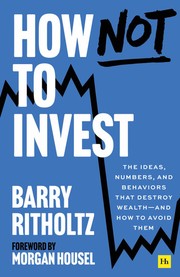
How Not to Invest

How Not to Invest

Barry Ritholtz
2025
T4 477 pages · about 7h 57m to read Open Librarygoodreads

Common investing mistakes catalogued by a working asset manager

Summary

Ritholtz, who runs an advisory firm and writes widely on markets, organises this around the argument that avoiding errors contributes more to investor returns than selecting good investments does. The structure follows bad ideas, bad numbers, bad behaviour and better outcomes.

The material covers the standard territory of the field: forecasting records that show market and economic predictions have no useful accuracy, the media and financial services incentives that generate a constant supply of confident predictions anyway, the cost drag from fees and taxes, the gap between fund returns and investor returns caused by buying and selling at the wrong times, the misuse of statistics in financial reporting, and the behavioural patterns that produce those decisions.

Ritholtz's contribution is compression and the accumulation of specific examples of confident predictions that failed, drawn from his long practice of collecting them. His prescription is conventional and he says so: hold a diversified low-cost portfolio, automate contributions, do not act on forecasts, and reduce the number of decisions you make.

The reference has not independently verified the specific studies and figures cited in this recent book. Readers should note that the argument and the conclusion are well established in the literature, that the book adds examples rather than evidence, and that anyone who has read Bogle, Malkiel or Housel will find the substance familiar. Its use is as a current and readable statement of a position that is correct and widely ignored.

Key takeaways 7

  1. Avoiding errors contributes more to long-run investor returns than selecting good investments does.
  2. Market and economic forecasts have no demonstrated accuracy, and the supply of them exists because media and financial services have an incentive to produce them.
  3. The gap between fund returns and investor returns is caused by buying and selling at the wrong times, and it is large enough to dominate manager selection.
  4. Fees and taxes compound against the investor and are the only reliably predictable component of future returns.
  5. Reducing the number of investment decisions made improves outcomes, because most discretionary decisions destroy value.
  6. Financial reporting systematically misuses statistics, particularly by presenting short-run performance and small samples as evidence.
  7. Automating contributions removes the decision points at which behavioural errors occur.

Who should read it

Individual investors who want a current readable statement of the avoid-errors position, though the underlying argument is available in several earlier books.

Who recommended it 1 · 1 direct

“Barry Ritholtz dreamed up the perfect concept and wrote the perfect book to suit it”

Similar books 6

Chosen by shared topics, the entries that hold them, and the people who recommended both.
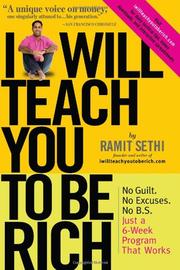
Ramit Sethi · 2009

A six-week programme to automate banking, credit, saving and investing.

Morgan Housel · 2020

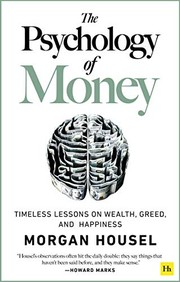
Twenty short essays on why behaviour matters more than knowledge with money.

“…books I've recommended, highlighted to death, or forced on friends.” — Andrew Wilkinson

Source: Andrew Wilkinson's Bookshelf, neverenough.com

Recommended by: Andrew Wilkinson, Nat Eliason, Ali Abdaal and 10 others

Fred Schwed · 1940

Why Wall Street grows rich on fees while its clients' results stay ordinary.

“recommended reading for those with a healthy disdain for Wall Street and its practices as well as an interest in post-boom psychology” — Nick Sleep

Source: Nomad Investment Partnership, Interim Report for the period ended June 30th, 2002, p. 10

Recommended by: Mohnish Pabrai, Nick Sleep, Warren Buffett and 4 others
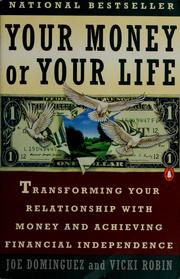
Vicki Robin, Joe Dominguez · 1992

A nine-step programme that counts spending in hours of life energy.

Where it sits in the reference 2

Investment philosophy
Investment styles

Topics

InvestingFinance and Markets